
Fig Tree Identification Guide
Recognize the common fig by its large lobed leaves, milky sap, smooth grey bark, and unique syconium fruit. Includes how to distinguish it from castor bean and other big-leaved look-alikes.
Read the full Fig Tree encyclopedia entry →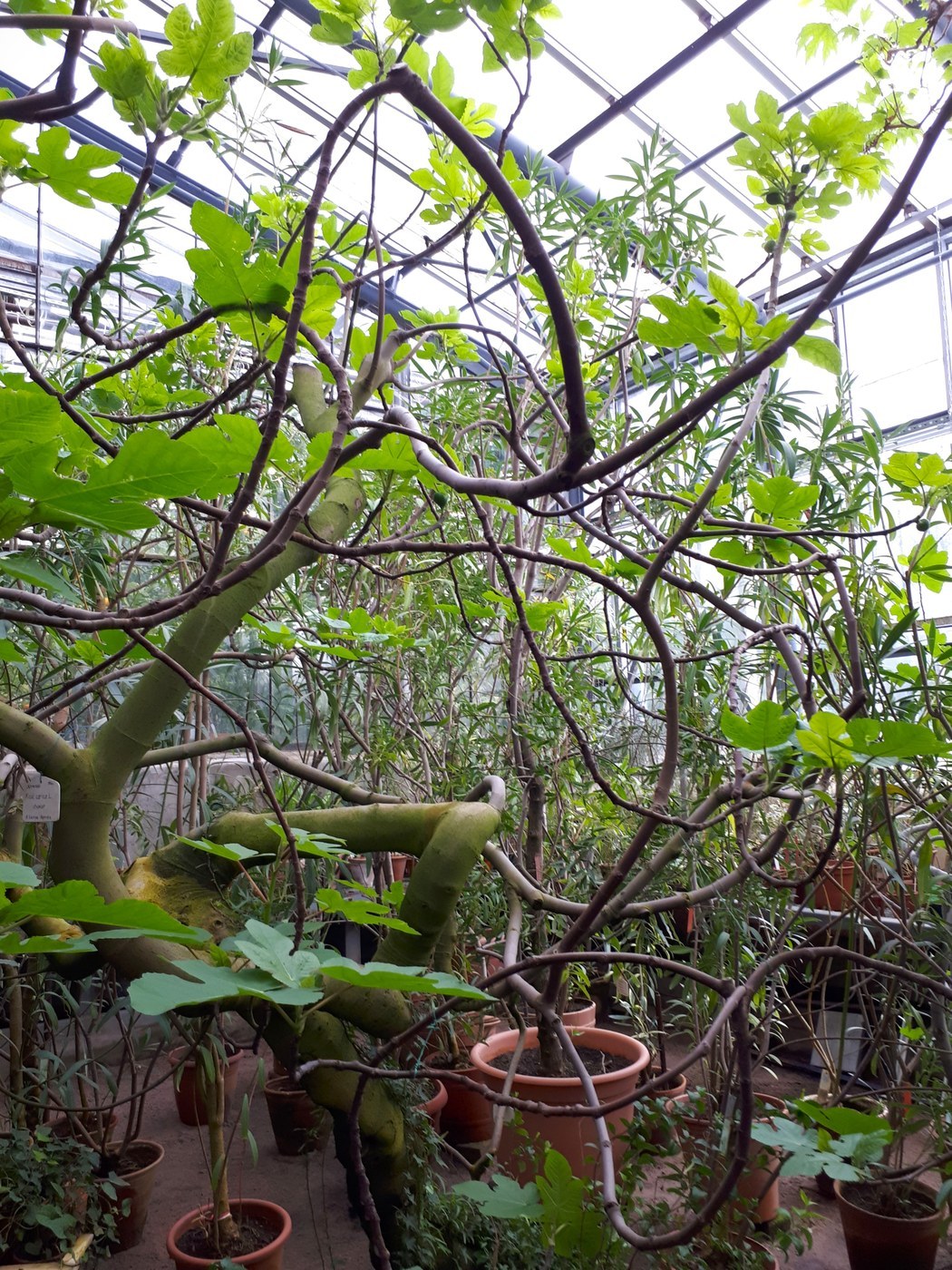
Key Identifying Features
The common fig (Ficus carica) is a deciduous tree or large shrub grown for its sweet fruit. Three features confirm it quickly: large, deeply lobed, rough-textured leaves, white milky sap (latex) that bleeds from any cut, and the pear-shaped fig fruit that grows directly on the stem.
- Palmate leaves with 3 to 5 deep lobes, rough on top, hairy beneath
- Milky white latex in stems, leaves, and unripe fruit
- Smooth, pale grey bark on a low, spreading frame
- Syconium fruit: a fleshy, hollow receptacle that is technically an inverted cluster of flowers
Leaves & Stems
Fig leaves are large (10 to 25 cm), bright to deep green, and palmately lobed, with a sandpapery upper surface and a paler, softly hairy underside. They are alternate along stout twigs. The whole plant exudes sticky white latex when broken, which can irritate skin in sunlight, so handle with care. Bark is smooth and silvery-grey, sometimes with faint horizontal markings. The tree often grows multi-trunked and wider than tall.
Flowers & Fruit
The fig has one of botany's strangest reproductive structures. What looks like the fruit is actually a syconium: a fleshy, hollow pod lined on the inside with hundreds of tiny flowers. You never see open blossoms because they bloom inward. The fruit is green ripening to brown, purple, or near-black, soft, and sweet, attaching directly to twigs. Common cultivated figs produce fruit without pollination; some types rely on a specialized fig wasp entering through the small eye (ostiole) at the base.
How to Tell It Apart from Look-Alikes
- Castor bean (Ricinus): also has big lobed leaves, but they are smooth and glossy with reddish stems, produce spiky seed capsules, and have no milky latex.
- Mulberry: leaves can be lobed and also have milky sap, but mulberry fruit is an elongated multiple drupe (like a blackberry), not a hollow fig, and leaf lobes are shallower and toothed.
- Ornamental Ficus (rubber plant, weeping fig): relatives with latex, but their leaves are unlobed and glossy.
The deeply lobed rough leaf plus milky sap plus stem-borne fig combination is unmistakable.
Where You'll Find It
Figs are native to the Mediterranean and western Asia and are widely cultivated in warm-temperate and subtropical regions worldwide. They thrive in hot sun and tolerate poor, dry soil, often self-seeding in walls, rocky crevices, and disturbed urban spaces. Look for them in gardens, orchards, courtyards, and naturalized along streambanks and old stonework.
Quick ID Checklist
- Large palmate leaves with 3 to 5 deep lobes
- Rough sandpapery upper leaf surface
- White milky sap bleeds from broken stems
- Smooth pale grey bark, spreading multi-trunked form
- Pear-shaped figs attached directly to twigs
- No visible open flowers (flowers are inside the fruit)
Frequently asked questions
Why does my fig tree bleed white sap?
Figs contain milky latex throughout their stems, leaves, and unripe fruit. This sap is a reliable identifier, but it can irritate skin in sunlight, so wash it off after pruning.
Where are the fig flowers?
They are hidden inside the fruit. A fig is a syconium, a hollow fleshy receptacle lined with hundreds of tiny inward-facing flowers, which is why you never see typical blossoms.
How do I tell a fig from a castor bean plant?
Both have big lobed leaves, but fig leaves are rough and exude milky sap, while castor bean leaves are smooth and glossy, have reddish stems and spiny seed pods, and no latex.
Do all figs need a wasp to fruit?
No. Many cultivated common figs are parthenocarpic and set fruit without pollination. Some types do depend on the specialized fig wasp entering through the eye at the fruit's base.