Fig Identification Guide
A practical guide to recognizing the common fig (Ficus carica) by its distinctive lobed leaves, milky sap, and unique flask-shaped fruit.
Read the full Fig encyclopedia entry →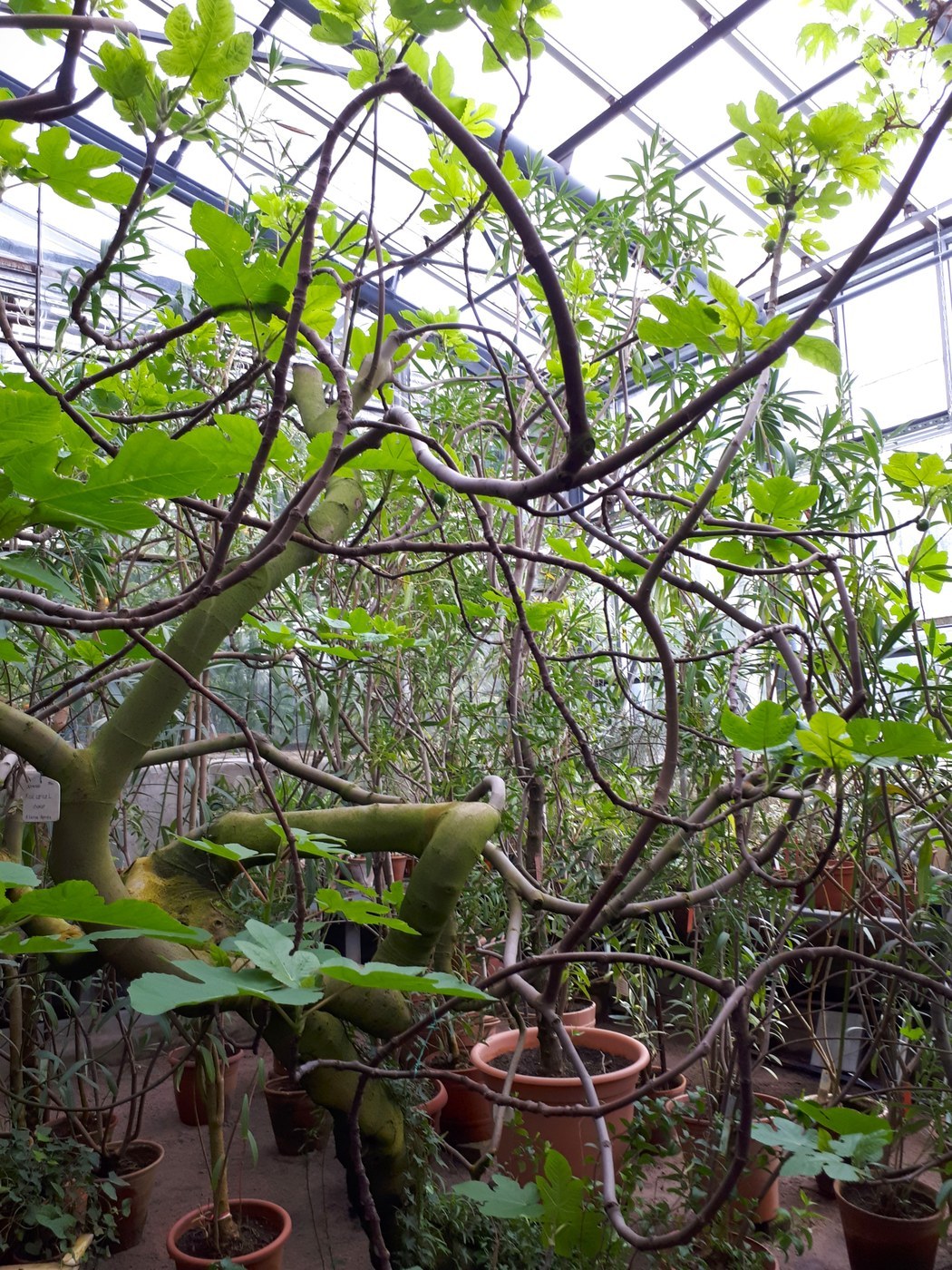
Key Identifying Features
The common fig (Ficus carica) is a deciduous shrub or small tree, usually 3-10 m (10-30 ft) tall, often multi-stemmed with a broad, spreading crown. The two most reliable field marks are its large, deeply lobed leaves and the white milky latex (sap) that oozes from any broken leaf, stem, or unripe fruit. The smooth, pale gray bark and the soft, pithy young shoots round out the picture.
Leaves & Stems
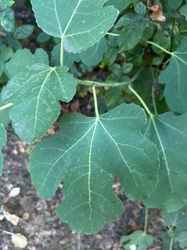
- Leaves are large (10-25 cm long), thick, and rough-textured on top, paler and downy underneath.
- Most have 3-5 deep lobes (palmate), though some leaves on the same plant may be nearly unlobed.
- The leaf base is heart-shaped; margins are slightly wavy or toothed.
- Crushing or tearing any part releases sticky white latex — a near-definitive sign.
- Young twigs are stout, green, and smooth, becoming gray with age; leaf scars are prominent after fall.
Flowers & Fruit
The fig is famous for having no visible flowers — they are hidden inside the fruit-like structure called a syconium. What you see is technically an inverted cluster of flowers.
- The fruit is pear- or teardrop-shaped, 3-8 cm, with a small opening (ostiole) at the bottom tip.
- Color ranges from green to yellow, brown, or deep purple-black depending on cultivar.
- A ripe fig is soft, droops on its stalk, and bleeds a sticky drop from the eye.
- Inside is the characteristic pink-to-red pulpy flesh full of tiny seeds.
How to Tell It Apart from Look-Alikes
- Mulberry (Morus): Has unlobed or shallowly lobed leaves, also bleeds milky sap, but its fruit is a blackberry-like aggregate, not a hollow syconium.
- Castor bean (Ricinus): Has large palmate lobed leaves but they are star-shaped with 7-11 pointed lobes, no milky latex, and spiny seed capsules.
- Ornamental figs (rubber plant, weeping fig): Evergreen with smooth, unlobed glossy leaves; only F. carica has the deeply lobed deciduous foliage.
The combination of deeply lobed rough leaves + milky sap + soft flask-shaped fruit is unique among temperate trees.
Where You'll Find It
Native to the Mediterranean and western Asia, figs are widely grown in warm-temperate gardens, orchards, and along old walls. They thrive in full sun, well-drained soil, and tolerate heat and drought. Self-seeded figs often appear in cracks of walls, sidewalks, and disturbed urban ground in mild climates (USDA zones 7-11).
Quick ID Checklist
- Large, rough, deeply 3-5 lobed deciduous leaves
- White milky sap from any cut or broken part
- Smooth pale gray bark, stout pithy twigs
- Soft, pear-shaped fruit with an eye (ostiole) at the tip
- Pink-red seedy pulp inside
- Multi-stemmed, spreading habit in warm climates
Frequently asked questions
How can I be sure a tree is a fig and not a mulberry?
Both bleed milky sap, but fig leaves are deeply 3-5 lobed and rough, while mulberry leaves are mostly unlobed (or shallowly lobed) and smoother. The clincher is the fruit: figs produce a hollow flask-shaped syconium with an eye, while mulberries form a soft elongated aggregate resembling a blackberry.
Why does breaking a fig leaf release white liquid?
That milky white latex is characteristic of the Ficus genus and the mulberry family. It is a reliable field test for identifying figs and their relatives in the wild.
Where are the fig's flowers?
They are inside the fruit. The fig 'fruit' is actually a syconium, an inverted hollow structure lined with hundreds of tiny flowers, which is why you never see typical blossoms on a fig tree.
Do all fig leaves on one plant look the same?
No. Fig foliage is variable; some leaves are deeply 5-lobed while others on the same branch may be nearly entire. Look at the overall mix of large, rough, lobed leaves plus the milky sap to confirm identity.
Fig identified by the community
Recent Fig specimens identified with Plant Identifier.