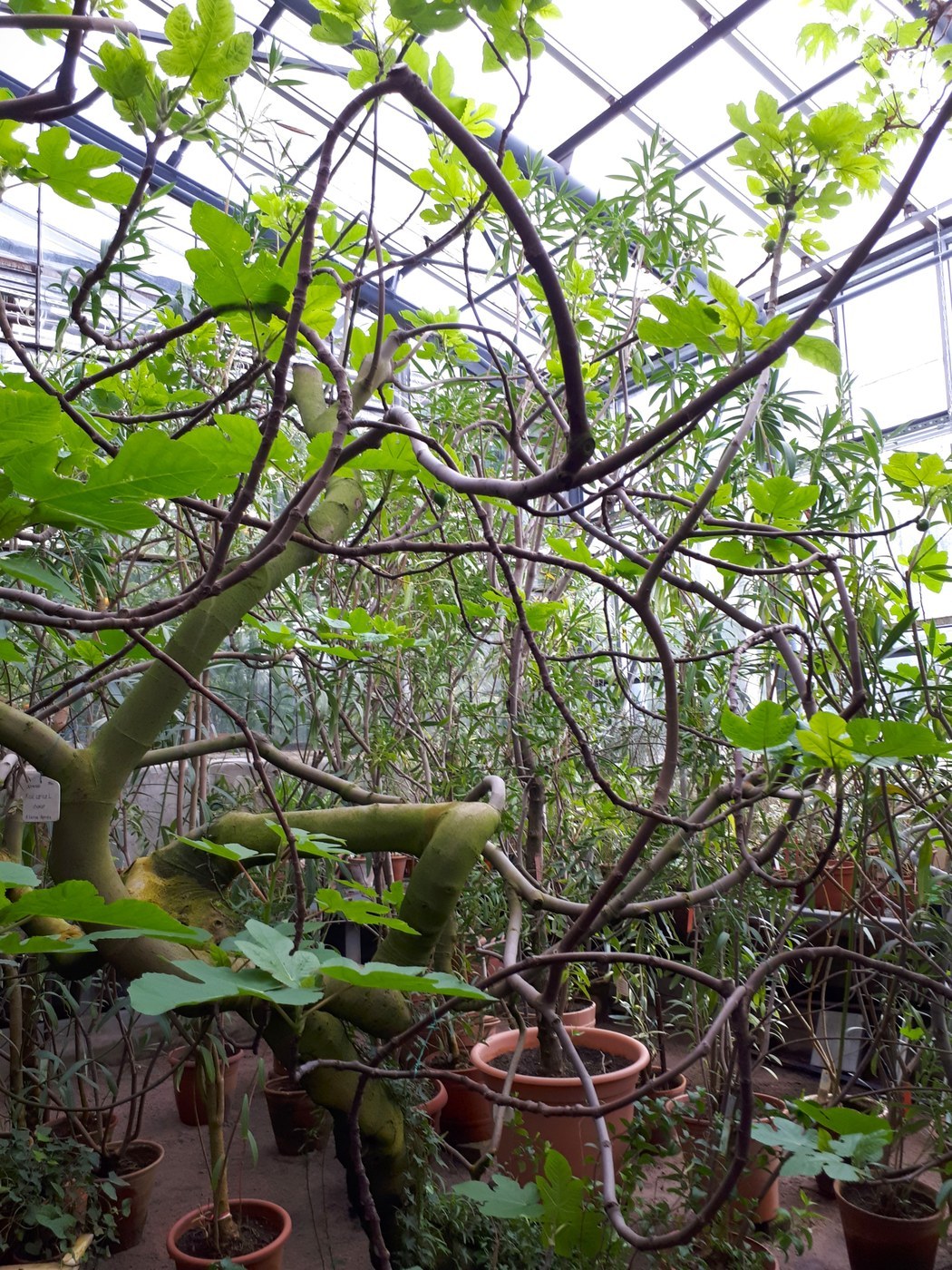
Fig
Ficus carica
The common fig is a deciduous Mediterranean tree or large shrub grown for its bold lobed foliage and teardrop-shaped fruit. It is hardy, drought-tolerant, and one of the oldest cultivated plants.
- Light
- Full sun
- Water
- Deep weekly soak; let soil dry between
- Difficulty
- Easy
Got a plant like this?
Identify any plant from a photo, free.
Overview
Ficus carica is a deciduous tree or multi-stemmed shrub in the mulberry family (Moraceae), typically reaching 10-30 ft. It has been cultivated for thousands of years across the Mediterranean and Middle East and remains a popular backyard tree.
Figs are remarkably adaptable, thriving in poor soils and tolerating heat and drought once established. Many home varieties are self-fertile and need no pollinator wasp, making them easy to fruit in temperate gardens.
How to identify it
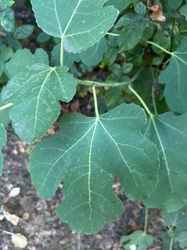
- Large, rough-textured leaves deeply cut into 3-5 lobes, 4-10 in across, with a sandpapery upper surface
- Smooth, silvery-gray bark on stout, spreading branches
- Hollow, pear-shaped fruit (a syconium) that ripens green, brown, or purple and softens when ready
- Broken stems and unripe fruit exude a milky white latex sap
- Open, often wider-than-tall growth habit with a tropical look despite being deciduous
Care & growing
Light: Needs full sun (6+ hours) for abundant fruit.
Water: Deep, infrequent watering; mature trees are drought-tolerant but fruit better with consistent summer moisture. Avoid waterlogging.
Soil: Well-drained, even poor or rocky soil; tolerates a wide pH range.
Temperature: Hardy in USDA zones 7-10; protect or grow in containers where winters drop below ~15°F.
Feeding: Light feeder—too much nitrogen grows leaves at the expense of fruit. A balanced spring feed is plenty.
Propagation: Very easy from hardwood cuttings taken in winter, or by air layering.
Habitat & origin
Native to the eastern Mediterranean and southwest Asia, the fig has naturalized throughout warm-temperate regions worldwide. It grows wild on rocky hillsides, old walls, and disturbed ground where its roots seek out cracks and crevices.
It is widely cultivated commercially in Turkey, Egypt, Iran, Greece, and California, and is a popular dooryard tree in mild climates everywhere.
Frequently asked questions
Do fig trees need a pollinator?
Most common home varieties (like 'Brown Turkey' and 'Celeste') are self-fertile and fruit without the specialized fig wasp or another tree.
Why isn't my fig fruiting?
Usually too little sun, excess nitrogen fertilizer, or a young tree that hasn't matured. Full sun and lean feeding fix most issues.
Can figs grow in pots?
Yes—they fruit well in large containers, which also lets you move them indoors or to shelter in cold-winter climates.
How big does a fig tree get?
A common fig typically reaches 10-30 ft as a tree or multi-stemmed shrub, with an open, often wider-than-tall habit that can be kept smaller by pruning or container growing.
Fig guides
In-depth guides for identifying, growing, and caring for Fig.
How to Care for Fig
Grow Fig (Ficus carica), a sun-loving deciduous tree with bold lobed leaves, easy to grow in the ground or a large container.
Fig Identification Guide
A practical guide to recognizing the common fig (Ficus carica) by its distinctive lobed leaves, milky sap, and unique flask-shaped fruit.
Fig identified by the community
Real specimens identified with Plant Identifier.