
How to Care for Fire Pink
A short-lived native woodland wildflower with brilliant scarlet star-shaped blooms that thrives in dappled shade and lean, sharply drained soil.
Read the full Fire Pink encyclopedia entry →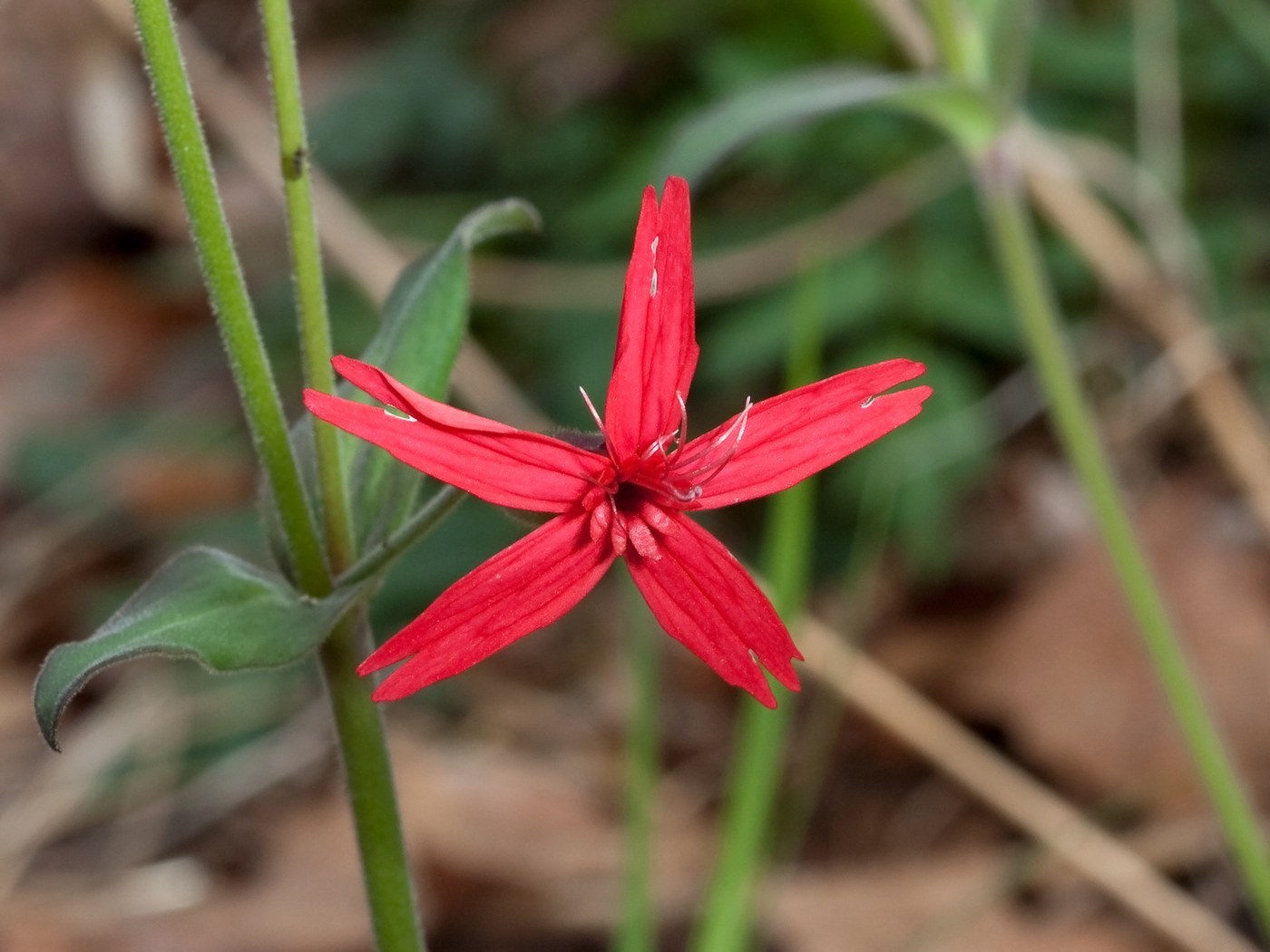
Fire Pink (Silene virginica) is a clump-forming native wildflower celebrated for its vivid scarlet, deeply notched, star-shaped flowers held on slender stems above a low rosette. Naturally a plant of open woodland edges and rocky slopes, it is short-lived but self-sows, making it a jewel for shaded native and rock gardens.
Light
Fire Pink grows best in partial shade to dappled sun, echoing its woodland-edge origins. Morning sun with afternoon shade, or the filtered light beneath high open trees, brings the deepest flower color and sturdiest stems. Deep shade reduces bloom, while full hot-afternoon sun can stress the plant unless soil moisture is reliable.
Water
Provide moderate water in well-drained soil. Fire Pink dislikes both drought stress and standing moisture; aim to keep the root zone lightly moist while never waterlogged. Water established plants during dry spells, but let the surface dry between waterings. The plant is especially prone to crown rot in soggy winter ground, so sharp drainage matters as much as the watering itself.
Soil & Potting
Lean, gritty, sharply drained soil suits it best. It naturally grows on rocky, sloping ground with low fertility, so heavy, rich, or wet soils are its downfall. Amend garden beds with grit, coarse sand, or fine gravel to guarantee drainage, and plant on a slope or raised area where possible. In containers use a gritty, free-draining mix and shallow-to-medium pots.
Humidity & Temperature
Fire Pink is a hardy temperate perennial that handles normal seasonal cold well when its crown stays dry through winter. It appreciates the cooler, airy conditions of dappled shade over hot, humid, stagnant sites. Good air movement helps keep foliage healthy in muggy summer weather.
Feeding
Feed sparingly or not at all. As a plant adapted to lean soils, Fire Pink resents rich feeding, which produces floppy growth and shortens its already brief life. A very light topdressing of compost in spring is more than enough; skip concentrated fertilizers entirely.
Propagation
Fire Pink is most reliably grown from seed, which it also scatters on its own. Sow fresh seed and give it a cold, moist period to break dormancy; seedlings develop a rosette before flowering in a later season. Because individual plants are short-lived, letting some flowers set and drop seed keeps a colony going year after year. Careful division of established clumps is possible but risky given its sensitive crown.
Repotting / Pruning
Little pruning is needed. Deadheading spent flowers can tidy the plant, but leaving some seed heads to ripen ensures self-sowing and future plants. If grown in pots, repot infrequently and handle the crown gently. Avoid cutting the plant back hard, as it recovers slowly.
Common Problems & Pests
The overwhelming risk is crown and root rot from wet, heavy soil, especially over winter, so drainage is the whole game. In too much shade or rich soil, stems flop and flowering thins. It is otherwise largely trouble-free, though slugs may nibble the low rosette in damp settings. Its natural short lifespan is normal rather than a fault; rely on self-seeding for continuity.
Seasonal Care Tips
In spring, enjoy the emerging rosette and provide light moisture as flower stems rise. Through the late-spring to summer bloom, water moderately in dry spells and let some flowers form seed. In autumn, ensure the crown will sit dry and mulch lightly with grit rather than moisture-holding material. Protect from soggy winter ground above all.
Frequently asked questions
Why did my Fire Pink die over winter?
The most common cause is crown rot from wet, heavy soil during dormancy. Fire Pink needs lean, sharply drained ground and a dry crown in winter; planting on a slope or in gritty soil greatly improves survival.
Should I fertilize Fire Pink?
Barely, if at all. It is adapted to lean, rocky soils, and rich feeding causes floppy growth and shortens its life. A light spring topdressing of compost is plenty; skip concentrated fertilizers.
How much sun does Fire Pink need?
Partial shade to dappled sun is ideal, such as morning sun with afternoon shade or filtered light under open trees. This yields the best flower color and sturdiest stems.
My plant seems short-lived. Is that normal?
Yes. Fire Pink is naturally a short-lived perennial. Let some flowers set and drop seed so the colony renews itself, since it self-sows readily in suitable conditions.