
Fireweed Identification Guide
Recognize Fireweed (Chamerion angustifolium) by its tall spire of magenta-pink four-petaled flowers and willow-like leaves. This guide explains its distinctive blooming sequence and habitat.
Read the full Fireweed encyclopedia entry →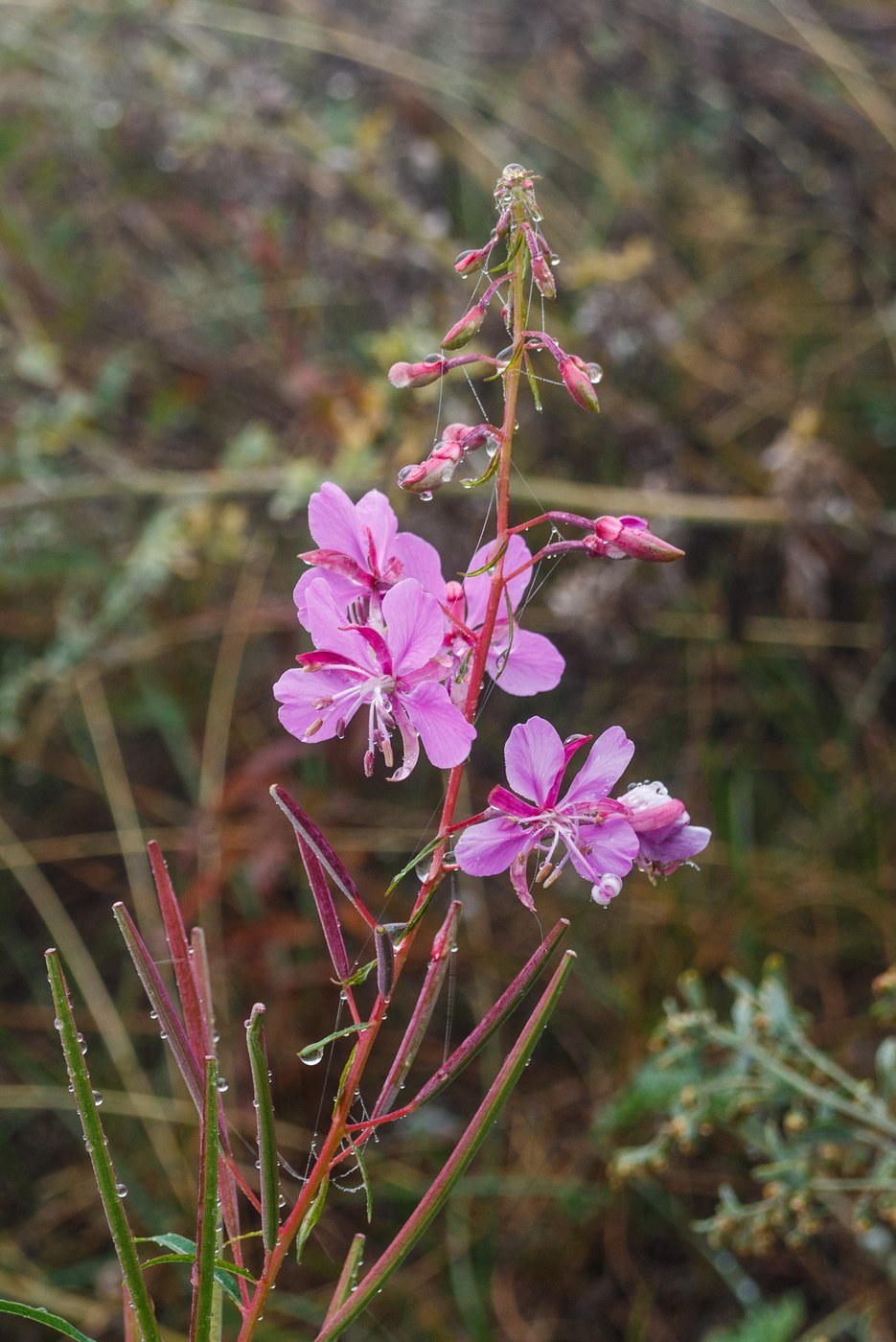
Key Identifying Features
Fireweed (Chamerion angustifolium, formerly Epilobium angustifolium) is a tall perennial famous for colonizing burned and disturbed ground. It produces a showy spike of rose-pink to magenta flowers atop a single stem, typically 2 to 6 feet (60 to 180 cm) tall. It is one of the most striking wildflowers of northern summers.
- Tall, unbranched spike of bright pink-magenta flowers
- Flowers have four rounded petals and a prominent style
- Willow-like narrow leaves
- Blooms from the bottom of the spike upward
Leaves & Stems
The stem is smooth, reddish, and usually unbranched. Leaves are alternate, narrow, lance-shaped, and willow-like, often with a pale or whitish underside. A distinctive feature is the veins that do not reach the leaf edge but loop and join in a network near the margin. Leaves are arranged spirally up the stem.
Flowers & Fruit
Each flower has four pink to magenta petals, four narrower sepals, eight stamens, and a long protruding style split into four lobes at the tip. Flowers open sequentially from the bottom of the spike upward, so you often see seed pods below, open flowers in the middle, and buds at the top all at once. The fruit is a long, slender reddish capsule that splits to release seeds tipped with silky white hairs for wind dispersal.
How to Tell It Apart from Look-Alikes
- Purple loosestrife (Lythrum salicaria): has six-petaled flowers in a denser spike and squarish stems; grows in wet ditches and is invasive.
- Dame's rocket / phlox: have flatter clusters and different leaf arrangement.
- Other willowherbs (Epilobium): smaller, with notched petals; fireweed's petals are unnotched and rounded.
The combination of four rounded petals, four-lobed style, willow leaves, and bottom-up blooming spike is unmistakable.
Where You'll Find It
True to its name, fireweed is a pioneer of burned land, clearings, roadsides, and disturbed soil, often appearing in masses after wildfires or logging. It ranges across cool temperate and subarctic regions of North America, Europe, and Asia. It is the floral emblem of the Yukon and a beloved sight in Alaska and northern meadows.
Quick ID Checklist
- Tall single spike of magenta-pink flowers
- Flowers with four rounded petals and a four-lobed style
- Willow-like alternate leaves with looping veins
- Blooms bottom-to-top along the spike
- Slender pods releasing silky-tufted seeds
- Found on burned or disturbed ground
Frequently asked questions
Why is it called fireweed?
Because it is one of the first plants to colonize land after wildfires, rapidly carpeting burned ground with pink blooms. Its seeds spread on the wind and germinate readily in disturbed, sun-exposed soil.
How can I tell fireweed from purple loosestrife?
Fireweed flowers have four rounded petals and grow on round stems, while purple loosestrife has six petals, a denser spike, and squarish stems. Loosestrife also favors wet ditches and wetlands.
Why do fireweed plants show flowers and seed pods at the same time?
Flowers open in sequence from the bottom of the spike upward. The lowest flowers mature into slender seed pods first while buds are still opening at the top, so a single stem can display pods, blooms, and buds together.
What do fireweed leaves look like?
The leaves are narrow, lance-shaped, and willow-like with a distinctive vein pattern: the side veins do not reach the leaf margin but loop and join in a network near the edge, which helps confirm identity.