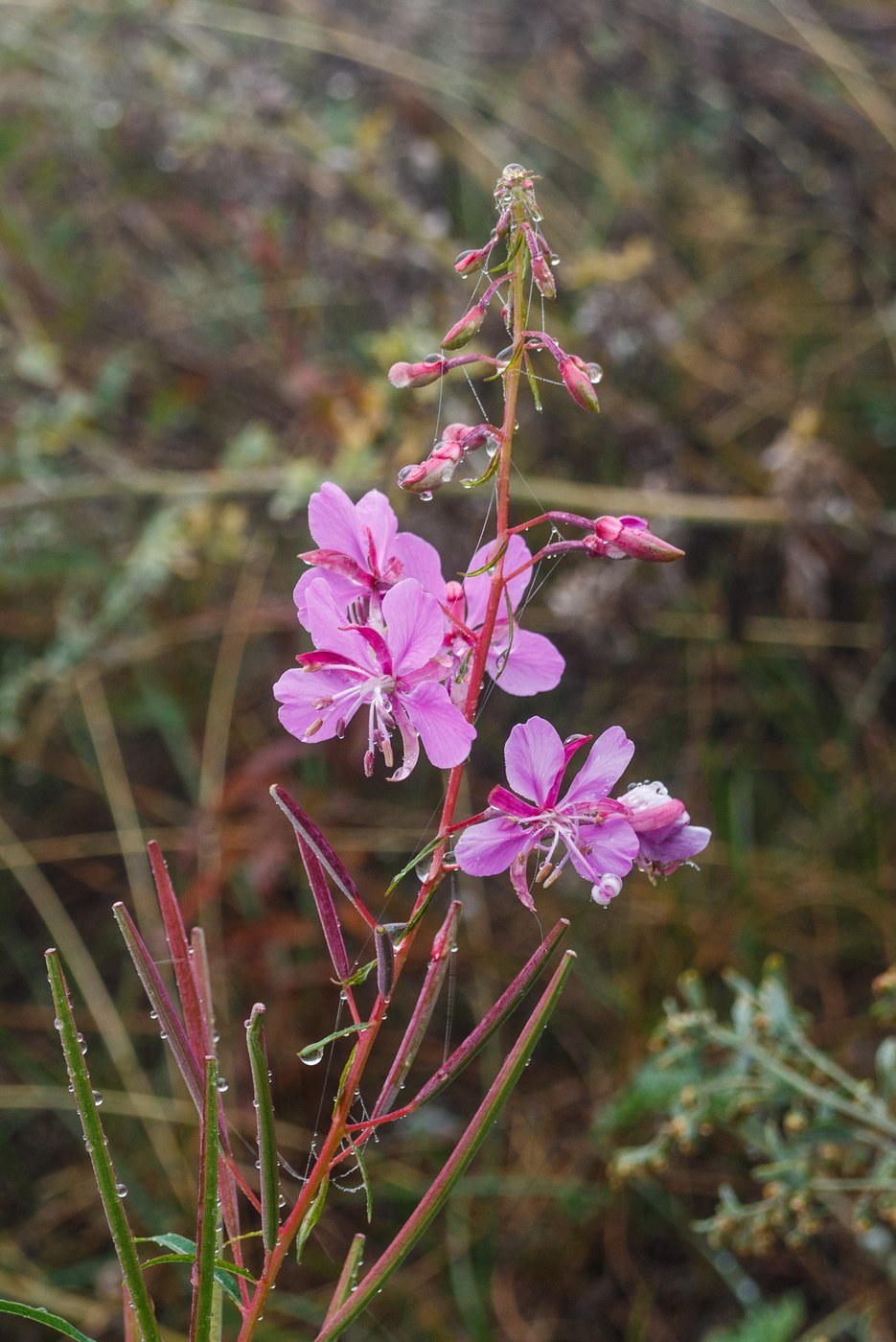
Fireweed
Chamerion angustifolium
A tall, magenta-flowered perennial famous for blanketing burned and disturbed land, which gives it its name. Its spires of pink-purple flowers make it both a pioneer species and a showy garden plant.
- Light
- Full sun to part shade
- Water
- Moderate; evenly moist soil
- Difficulty
- Easy
Got a plant like this?
Identify any plant from a photo, free.
Overview
Fireweed (Chamerion angustifolium, formerly Epilobium angustifolium) is a circumboreal perennial named for its dramatic ability to colonize ground cleared by wildfire, logging, or other disturbance. It famously carpeted bomb sites in London after World War II, earning the local name 'bombweed.'
The plant produces tall, leafy stems topped by long racemes of four-petaled magenta flowers that open from the bottom upward over the course of the season. It is the official floral emblem of Yukon, Canada.
Fireweed spreads readily by both seed and rhizome, quickly forming showy colonies in open ground.
How to identify it
Recognize fireweed by its tall flower spikes of bright pink-magenta blooms.
- Flowers: Four rounded petals, magenta to pink, in a tall terminal spike that blooms upward
- Leaves: Narrow, lance-shaped, alternate, with a distinctive pale central vein and veins that loop within the leaf margin
- Stems: Erect, often reddish, unbranched
- Size: Typically 3 to 8 feet (1 to 2.5 m) tall
- Seeds: Slender pods split to release fluffy, white, wind-borne seeds
Care & growing
Fireweed is an easy, vigorous grower that can spread enthusiastically.
- Light: Full sun to part shade
- Water: Prefers consistently moist soil but tolerates a range once established
- Soil: Adapts to most soils, including poor and disturbed ground
- Temperature: Very cold-hardy; thrives in northern and montane climates
- Propagation: By seed or by dividing rhizomes; can become aggressive, so site it where spread is welcome
- Feeding: Rarely needed
Habitat & origin
Fireweed is native across the cooler temperate and boreal regions of the Northern Hemisphere, including North America, Europe, and Asia.
It is a classic pioneer species, rapidly colonizing burned forests, clearcuts, roadsides, riverbanks, and other disturbed open habitats, then gradually giving way as woody plants return.
It is widely seen in the wild in Alaska, Canada, the northern United States, Scandinavia, and the UK, and is sometimes grown in naturalistic and pollinator gardens.
Frequently asked questions
Why is it called fireweed?
It is one of the first plants to recolonize ground cleared by wildfire, quickly covering scorched land with pink flowers.
Does fireweed spread aggressively?
It can. It multiplies by both seed and rhizome, so plant it where its spreading colonies are welcome.
How tall does fireweed grow?
It typically reaches 3 to 8 feet (1 to 2.5 m), sending up erect, often reddish, unbranched stems topped with tall flower spikes.
How do its seeds spread?
Slender seed pods split open to release large numbers of fluffy, white-tufted seeds that are carried long distances on the wind.
Fireweed guides
In-depth guides for identifying, growing, and caring for Fireweed.
How to Care for Fireweed
Growing guide for fireweed (Chamerion angustifolium): a vigorous native perennial with tall magenta flower spikes for sunny, informal gardens.
Fireweed Identification Guide
Recognize Fireweed (Chamerion angustifolium) by its tall spire of magenta-pink four-petaled flowers and willow-like leaves. This guide explains its distinctive blooming sequence and habitat.