
Fishbone Cactus Identification Guide
Recognize the Fishbone Cactus (Epiphyllum anguliger) by its flat, zigzag-toothed trailing stems and night-blooming fragrant flowers. Includes look-alike comparisons.
Read the full Fishbone Cactus encyclopedia entry →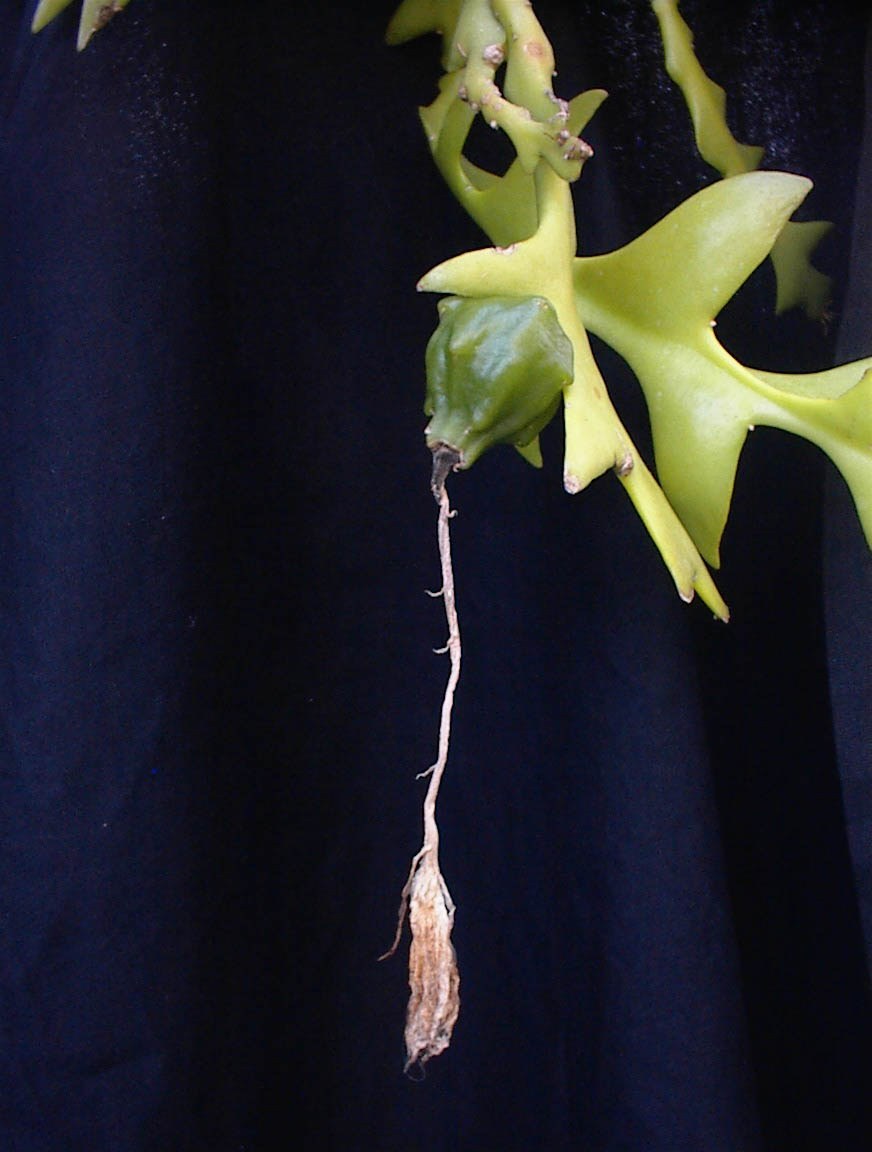
Key Identifying Features
The Fishbone Cactus (Epiphyllum anguliger, also called Zig-Zag or Ric Rac Cactus) is an epiphytic jungle cactus identified by its flattened, lobed green stems with a deeply toothed, fishbone-like zigzag margin. Trailing and spineless, it is grown for both foliage and spectacular night blooms.
- Flat, strap-like stems with deep, alternating lobes (zigzag/fishbone shape)
- Spineless and smooth, mid-green and slightly succulent
- Trailing/pendulous growth habit
- Large fragrant night flowers in fall
Leaves & Stems
What appear to be leaves are actually flattened modified stems (cladodes). They are deeply notched along both edges into rounded lobes, creating the classic fishbone or ric-rac pattern. Stems are fleshy, flat, and arching, eventually trailing well over the pot edge to a foot or more. As a true cactus it has areoles along the notches, but spines are absent or vestigial. The color is a fresh mid-green.
Flowers & Fruit
In autumn, mature plants produce large, showy flowers (3-6 inches) that open at night and are strongly fragrant, with white to creamy-yellow petals and a layered, spiky look. Each bloom lasts only a night or two. Pollinated flowers may form fleshy fruit, though this is uncommon indoors.
How to Tell It Apart from Look-Alikes
- Holiday cacti (Schlumbergera) have segmented, scalloped pads with notched tips, not continuous zigzag strap-stems, and bloom in winter with smaller flowers.
- Other Epiphyllum (orchid cacti) have flat stems but with shallow, less toothy margins.
- Rhipsalis species are thin and cylindrical or only slightly flattened, lacking the deep fishbone lobes.
The deeply toothed, continuous zigzag flat stem is the unmistakable diagnostic.
Where You'll Find It
Native to southern Mexico, it grows as an epiphyte in humid forests, perched on trees. As a houseplant it thrives in bright indirect light and a hanging basket, mimicking its trailing jungle habit. It needs more water and humidity than desert cacti.
Quick ID Checklist
- Flat, fleshy green stems
- Deep zigzag/fishbone notches along both edges
- No spines
- Trailing habit
- Large fragrant white night flowers in autumn
Flat zigzag-edged stems that trail and bloom at night confirm Epiphyllum anguliger.
Frequently asked questions
Is the Fishbone Cactus really a cactus?
Yes, it is a true epiphytic cactus (Epiphyllum anguliger) with areoles, but it is spineless and grows in humid forests rather than deserts.
Are those flat parts leaves or stems?
They are modified flattened stems called cladodes. The deep notches along their edges create the fishbone pattern.
When and how does it flower?
Mature plants bloom in fall with large, fragrant white-to-cream flowers that open at night and last only a day or two.
How is it different from a Christmas cactus?
Christmas cactus has short, scalloped segmented pads and blooms in winter. Fishbone cactus has long, continuous zigzag-edged strap stems and blooms in autumn at night.