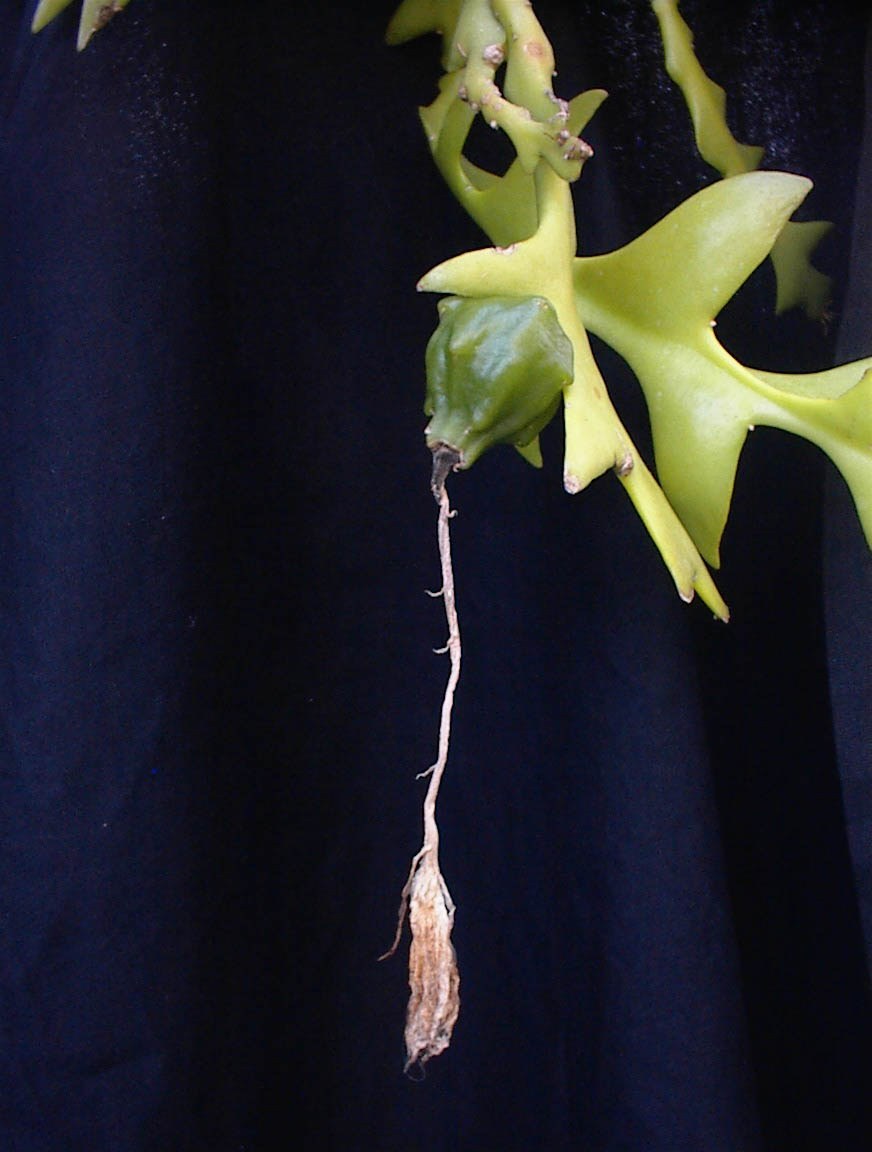
Fishbone Cactus
Disocactus anguliger
An epiphytic jungle cactus with flat, deeply zigzagged stems resembling a fish skeleton. Easy to grow and capable of producing large, fragrant night-blooming flowers in autumn.
- Light
- Bright indirect light
- Water
- When top inch dries
- Difficulty
- Easy
Got a plant like this?
Identify any plant from a photo, free.
Overview
The Fishbone Cactus is an epiphytic cactus from Mexican rainforests, not a desert dweller. Its flattened, succulent stems are notched into a bold zigzag pattern that gives it its name.
Unlike spiny desert cacti, it grows on trees and prefers dappled light and a bit more water. In autumn, mature plants may produce surprisingly large, fragrant flowers that open at night, a memorable bonus to an already striking hanging plant.
How to identify it
Identify it by flat, fleshy green stems cut into a deep, alternating zigzag along their length.
- Stems: flattened, succulent, bright green with deep lobed notches (the 'fishbone')
- Habit: trailing and arching, ideal for hanging baskets
- Spines: essentially absent; tiny bristles may appear in areoles
- Flowers: large, fragrant, white-to-yellow, night-blooming in fall on mature plants
- Size: stems trail 1-3 ft
Care & growing
Light: Bright, indirect light mimics its dappled forest canopy; avoid harsh direct sun.
Water: Water when the top inch dries; it likes more moisture than desert cacti but still needs good drainage.
Soil: Airy, well-draining mix; a cactus mix amended with orchid bark works well.
Temperature: 60-80F with moderate humidity.
Feeding: A diluted cactus fertilizer during spring and summer; some growers use a bloom feed in early fall.
Propagation: Very easy from stem-segment cuttings; let them callus a day or two, then root in moist mix.
Habitat & origin
Native to the rainforests of southern Mexico, where it grows as an epiphyte on tree branches in humid, shaded conditions.
It is cultivated worldwide as an easy-care hanging houseplant and is popular among collectors for its sculptural stems and dramatic nocturnal flowers.
Frequently asked questions
How do I get it to bloom?
Give it bright indirect light, a cooler and drier rest in late fall/winter, and let it mature. Blooms typically appear in autumn on established plants.
Does it need cactus soil?
It does best in an airy, well-draining mix with extra organic matter or orchid bark, reflecting its epiphytic, rainforest origins rather than a pure desert mix.
Why are the stems wrinkling?
Wrinkled, limp stems usually signal underwatering. Water more consistently while keeping drainage sharp.
How big does it get?
Its flattened, zigzag stems trail and arch about 1-3 ft long, making it well suited to hanging baskets where the stems can spill over the sides.
Fishbone Cactus guides
In-depth guides for identifying, growing, and caring for Fishbone Cactus.
How to Care for Fishbone Cactus
Grow the trailing Fishbone Cactus (Disocactus anguliger) for its zigzag, ric-rac stems and fragrant, short-lived night blooms.
Fishbone Cactus Identification Guide
Recognize the Fishbone Cactus (Epiphyllum anguliger) by its flat, zigzag-toothed trailing stems and night-blooming fragrant flowers. Includes look-alike comparisons.