
Fittonia Identification Guide
Identify Fittonia (nerve plant) by its small oval leaves laced with a contrasting network of white, pink or red veins and its low, spreading habit.
Read the full Fittonia encyclopedia entry →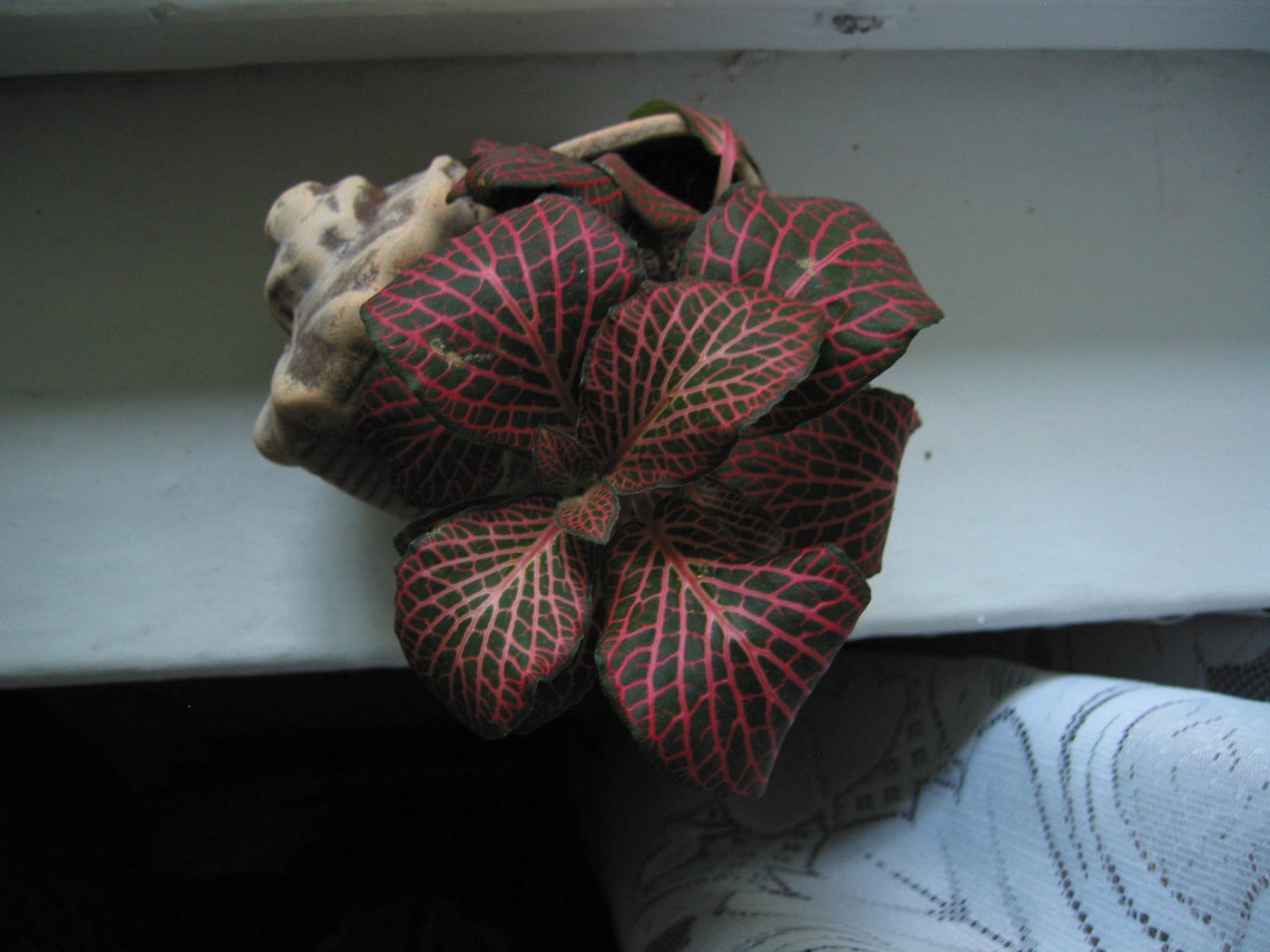
Key Identifying Features
Fittonia (Fittonia albivenis), the nerve or mosaic plant, is identified by its olive-to-deep-green oval leaves intricately laced with a contrasting network of veins in white, pink, or red — the standout feature that gives it the "nerve" name.
- Bold, branching vein network in white, pink, or red
- Small, oval, soft leaves (5–10 cm)
- Low, creeping, spreading habit
- Slightly fuzzy stems and leaf surface
Leaves & Stems
Leaves are ovate to elliptic, 3–10 cm long, opposite, with a slightly puckered surface and a soft, almost velvety texture. The veins form a dense, symmetrical reticulated pattern that contrasts sharply with the green leaf tissue — white-veined ('Argyroneura'), pink, or deep-red forms are all common. Stems are thin, green, slightly hairy, and creep along the soil, rooting at the nodes to form a low spreading mat 10–20 cm tall. Wilting dramatically when dry then reviving with water is a classic Fittonia behavior (the "drama queen" plant).
Flowers & Fruit
Flowers are insignificant — small, tubular, whitish to pale-yellow blooms tucked into a green bracted spike. They are rarely produced indoors and are not used for ID; the foliage does all the work.
How to Tell It Apart from Look-Alikes
- vs. Hypoestes (Polka Dot Plant): polka dot plant has scattered spots/freckles of pink or white, not a continuous vein network
- vs. Pilea/Peperomia veined types: those have different leaf shapes and less dramatic, less symmetric venation
- vs. Maranta/Prayer Plant: prayer plants are larger, fold up at night, and have herringbone or blotch patterns rather than a fine net of veins
The giveaway is the fine, evenly branched vein mosaic across a small oval leaf on a low creeping plant.
Where You'll Find It
A popular small houseplant for terrariums, bottle gardens and humid bathrooms because it loves moisture and warmth. Native to the rainforest floor of Peru and northwestern South America, where it carpets shaded, humid ground.
Quick ID Checklist
- Contrasting net of white/pink/red veins on each leaf
- Small, soft, oval, slightly puckered leaves
- Low, creeping, mat-forming growth
- Rooting at nodes along thin fuzzy stems
- Dramatic wilting when thirsty, fast recovery when watered
Frequently asked questions
What causes the colorful veins on a Fittonia?
The vivid white, pink or red veins are a natural pigmentation feature of Fittonia albivenis and are its primary identifying trait, present on every leaf.
How is Fittonia different from a Polka Dot Plant?
Fittonia has a continuous branching network of veins, while the Polka Dot Plant (Hypoestes) has scattered spots or freckles across the leaf.
Why does my Fittonia collapse and then recover?
Fittonia wilts dramatically when its soil dries, then perks back up within hours of watering. This thirsty 'fainting' behavior is characteristic of the plant.
Does Fittonia flower?
It can, but the small whitish flowers are insignificant and rarely appear indoors. Fittonia is grown entirely for its veined foliage.