
How to Care for Flame Violet
Grow Flame Violet (Episcia cupreata): a trailing gesneriad with velvety, coppery leaves and vivid orange-red flowers for warm, humid spots.
Read the full Flame Violet encyclopedia entry →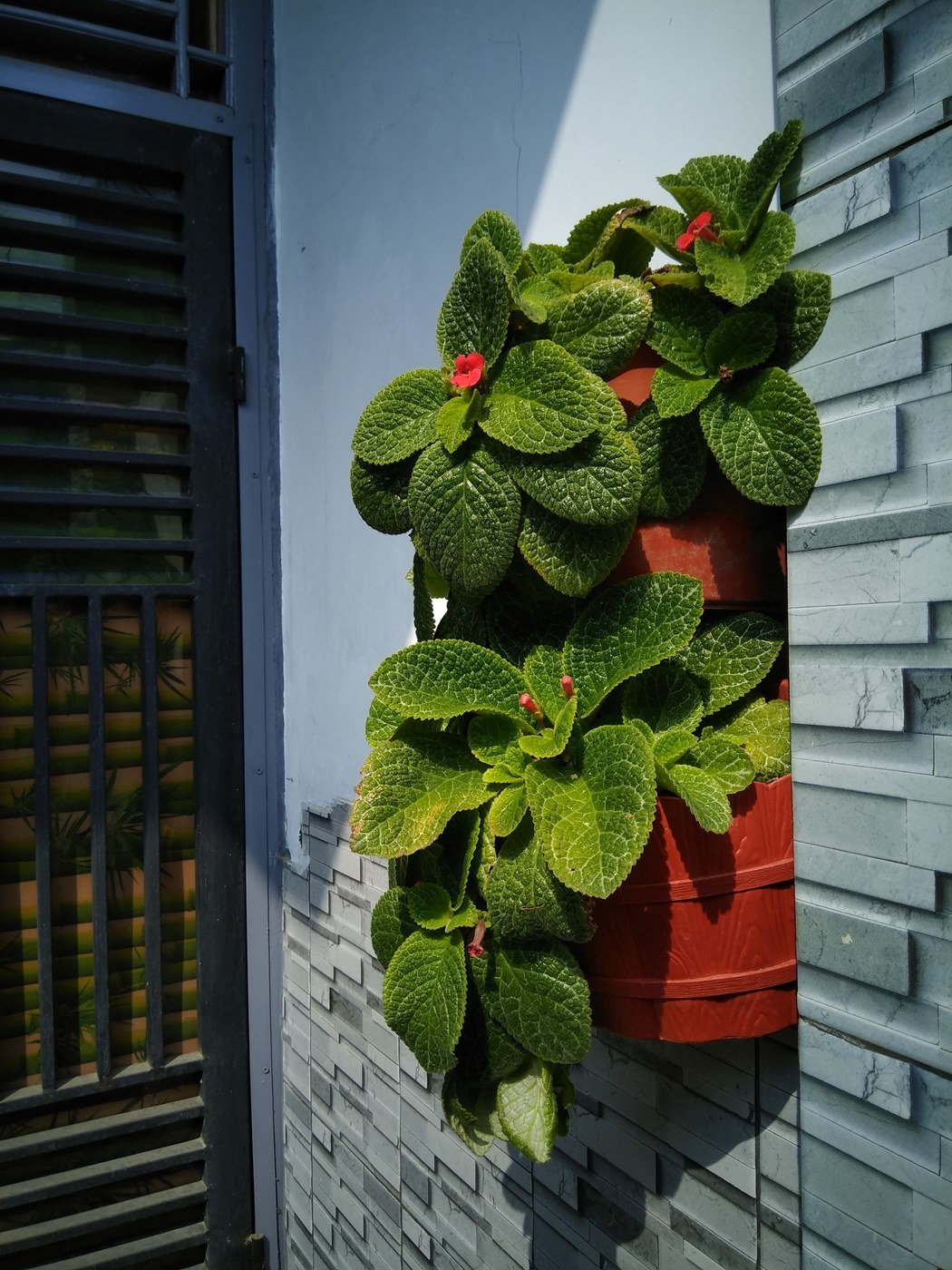
Flame Violet (Episcia cupreata) is a low, trailing tropical gesneriad, a relative of the African violet, grown for its velvety, iridescent copper-and-silver foliage and bright orange-red tubular flowers. It spreads by runners into a lush groundcover or cascading houseplant, and rewards attention to warmth and humidity with continuous color.
Light
Give Flame Violet bright, indirect light. Strong filtered light near an east window, or a few feet back from a brighter one, brings out the richest leaf color and steady bloom. Avoid direct midday sun, which scorches the delicate leaves, while too little light causes leggy stems and poor flowering. It also grows well under fluorescent or LED grow lights.
Water
Keep the soil lightly and evenly moist, never soggy and never bone-dry. Water when the surface just begins to dry, using room-temperature water to avoid shocking the roots. Try to keep water off the velvety leaves, which can spot; water from below or aim at the soil. Reduce watering somewhat in winter when growth slows.
Soil & Potting
Use a light, airy, well-drained mix such as an African violet blend, or peat/coco with perlite. The mix should hold moisture yet drain freely so roots never sit in water. Shallow, wide pots suit its spreading, shallow-rooted habit and give runners room to root.
Humidity & Temperature
Humidity is the key to success. Flame Violet loves high humidity, ideally 50 percent or more, and can be tricky in dry indoor air. Boost humidity with a pebble tray, a nearby humidifier, or a terrarium, but avoid misting the fuzzy leaves directly. Keep it warm and steady, roughly 65-80F, and protect it from cold drafts and temperatures below about 55F.
Feeding
During active growth in spring and summer, feed every two to four weeks with a dilute balanced or bloom-oriented houseplant fertilizer at quarter to half strength. Reduce or stop feeding in the low light of winter.
Propagation
Flame Violet is very easy to propagate. Pin the plantlets that form at the ends of its stolons (runners) onto moist mix and let them root while still attached, then sever. Stem-tip and leaf cuttings also root readily in moist mix or water. Divide crowded plants in spring.
Repotting / Pruning
Repot in spring when the plant fills its pot, moving to a slightly larger shallow container with fresh mix. Pinch stem tips to encourage branching and a fuller shape, and trim leggy or bare runners to keep the plant compact. Removing spent flowers keeps it tidy and encourages more.
Common Problems & Pests
Brown leaf spots usually come from cold water or water sitting on the foliage; leggy growth signals too little light. Watch for mealybugs, aphids, spider mites (common in dry air), and cyclamen mites, which distort new growth. Treat pests with insecticidal soap and keep humidity up. Avoid cold, wet soil, which causes root and crown rot.
Seasonal Care Tips
In spring and summer, water and feed regularly and propagate runners during the active growing season. In fall and winter, ease off on water and fertilizer as growth slows, keep the plant warm and away from cold windows, and maintain humidity against dry heating air.
Frequently asked questions
Why does my Flame Violet have brown spots on the leaves?
Brown spots usually result from cold water or water sitting on the velvety foliage, or from direct sun. Use room-temperature water aimed at the soil, and keep the plant in bright indirect light.
How do I keep Flame Violet blooming?
Provide bright indirect light, warmth, high humidity, and a dilute bloom-oriented feed during the growing season. Too little light is the most common reason for sparse flowering.
Why is my Flame Violet leggy and sparse?
Legginess means the plant needs more light. Move it to a brighter indirect spot or add a grow light, and pinch the stem tips to encourage fuller, bushier growth.
How do I propagate Flame Violet?
The easiest way is to pin its runner plantlets onto moist mix, let them root while still attached, then cut them free. Stem and leaf cuttings also root easily.