
Flame Violet Identification Guide
Identify the Flame Violet (Episcia cupreata), a trailing African-violet relative with velvety, metallic-veined leaves and bright orange-red flowers.
Read the full Flame Violet encyclopedia entry →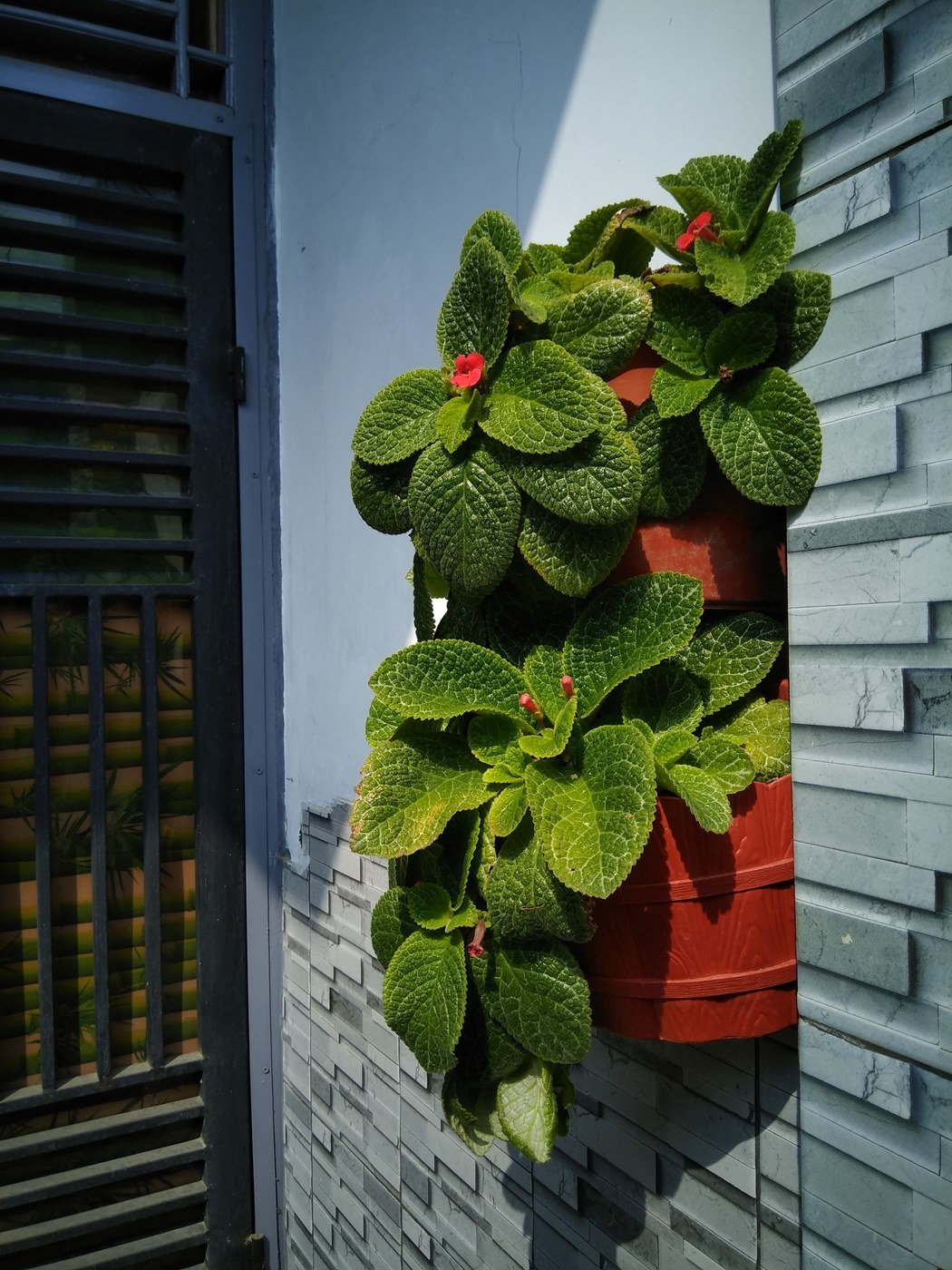
Key Identifying Features
The Flame Violet (Episcia cupreata) is a low, spreading member of the gesneriad family (same family as African violets). It is recognized by velvety, often coppery or silver-veined leaves and small but vivid flame-orange to red tubular flowers.
- Velvety, fuzzy leaves with metallic/coppery sheen
- Silvery or pale veins contrasting the leaf
- Bright orange-red flowers with a tubular throat
- Low, spreading habit with stolons (runners)
Leaves & Stems
Leaves are oval, quilted (puckered), and softly hairy (velvety), typically bronze-green to deep coppery with a network of silvery, pale green, or pink veins that catch the light, hence the species name cupreata ('coppery'). They grow in opposite pairs in low rosettes.
The plant spreads by stolons (runners) that creep outward and root at the tips, much like a strawberry, forming a dense mat or trailing over a basket. Stems are short and the overall form is low and carpeting rather than upright.
Flowers & Fruit
Flowers are small (about 3/4 inch), tubular, and brilliant orange-red with a flared, often fringed face and a yellow eye, appearing among the leaves over a long season. The vivid flowers against velvety dark foliage give the plant its 'flame' name. Some cultivars vary toward pink or red.
How to Tell It Apart from Look-Alikes
- African violet (Saintpaulia): An upright, clumping relative with rounder leaves and purple/pink/white flat-faced flowers; Flame Violet trails on runners and has tubular orange-red blooms and metallic veining.
- Other Episcia cultivars ('Chocolate Soldier', etc.): Same species/genus with varied leaf color; the velvety veined leaf plus runners identifies the group.
- Begonias: May have showy leaves but asymmetrical leaf bases and different flowers; Episcia leaves are symmetrical, quilted, and produce stolons.
Where You'll Find It
Grown as a terrarium, hanging-basket, or warm-windowsill houseplant for its colorful foliage and flowers. Native to Central and South American rainforests, it wants warmth, high humidity, and bright indirect light, and it dislikes cold drafts.
Quick ID Checklist
- Velvety, quilted leaves with silvery/coppery veins
- Spreading runners (stolons) rooting at tips
- Tubular orange-red flowers with yellow eye
- Low, carpeting or trailing habit
- A gesneriad (African-violet relative)
If you see a low, runner-spreading plant with velvety metallic-veined leaves and bright orange-red tubular flowers, it is a Flame Violet.
Frequently asked questions
Is the Flame Violet related to the African violet?
Yes. Both belong to the gesneriad family, but the Flame Violet (Episcia cupreata) trails on runners with velvety coppery, silver-veined leaves and tubular orange-red flowers, while African violets are upright clumps with flat-faced purple, pink, or white blooms.
Why are the leaves described as coppery?
The species name cupreata means 'coppery'. The velvety leaves have a bronze-to-copper sheen overlaid with contrasting silver, pale green, or pink veins that shimmer in light.
How does the Flame Violet spread?
It sends out stolons (runners) that creep outward and root at their tips, much like a strawberry, forming a spreading mat or trailing over a hanging basket.
What conditions does it need?
Warmth, high humidity, and bright indirect light. It is a tropical rainforest plant that dislikes cold drafts and low humidity, which is why it is often grown in terrariums.