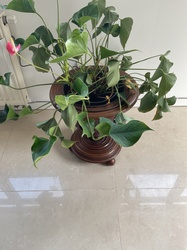
How to Care for Flamingo Flower
Grow glossy, long-lasting Anthurium andraeanum indoors with bright indirect light, an airy chunky mix, and steady warmth and humidity.
Read the full Flamingo Flower encyclopedia entry →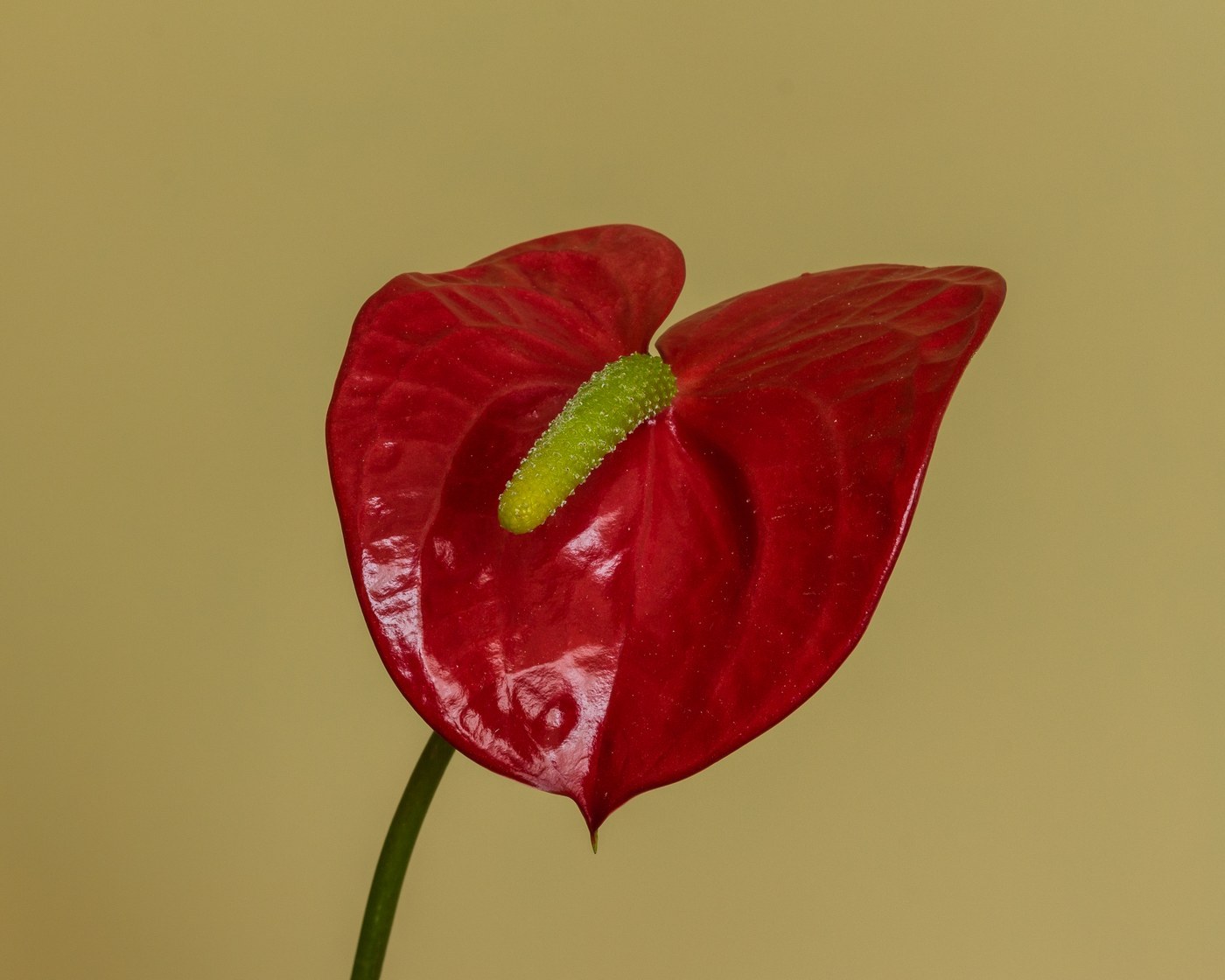
The Flamingo Flower (Anthurium andraeanum) is a tropical epiphyte prized for its lacquered, heart-shaped spathes in red, pink, white, and coral that hold their color for weeks. It is a moderate-difficulty houseplant that rewards steady warmth, humidity, and a light, fast-draining root run.
Light
Give it bright, indirect light near an east or a filtered south or west window. Strong, filtered light drives repeat flowering, while deep shade leaves it green and bloomless. Keep it off unshaded midday glass, where the spathes and leaf edges scorch and fade. A sheer curtain is ideal.
Water
Water when the top inch or two of the mix has dried, then soak thoroughly until it drains and empty the saucer. The goal is lightly moist but never soggy, since the fleshy roots rot quickly in standing water. Let the surface dry between waterings and ease off in winter when growth slows. Use tepid water; cold water shocks the roots.
Soil & Potting
Anthuriums are semi-epiphytic and want a chunky, airy medium rather than dense potting soil. Blend orchid bark, perlite or pumice, and coco coir or peat so water races through and air reaches the roots. A pot with generous drainage holes, only slightly larger than the root mass, prevents the wet-feet conditions that cause decline.
Humidity & Temperature
Humidity above 50 to 60 percent produces the best foliage and flowers; a pebble tray, grouping with other plants, or a humidifier all help. Keep temperatures between 65 and 80 F. Protect it from cold drafts, air-conditioning blasts, and heating vents, and never let it sit below about 55 F, which stalls growth and browns leaves.
Feeding
Feed during spring and summer with a balanced, water-soluble fertilizer diluted to about one quarter to one half strength, roughly every four to six weeks. A formula slightly higher in phosphorus supports flowering. Flush the pot with plain water periodically to clear salt buildup, and stop or reduce feeding in the low-light months.
Propagation
Propagate by division at repotting time: separate healthy offsets or crowns that carry their own roots and a few leaves, and pot each into fresh airy mix. Stem cuttings with an aerial root and node can also be rooted in a chunky medium or moist sphagnum. Keep divisions warm and humid until new growth establishes.
Repotting / Pruning
Repot every two to three years or when roots crowd the pot, moving up just one size in spring. Refresh the airy mix and settle the crown at its previous depth. Pruning is minimal: snip spent flower stalks at the base and remove yellowing or damaged leaves to keep the plant tidy and channel energy into new growth.
Common Problems & Pests
Yellowing leaves usually signal overwatering or poor drainage; brown crispy tips point to dry air or salt buildup. Faded, scorched patches mean too much direct sun, while a plant that never blooms wants brighter indirect light. Watch for aphids, mealybugs, scale, and spider mites, especially in dry indoor air; wipe leaves and treat with insecticidal soap as needed.
Seasonal Care Tips
In spring and summer, water more attentively, resume feeding, and expect the strongest flush of blooms. In fall and winter, cut back on water and fertilizer as light drops, keep the plant well away from cold windows and heat sources, and boost humidity to counter dry indoor heating.
Frequently asked questions
Why won't my Flamingo Flower bloom?
The most common reason is insufficient light. Move it to a spot with bright, indirect light and feed with a bloom-supporting fertilizer in spring and summer. Steady warmth and humidity also encourage repeat flowering.
How often should I water an Anthurium?
Water when the top inch or two of the mix dries out, then soak thoroughly and drain. Aim for lightly moist, never soggy, and water less in winter. The chunky mix should never stay waterlogged.
Why are the leaf tips turning brown?
Brown, crispy tips usually mean the air is too dry or mineral salts have built up. Raise humidity with a pebble tray or humidifier and flush the pot occasionally with plain water to clear salts.
What kind of soil does a Flamingo Flower need?
Use a loose, airy epiphyte mix of orchid bark, perlite or pumice, and some coco coir or peat. This drains fast and gives the fleshy roots the aeration they need to avoid rot.
Flamingo Flower identified by the community
Recent Flamingo Flower specimens identified with Plant Identifier.