Flamingo Flower
Anthurium andraeanum
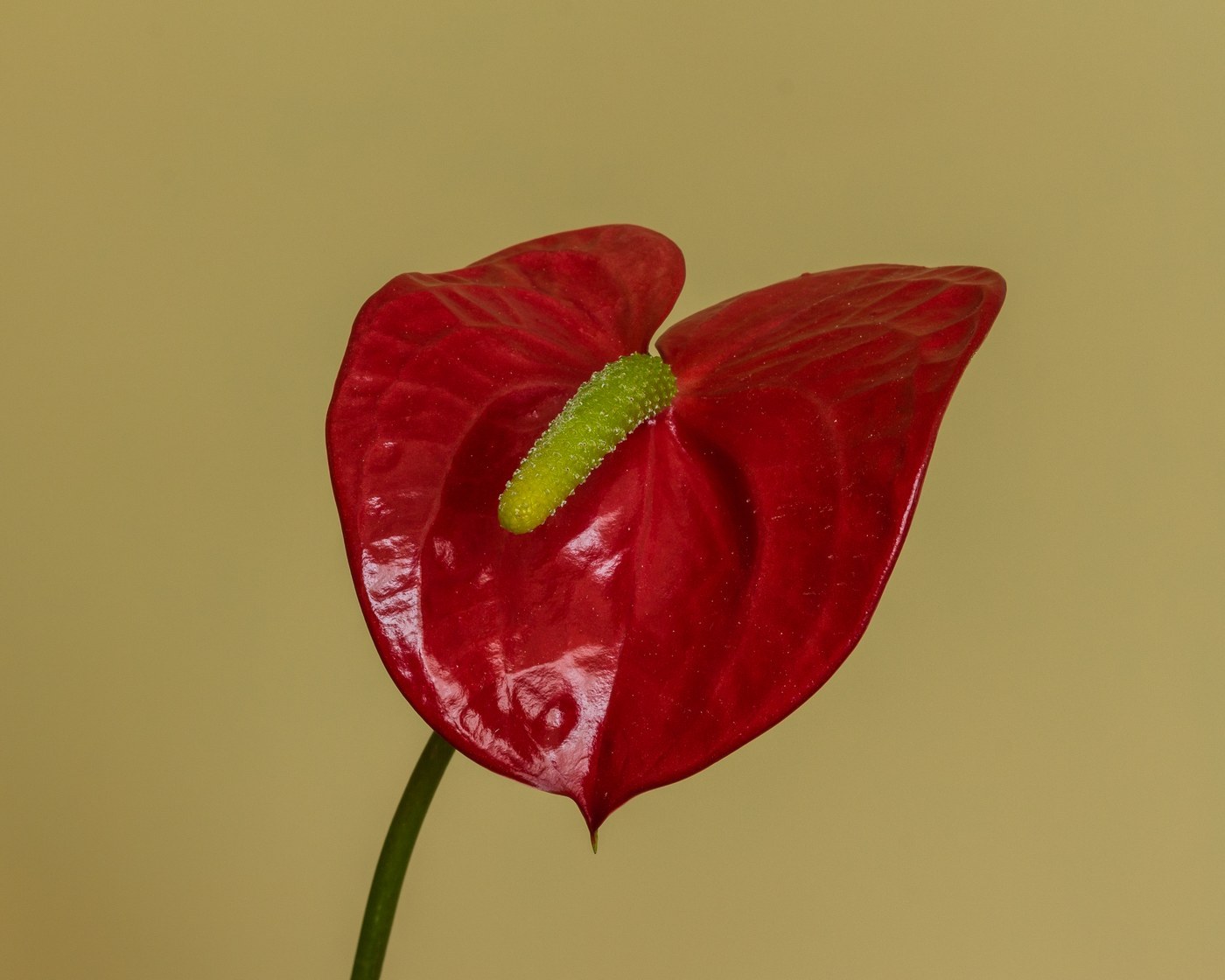
A tropical plant famous for its glossy, heart-shaped red 'flowers' (actually spathes) with a protruding spadix. Long-lasting blooms make it a popular gift plant.
- Light
- Bright indirect light
- Water
- Let topsoil dry; keep lightly moist
- Difficulty
- Moderate
Got a plant like this?
Identify any plant from a photo, free.
Overview
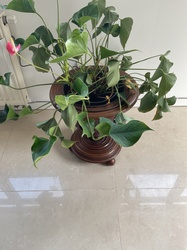
The Flamingo Flower is a tropical evergreen grown for its striking, waxy, heart-shaped spathes and dark, glossy foliage. What looks like a single brilliant petal is actually a modified leaf (the spathe) surrounding a finger-like flower spike called the spadix.
The spathes, most commonly red but also pink, white, orange, or purple, last for weeks and can appear nearly year-round in good conditions. This long-lasting, exotic display makes anthurium a favorite houseplant, gift plant, and cut flower.
How to identify it
Identify it by:
- Spathe: waxy, glossy, heart-shaped, brightly colored (red, pink, white, orange); flat and almost plastic-looking
- Spadix: a straight, finger-like spike (often yellow or white) rising from the spathe, bearing the true tiny flowers
- Leaves: dark green, glossy, heart-shaped, on long stalks
- Habit: upright clump, typically 12-18 in tall indoors
- Bloom: spathes are very long-lasting and may appear most of the year
Care & growing
Light: Bright indirect light encourages blooming; avoid direct sun, which scorches leaves. Too little light reduces flowering.
Water: Let the top inch of soil dry, then water; keep lightly moist but never soggy. Sensitive to overwatering and root rot.
Soil: Loose, chunky, very well-draining mix (orchid-style bark blends work well), reflecting its semi-epiphytic roots.
Temperature: 65-80F (18-27C); warmth-loving and frost-sensitive.
Humidity: High humidity promotes lush growth and blooming.
Feeding: Diluted, phosphorus-containing fertilizer during the growing season to support flowering.
Propagation: By division or stem cuttings with aerial roots.
Habitat & origin
Anthurium andraeanum is native to the tropical rainforests of Colombia and Ecuador, where it grows as an epiphyte or terrestrial plant in warm, humid, shaded conditions.
It is grown worldwide as an indoor flowering houseplant and is cultivated commercially, notably in Hawaii and the Netherlands, as a long-lasting cut flower.
Frequently asked questions
Is the colorful part of an Anthurium really a flower?
Not exactly. The bright, waxy 'flower' is a modified leaf called a spathe; the true tiny flowers are clustered on the finger-like spadix in the center.
Why isn't my Flamingo Flower blooming?
Most often too little light. Move it to bright indirect light and feed with a phosphorus-rich fertilizer to encourage spathes.
Why are the leaf tips turning brown?
Browning often comes from low humidity, overwatering, or fertilizer/salt buildup. Raise humidity, let the topsoil dry between waterings, and flush the soil occasionally.
Flamingo Flower guides
In-depth guides for identifying, growing, and caring for Flamingo Flower.
How to Care for Flamingo Flower
Grow glossy, long-lasting Anthurium andraeanum indoors with bright indirect light, an airy chunky mix, and steady warmth and humidity.
Flamingo Flower Identification Guide
Identify Anthurium andraeanum by its glossy, heart-shaped leaves and waxy red, pink, or white spathes with a protruding yellow spadix.
Flamingo Flower identified by the community
Real specimens identified with Plant Identifier.