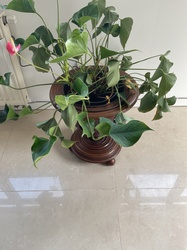
Flamingo Flower Identification Guide
Identify Anthurium andraeanum by its glossy, heart-shaped leaves and waxy red, pink, or white spathes with a protruding yellow spadix.
Read the full Flamingo Flower encyclopedia entry →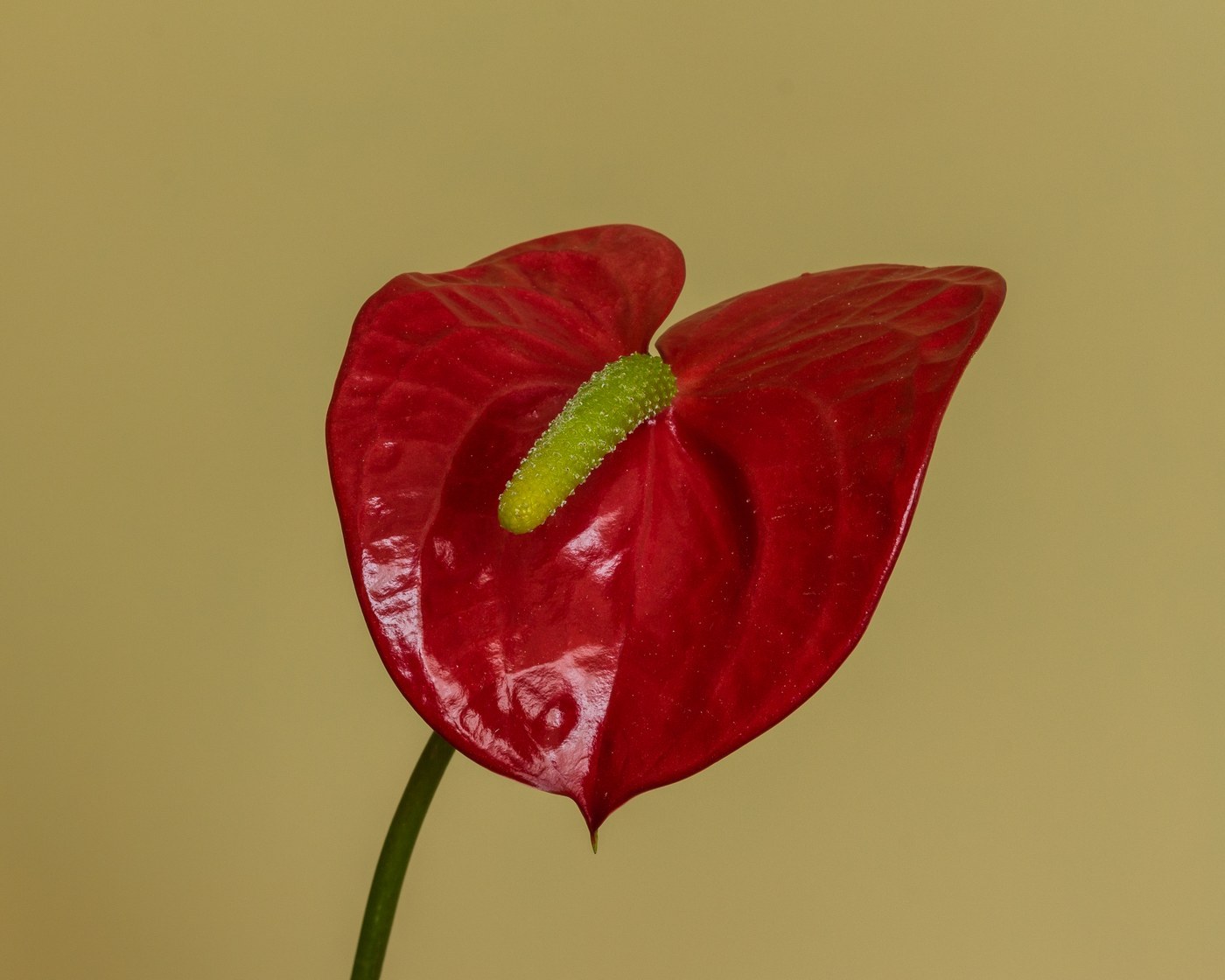
Key Identifying Features
The Flamingo Flower (Anthurium andraeanum), also called flamingo lily or painter's palette, is famous for its glossy, waxy, heart-shaped colored bract (spathe) with a straight or curved spadix sticking out of the center.
- Heart-shaped, lacquered spathe in red, pink, white, coral, or burgundy
- A finger-like spadix (yellow, cream, or white) projecting from the spathe
- Dark green, glossy, heart-shaped leaves on long stalks
- Upright, clumping habit, typically 30-45 cm tall as a houseplant
Leaves & Stems
Leaves are heart-shaped (cordate), leathery, and very glossy, deep green, held on long upright petioles that emerge from a short central stem. The leaf tip tapers to a point and the surface looks polished. Veins are prominent and slightly sunken. New leaves unfurl from the crown.
The "flower" the public sees is actually a modified leaf (spathe), which is smooth, waxy, and often puckered/heart-shaped. It is this glossy artificial-looking bract, not true petals, that identifies the plant. Anthurium belongs to the arum family (Araceae).
Flowers & Fruit
The true flowers are tiny and packed onto the spadix, the central tail-like spike. As they mature the spadix may show a faint spiral of bumps and can change color along its length. The colorful spathe is a bract that attracts pollinators and lasts for weeks. Pollinated spadices can develop small berry-like fruits. The spadix-plus-spathe structure is the unmistakable signature of an aroid like Anthurium.
How to Tell It Apart from Look-Alikes
- Peace lily (Spathiphyllum) also has a spathe and spadix, but its spathe is thin, matte, and white/green, not the thick waxy red of flamingo flower, and its leaves are lance-shaped, not heart-shaped.
- Other anthuriums (A. clarinervium, bird's-nest types) are grown for foliage and have velvety or large strap leaves without the showy red spathe.
- Calla lily has a funnel-shaped spathe and arrow leaves, different habit.
- The stiff, glossy, heart-shaped colored spathe with a protruding straight spadix is diagnostic for A. andraeanum.
Where You'll Find It
Native to Colombia and Ecuador, growing as an epiphyte/terrestrial in humid tropical forests. Grown worldwide as a flowering houseplant and cut flower, prized because the spathes last for weeks. Indoors it wants warmth, humidity, and bright indirect light.
Quick ID Checklist
- Waxy, heart-shaped colored spathe (red/pink/white)
- Finger-like spadix protruding from center
- Glossy, dark green heart-shaped leaves
- Long upright leaf stalks from a central crown
- Long-lasting 'flowers' (really bracts)
Frequently asked questions
Is the red part actually a flower?
No. The glossy red heart-shaped part is a modified leaf called a spathe. The true flowers are the tiny bumps packed along the central tail-like spadix.
How do I tell a flamingo flower from a peace lily?
Flamingo flower has a thick, waxy, glossy spathe usually in red, pink, or white with heart-shaped leaves, while peace lily has a thin, matte white spathe and lance-shaped leaves.
Why does the spadix change color or texture?
As the tiny true flowers on the spadix mature, the spike can shift color and develop a slightly bumpy or spiraled texture. This is a normal part of the bloom cycle.
How do I recognize the leaves of a flamingo flower?
Look at the leaves: flamingo flower has glossy, leathery, heart-shaped (cordate) leaves on long upright stalks emerging from a central crown, with prominent slightly sunken veins, which together with the waxy spathe confirm the plant.
Flamingo Flower identified by the community
Recent Flamingo Flower specimens identified with Plant Identifier.