
How to Care for Flapjack Plant
Grow the flapjack plant (Kalanchoe luciae) with its stacked paddle leaves that blush red in bright light and lean dry care.
Read the full Flapjack Plant encyclopedia entry →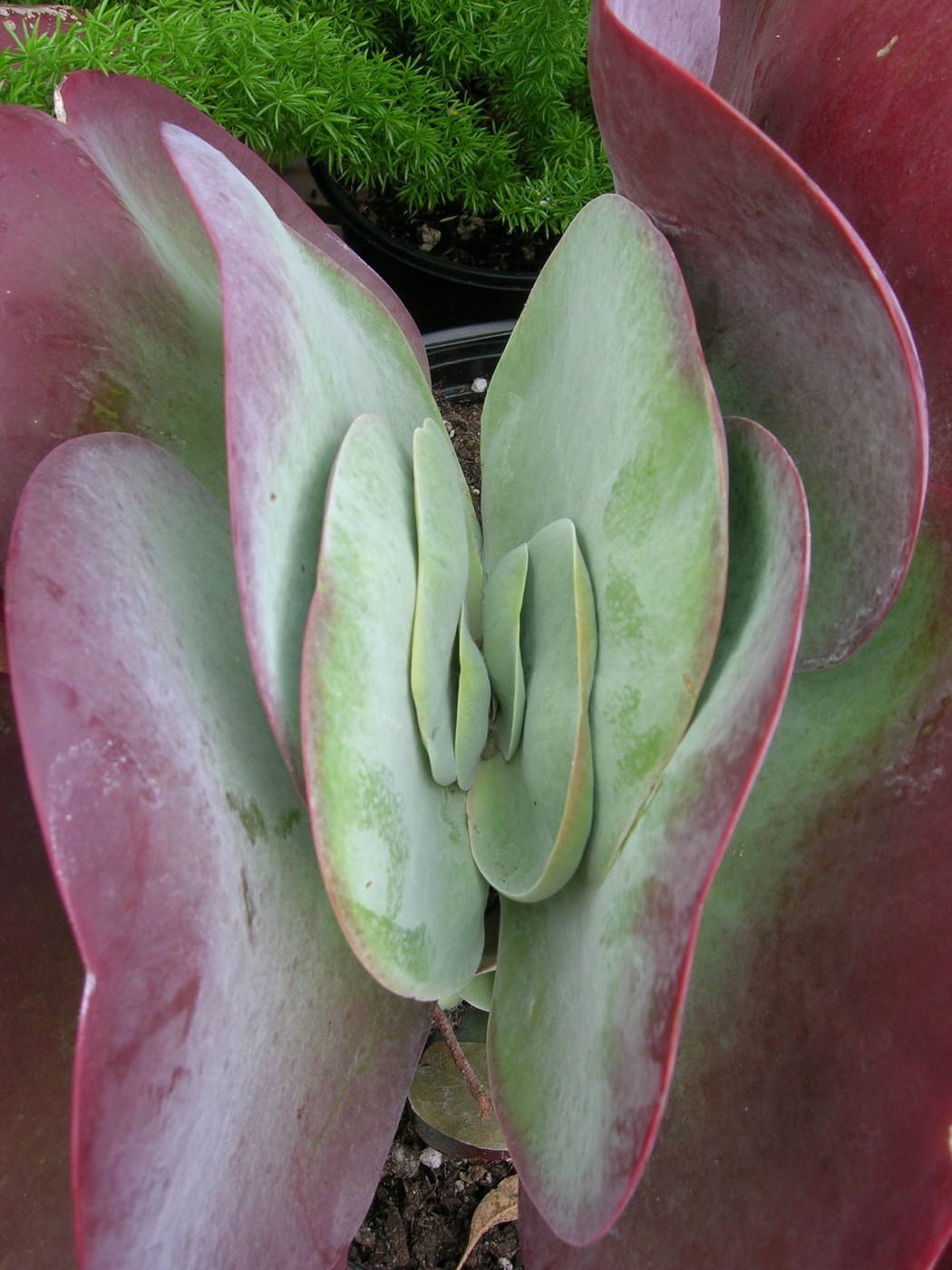
The flapjack plant (Kalanchoe luciae) is an easygoing rosette succulent prized for broad, clam-shell leaves that stack like pancakes and flush crimson at their margins under strong light. It is a forgiving choice for sunny windowsills and warm patios.
Light
Give this plant the brightest spot you can offer. Bright light to full sun brings out the signature red-edged blush; in dim conditions the leaves stay flat green and the rosette stretches and leans. Indoors, a south- or west-facing window is ideal. Outdoors, acclimate it gradually to direct sun over a week or two so the paddles do not scorch before they harden off.
Water
Water sparingly and let the soil dry out completely between drinks. In the growing season, a thorough soak every couple of weeks is usually plenty; in winter, cut back further. The thick leaves store their own reserves, so err on the dry side. Never let the pot sit in standing water, and always tip out the saucer after watering.
Soil & Potting
Use a fast-draining cactus and succulent mix, or amend regular potting soil with generous coarse sand, perlite, or pumice so water races through. Plant in a container with drainage holes; terracotta is a good match because it wicks moisture from the mix. A snug pot suits this plant better than an oversized one that stays wet.
Humidity & Temperature
Average-to-dry household air is perfect, and this plant dislikes damp, stagnant conditions. It thrives in warmth and is frost-tender, so keep it above roughly 50 F (10 C) and bring it indoors before cold nights arrive. Good airflow around the rosette helps keep the leaves firm.
Feeding
Feed lightly. A diluted, low-nitrogen succulent fertilizer once or twice during spring and summer is ample. Skip feeding entirely in fall and winter when growth slows. Over-fertilizing produces soft, weak growth and dulls the leaf coloring.
Propagation
The flapjack multiplies readily from offsets that form around the base of a mature rosette; separate these pups and pot them up once they have a few roots. You can also root individual leaves or stem cuttings: let the cut end callous for a day or two, then set it on barely moist succulent mix and wait for roots before watering normally.
Repotting / Pruning
Repot only every two to three years or when a rosette outgrows its pot. After a mature rosette blooms it naturally declines, so remove the spent flower stalk and let the surrounding offsets take over. Little pruning is needed beyond tidying old or damaged lower leaves.
Common Problems & Pests
The most frequent problem is overwatering, which leads to soft, translucent, rotting leaves at the base; correct it by drying out the mix and improving drainage. A powdery white coating on the leaves is natural bloom (a protective wax) and should be left undisturbed. Watch for mealybugs tucked into leaf joints and the occasional aphid on flower stalks, and wipe or spot-treat them promptly.
Seasonal Care Tips
Spring and summer are the active season for watering and light feeding. In fall, reduce water and stop fertilizing to help the plant firm up before winter. Over winter, keep it bright, cool, and mostly dry, protecting it from frost. The best red leaf color develops in cooler, sunny months.
Frequently asked questions
Why are my flapjack plant's leaves turning red?
Red or maroon leaf margins are a healthy response to strong light and cooler temperatures. It signals the plant is getting the bright exposure it loves; in low light the leaves stay plain green.
How often should I water a flapjack plant?
Water only when the soil has dried out completely, roughly every two weeks in summer and much less in winter. The thick paddle leaves store moisture, so under-watering is far safer than overwatering.
Why is my flapjack plant stretching and leaning?
Stretched, leaning growth means it is not getting enough light. Move it to your brightest window or acclimate it to more direct sun so the rosette stays compact.
My flapjack rosette flowered and then started dying. Is that normal?
Yes. A mature rosette is monocarpic, meaning it naturally declines after blooming. Remove the spent flower stalk and let the offsets that form at the base carry on as replacements.