
How to Care for Flapjack Succulent
Flapjack Succulent forms sculptural stacks of round, paddle-shaped leaves that blush red in bright light — easy, drought-tolerant, and striking.
Read the full Flapjack Succulent encyclopedia entry →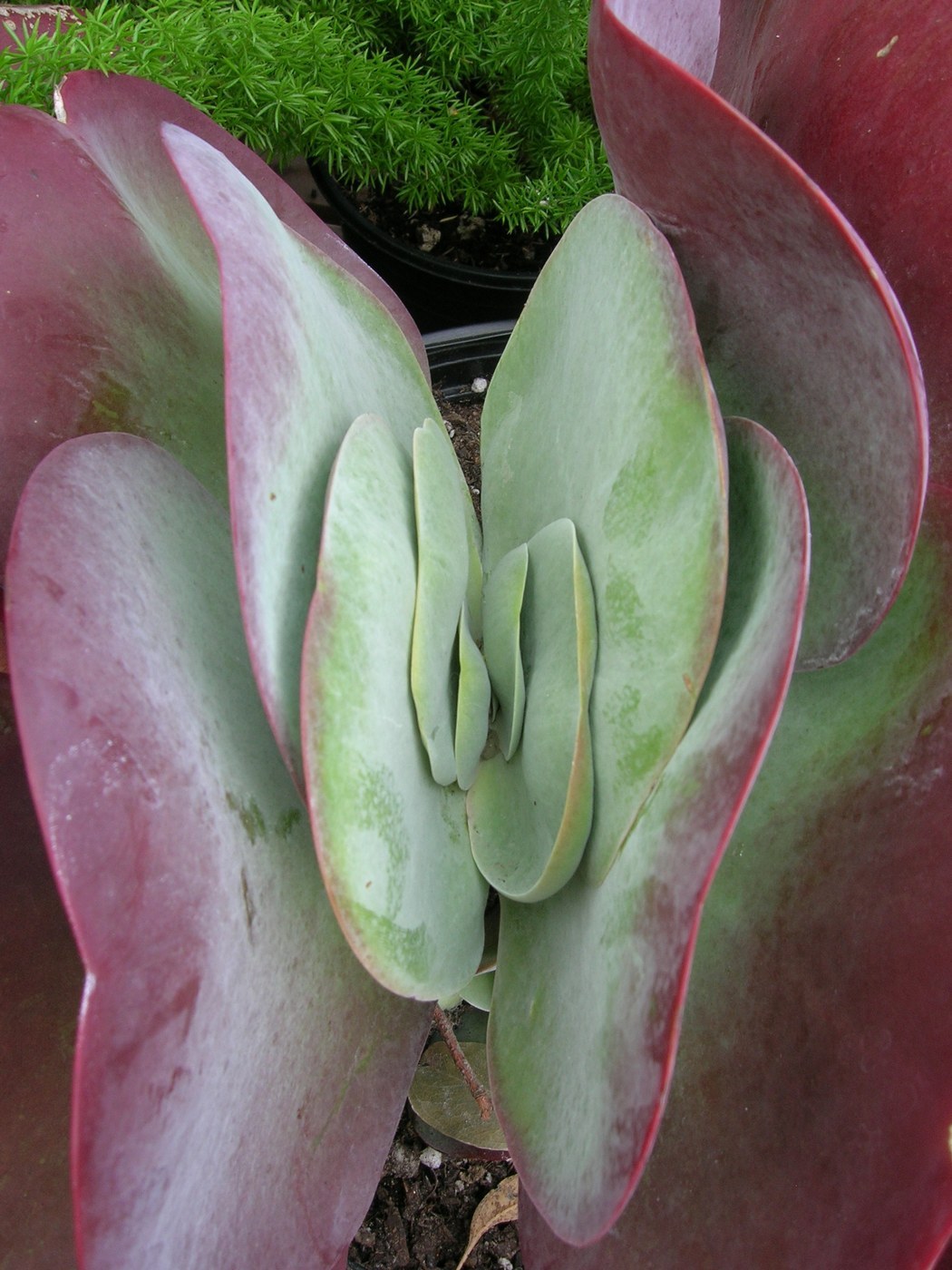
Flapjack Succulent (Kalanchoe luciae), also called paddle plant, is a striking succulent grown for its rosettes of flat, rounded, paddle-shaped leaves that flush vivid red along their margins in bright light. It is an easy, low-water plant that thrives on sun and sharp drainage.
Light
Bright light with some direct sun brings out the plant's best form and its signature red blushing on the leaf edges. Give it several hours of direct sun outdoors, or the brightest possible windowsill (south- or west-facing) indoors. In too little light the leaves stay plain green, stack loosely, and the rosette stretches and flops. When moving a plant into stronger sun, acclimate it gradually to avoid scorching the leaves.
Water
Water every two to three weeks, allowing the soil to dry out completely between waterings — this is a drought-tolerant plant that stores water in its thick leaves. Water thoroughly, letting excess drain away, then wait until the soil is fully dry again. Reduce watering further in winter when growth slows. Overwatering and soggy soil are the quickest way to rot the plant, so always err on the dry side.
Soil & Potting
Use a gritty, fast-draining succulent or cactus mix, ideally amended with extra perlite, pumice, or coarse sand. The single most important factor is drainage — the roots must never sit in water. Always plant in a container with drainage holes; unglazed terracotta is ideal because it wicks away excess moisture. A slightly snug pot is fine.
Humidity & Temperature
Flapjack prefers warm, dry conditions and low to moderate humidity. It is frost-sensitive and best kept above about 50°F (10°C); it is generally hardy outdoors only in USDA zones 9–11. In colder climates grow it in a container that can be moved indoors before frost. It tolerates heat well and appreciates good air circulation.
Feeding
Feed sparingly — succulents need little fertilizer. Apply a diluted, balanced or low-nitrogen succulent fertilizer once or twice during the spring and summer growing season. Do not feed in autumn and winter when the plant is resting. Over-feeding produces soft, weak growth and dulls the leaf coloration.
Propagation
Flapjack is easily propagated from leaf cuttings, stem cuttings, or offsets. Remove a healthy leaf or take a stem cutting, let the cut end callus over for a few days, then set it on or in barely moist, well-draining mix; roots and new plantlets form in a few weeks. Mature plants also produce offsets (pups) around the base that can be separated and potted individually. The plant is monocarpic — a rosette dies after flowering — so propagating offsets ensures a continuing supply.
Repotting / Pruning
Repot every couple of years or when the plant outgrows its container, moving up one pot size in spring using fresh, gritty mix; let it settle a few days before watering. Little pruning is needed — remove dead or damaged lower leaves and, if the plant sends up a tall flower spike, you may leave it to bloom (knowing the flowering rosette will then decline) or cut it off to redirect energy into offsets. Remove and pot up offsets as they appear to keep the display going.
Common Problems & Pests
The most common problem is overwatering, which causes soft, translucent, yellowing leaves and root or stem rot — correct it with drier conditions and better drainage. Insufficient light causes stretching and loss of red color. Watch for mealybugs (white cottony clusters in leaf crevices) and occasionally aphids or scale; treat with insecticidal soap or by dabbing with alcohol. Sudden intense sun can scorch leaves that were not acclimated.
Seasonal Care Tips
Spring: Resume regular watering and light feeding as growth picks up; repot and take cuttings now. Summer: Provide bright light, water when the soil dries fully, and enjoy the deep red leaf margins; watch for mealybugs. Autumn: Begin reducing watering and stop feeding as growth slows; move outdoor plants indoors before the first frost. Winter: Keep on the dry side in a bright, cool spot, protect from frost, and expect little to no growth until spring.
Frequently asked questions
How do I get the red color on my Flapjack Succulent?
The red blush on the leaf margins is brought out by strong light and some direct sun. In low light the leaves stay plain green, so move the plant to the brightest spot you can, acclimating it gradually to avoid scorch.
How often should I water a Flapjack Succulent?
Roughly every two to three weeks, letting the soil dry out completely between waterings, and even less in winter. It stores water in its thick leaves, so overwatering is the main cause of failure.
My Flapjack sent up a tall stalk with flowers — is that bad?
The plant is monocarpic, meaning the flowering rosette naturally declines after it blooms. This is normal; simply propagate the offsets that form around the base to keep new plants coming, or cut off the flower spike early to delay it.
Why are the leaves on my Flapjack turning soft and yellow?
Soft, translucent, yellowing leaves usually signal overwatering and possible rot. Let the soil dry out fully, ensure the pot drains freely, and switch to a gritty succulent mix if the current soil holds too much water.