Flapjack Succulent
Kalanchoe luciae
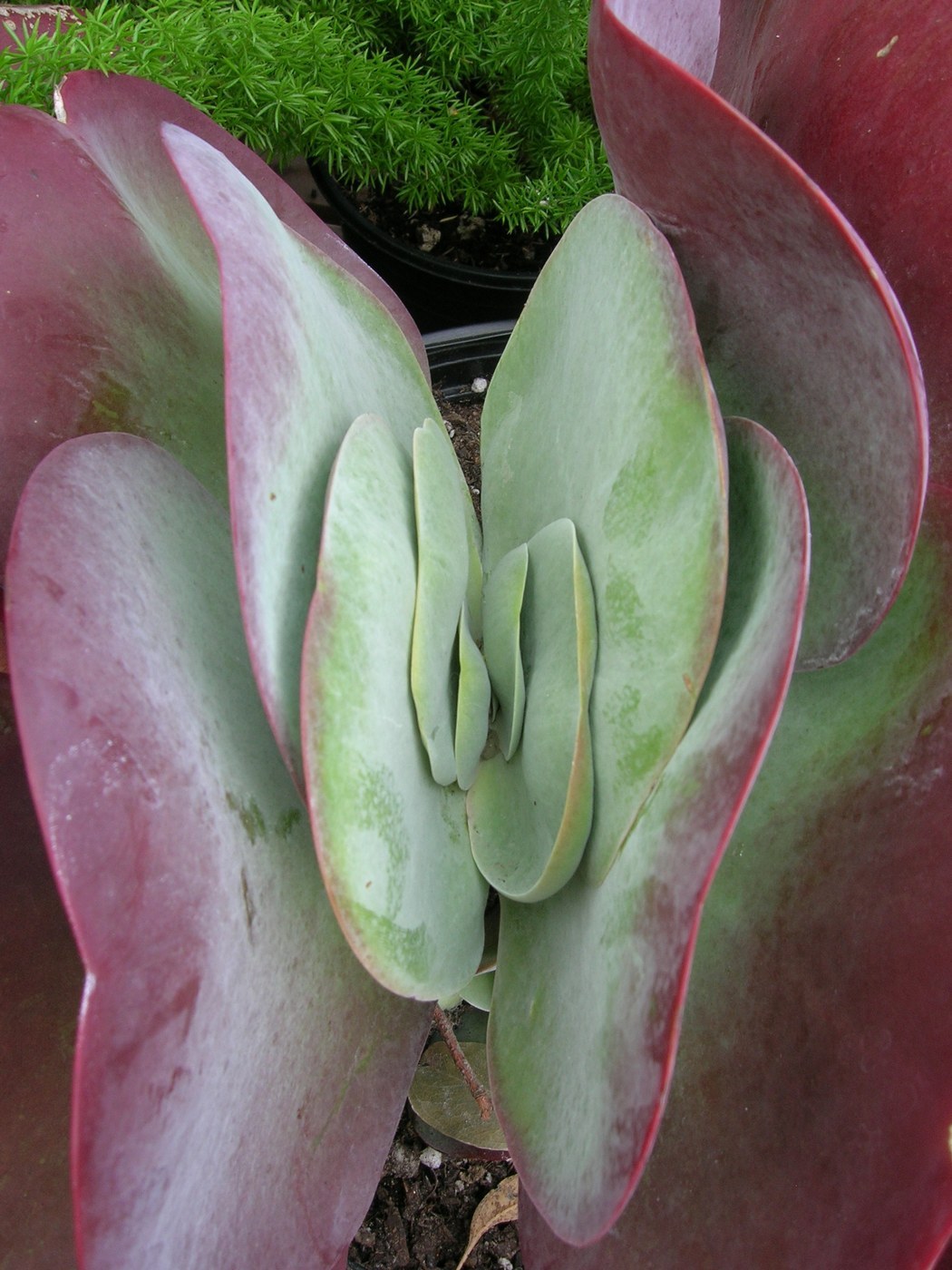
A striking succulent with large, flat, paddle-shaped leaves that flush vivid red along their edges in bright sun and cool weather. It forms rosettes that resemble a stack of pancakes, giving it the name flapjack.
- Light
- Bright light with some direct sun
- Water
- Every 2-3 weeks; let soil dry out
- Difficulty
- Easy
Got a plant like this?
Identify any plant from a photo, free.
Overview
Flapjack Succulent is grown for its bold, rounded leaves stacked in a clamshell rosette. In strong light and cooler temperatures the leaf margins blush a brilliant red, creating a dramatic contrast with the chalky green centers.
It is frequently sold as both Kalanchoe luciae and the very similar Kalanchoe thyrsiflora; the two are often confused in the trade. It is a low-maintenance, eye-catching plant for sunny windowsills, containers, and frost-free gardens.
Like many kalanchoes, it is monocarpic in the sense that an individual rosette dies after flowering, but it typically produces offsets that carry on.
How to identify it
Key identifying features:
- Leaves: Large, flat, paddle- or clamshell-shaped, often coated in a powdery white bloom (farina)
- Color: Pale green to gray-green with red-flushed margins that intensify in sun and cold
- Habit: Forms a basal rosette resembling stacked pancakes; usually 1-2 feet tall in bloom
- Flowers: Tall spike of small, fragrant, pale yellow tubular flowers (mainly on K. luciae); the rosette dies after flowering
- Offsets: Produces pups around the base
Care & growing
- Light: Bright light with several hours of direct sun to develop the best red coloring
- Water: Allow soil to dry completely between waterings; roughly every 2-3 weeks, less in winter
- Soil: Gritty, fast-draining cactus or succulent mix
- Temperature: Warm season growth; protect from frost (hardy to about USDA zone 9b-10)
- Feeding: Occasional diluted succulent fertilizer in the growing season
- Propagation: Easiest by separating offsets; also from leaf cuttings, though slower
Habitat & origin
Native to southern and eastern Africa, including South Africa, where it grows on rocky slopes and well-drained, sunny terrain.
It is widely cultivated as a houseplant and as an ornamental in dry, frost-free gardens worldwide, valued for its sculptural form and drought tolerance.
Frequently asked questions
Why aren't the leaves turning red?
Red coloring develops with strong light and cooler temperatures. In low light the plant stays pale green and may stretch.
My plant sent up a tall spike and is dying. Why?
It is flowering. The mother rosette naturally dies after blooming, but it usually leaves behind offsets you can grow on.
Is the white coating on the leaves a problem?
No. That powdery bloom (farina) is a natural protective coating. Avoid rubbing it off, as it helps shield the plant from sun.
Flapjack Succulent guides
In-depth guides for identifying, growing, and caring for Flapjack Succulent.
How to Care for Flapjack Succulent
Flapjack Succulent forms sculptural stacks of round, paddle-shaped leaves that blush red in bright light — easy, drought-tolerant, and striking.
Flapjack Succulent Identification Guide
How to identify the Flapjack or Paddle Plant (Kalanchoe luciae / thyrsiflora) by its stacked, round, red-edged paddle leaves and rosette form.