
Floss Flower Identification Guide
Identify Floss Flower (Ageratum) by its fuzzy, thread-like blue-purple powder-puff flower clusters and soft heart-shaped leaves.
Read the full Floss Flower encyclopedia entry →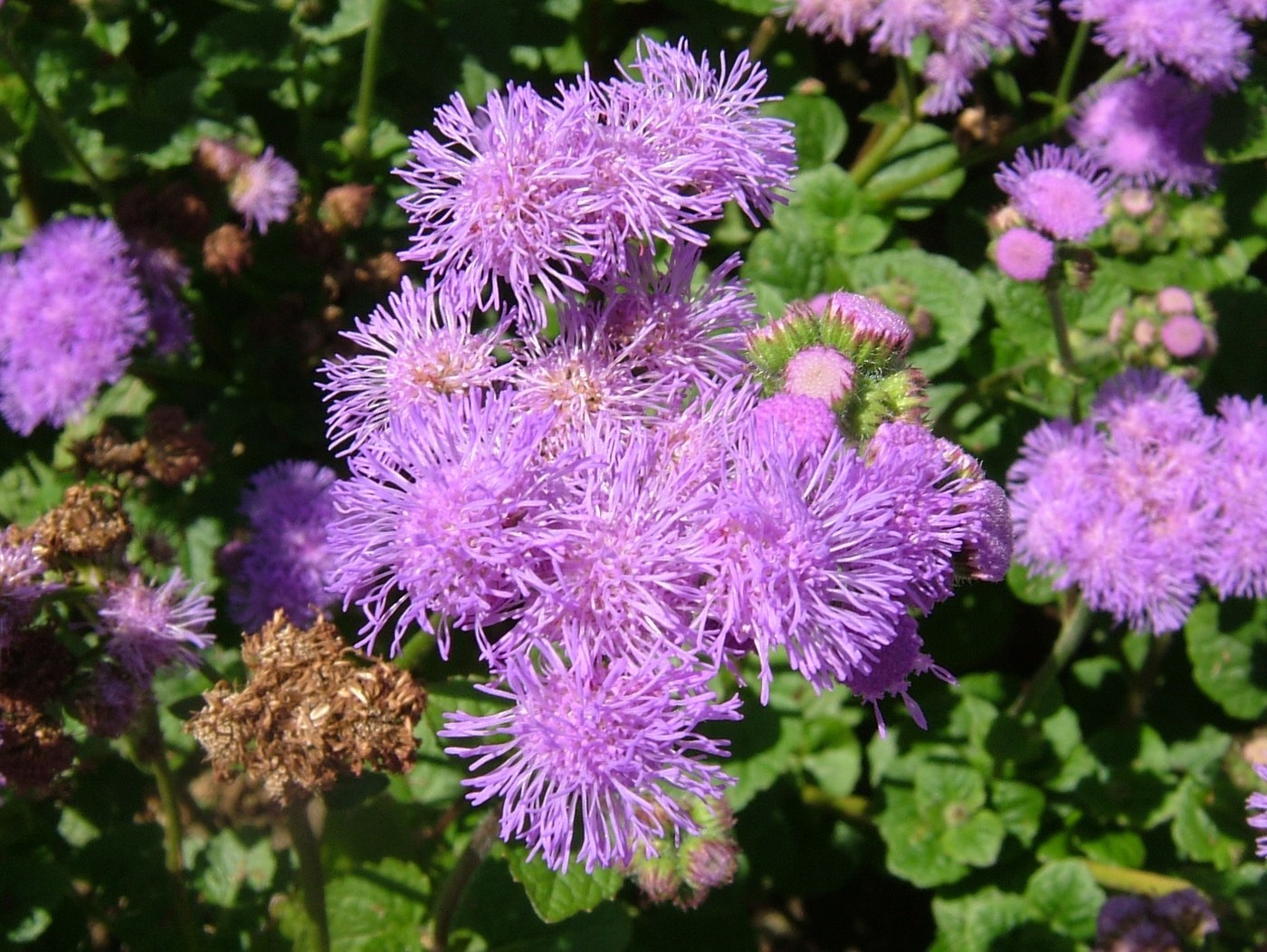
Key Identifying Features
Floss Flower (Ageratum houstonianum) is a low, mounding warm-season annual famous for its soft, fluffy flower clusters that look like tufts of colored floss or powder puffs. It is one of the few annuals offering true blue and lavender-blue tones.
- Compact, mounding habit, typically 6-18 in (15-45 cm) tall
- Flower heads made of fine, thread-like filaments giving a fuzzy texture
- Blooms in tight clustered domes at the stem tips
- Colors: blue, lavender-purple, pink, and white
- No ray petals — the fuzziness comes from the protruding flower parts
Leaves & Stems
Leaves are opposite (sometimes alternate above), oval to heart-shaped (cordate), 1-3 in long, with scalloped or softly toothed margins and a slightly wrinkled, soft-hairy surface. They are dull green and somewhat hairy. Stems are slender, hairy, and branching, forming a rounded cushion of foliage topped by the flower clusters.
Flowers & Fruit
Floss flower belongs to the aster family, but unlike most daisies it has no strap-shaped ray petals. Instead each small flower head is packed with disc florets whose thread-like styles protrude, creating the characteristic fuzzy, fringed look. Heads are grouped into flat-topped or domed clusters. Seeds are tiny, dark achenes with a small bristly pappus, typical of the family.
How to Tell It Apart from Look-Alikes
- Mistflower / hardy ageratum (Conoclinium coelestinum): a perennial native look-alike with nearly identical fuzzy blue clusters, but it is taller, spreads by rhizomes, and blooms in late summer/fall; floss flower is a compact bedding annual.
- Verbena: also forms clustered flower heads but each floret has five flat lobes, not a fuzzy fringe.
- The soft, threadlike, ray-less fuzzy blue flower head plus heart-shaped scalloped leaves is the giveaway.
Where You'll Find It
Floss flower is a classic edging, mass-bedding, and container plant, valued for steady blue color all summer in full sun to part shade. Dwarf cultivars are most common in beds. It prefers moist, fertile soil and attracts butterflies. The taller cut-flower types appear in cottage and pollinator gardens.
Quick ID Checklist
- Compact mounding annual under ~18 in
- Fuzzy, thread-like powder-puff flower clusters
- Blue, lavender, pink, or white blooms with no ray petals
- Soft, heart-shaped, scallop-edged opposite leaves
- Slender hairy branching stems
- Long summer bloom, loved by butterflies
Frequently asked questions
Why do floss flowers look fuzzy?
Each flower head lacks the strap-shaped petals of a typical daisy. Instead, the thread-like styles of many tiny disc florets protrude, creating a soft, fringed, powder-puff texture.
Is floss flower the same as hardy ageratum?
Not exactly. The annual floss flower is Ageratum houstonianum. Hardy ageratum or mistflower (Conoclinium coelestinum) is a taller, rhizome-spreading perennial native with very similar blue flowers.
What color is most distinctive for floss flower?
Its true blue and lavender-blue shades are unusual among bedding annuals, making the fuzzy blue clusters one of the easiest ways to spot it in a garden.
Are the leaves a useful ID clue?
Yes. The opposite, oval to heart-shaped leaves with scalloped or softly toothed edges and a soft hairy surface help confirm floss flower alongside the fuzzy blooms.