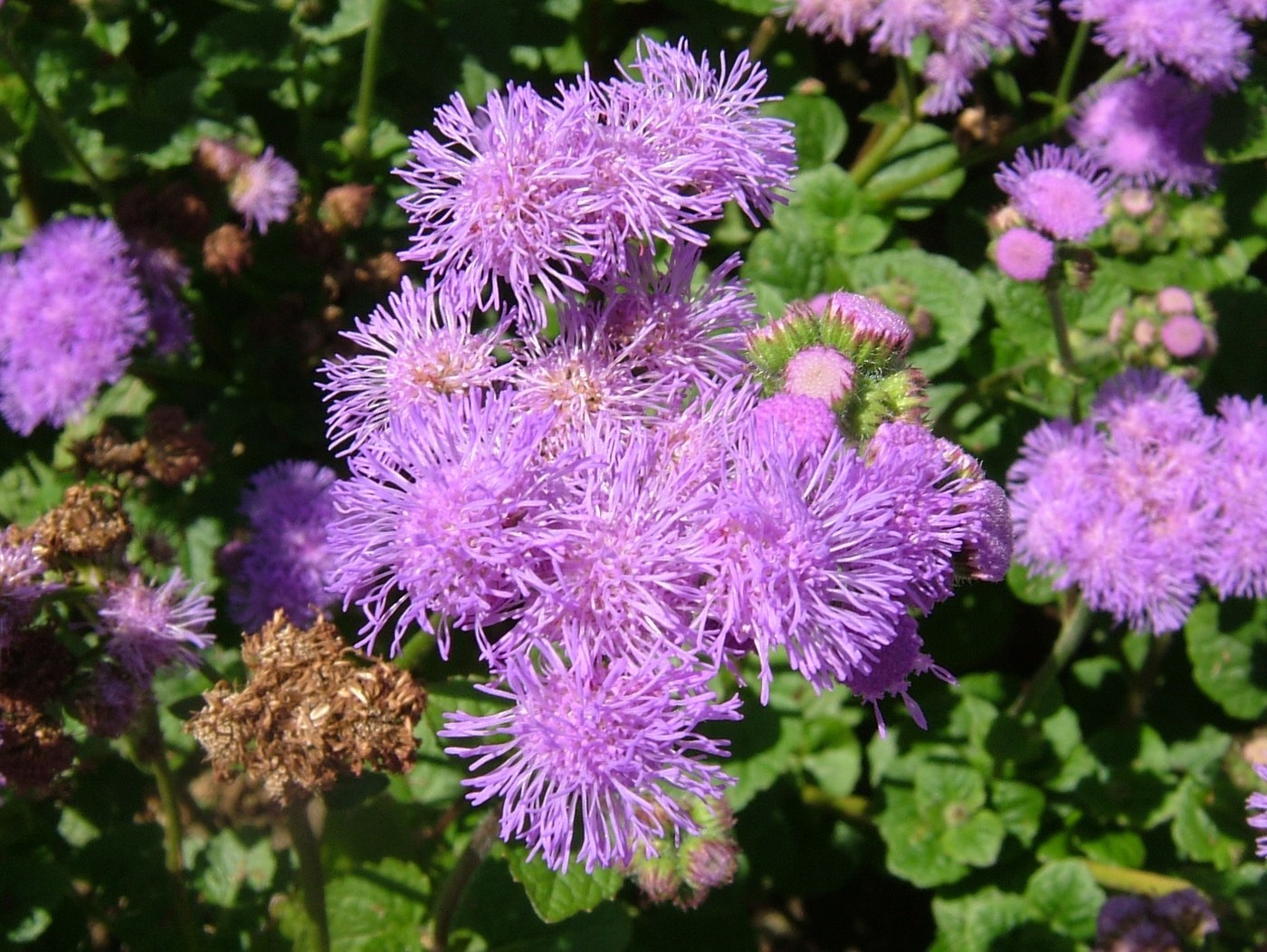
Floss Flower
Ageratum houstonianum
Floss flower is a compact annual covered in fluffy, thread-like clusters of blue, lavender, pink, or white blooms that flower nonstop all summer.
- Light
- Full sun to part shade
- Water
- Moderate; keep evenly moist
- Difficulty
- Easy
Got a plant like this?
Identify any plant from a photo, free.
Overview
Floss flower, commonly called ageratum, earns its name from its soft, fuzzy flower clusters that look like tufts of colored floss. It is one of the few annuals offering a true, clear blue, making it especially popular for cool color schemes.
Most garden types are low, mounded, and tidy, blooming continuously from late spring to frost. The fluffy heads have no central eye, giving a uniform, powder-puff texture that pairs beautifully with brighter flowers.
How to identify it
- Habit: Mounded and compact, 6-12 in (taller in cut-flower types)
- Flowers: Fluffy, thread-like clusters with no visible center
- Colors: Blue, lavender, purple, pink, white
- Leaves: Soft, heart-shaped to oval, slightly fuzzy, green
- Bloom time: Late spring through frost
Care & growing
Light: Full sun for densest bloom; tolerates light afternoon shade in hot climates.
Water: Keep evenly moist; it dislikes drying out completely.
Soil: Rich, well-drained soil.
Temperature: A warm-season annual; plant out after frost.
Feeding: Feed lightly through the season for continuous bloom.
Propagation: From seed surface-sown in warmth (needs light to germinate); deadhead to keep it tidy and blooming.
Habitat & origin
Ageratum houstonianum is native to Mexico, Central America, and the Caribbean.
It is grown worldwide as a bedding and edging annual, and in warm regions it can naturalize and even become weedy. It is widely used in mass plantings, borders, and containers.
Frequently asked questions
Why are my ageratum plants getting leggy and flopping?
Too much shade or overly rich, wet soil can cause floppy growth. Give it full sun and deadhead regularly to keep it compact.
What color is floss flower?
It is famous for true blue and lavender shades, but also comes in pink and white.
Do I need to deadhead floss flower?
Deadheading is not strictly required for newer self-cleaning types, but removing spent clusters keeps plants neat and encourages more bloom.
Floss Flower guides
In-depth guides for identifying, growing, and caring for Floss Flower.
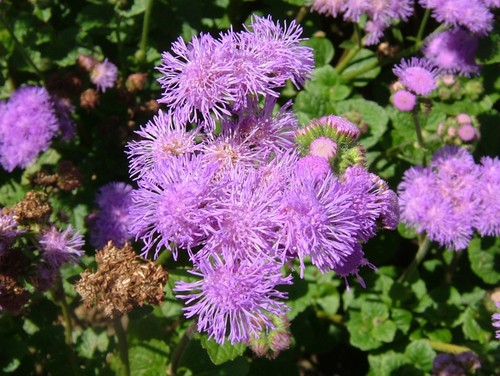
How to Care for Floss Flower
Grow floss flower (Ageratum houstonianum) with these easy tips for fluffy blue blooms, steady moisture, and a long summer display.
Floss Flower Identification Guide
Identify Floss Flower (Ageratum) by its fuzzy, thread-like blue-purple powder-puff flower clusters and soft heart-shaped leaves.