How to Care for Flowering Almond
Grow flowering almond (Prunus glandulosa), an easy deciduous shrub prized for its clouds of pink spring blossoms.
Read the full Flowering Almond encyclopedia entry →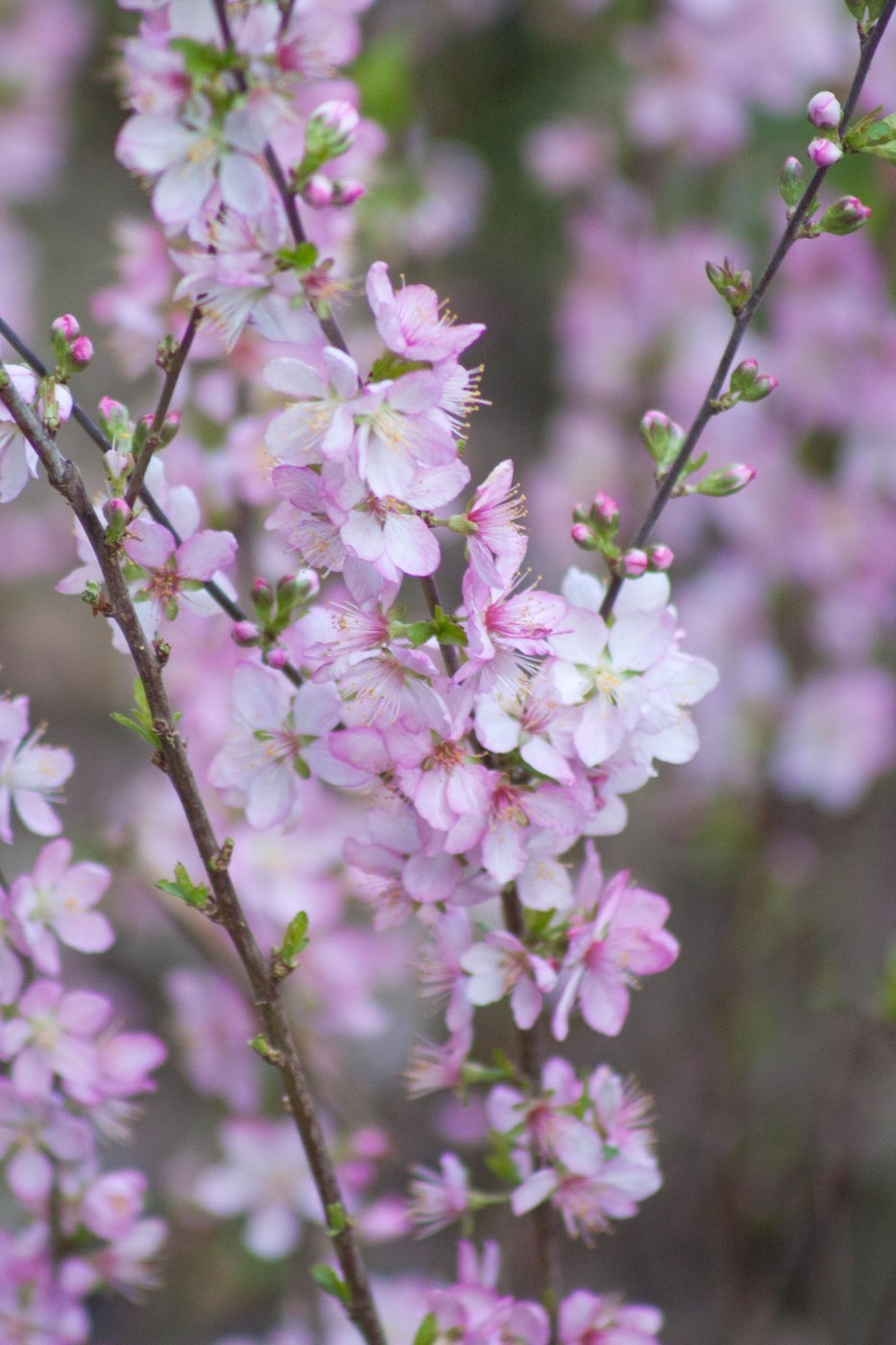
Flowering almond (Prunus glandulosa) is a compact, easy-going deciduous shrub that erupts in double pink or white blossoms along its bare stems in early spring, making it a classic accent in cottage and shrub borders.
Light
Give flowering almond full sun for the heaviest bloom and densest growth. It tolerates a little afternoon shade, but plants sited in too much shade become leggy and flower sparsely. A spot with at least six hours of direct sun daily is ideal.
Water
Water weekly during the first growing season to establish deep roots. Once mature, it is moderately drought-tolerant and needs supplemental water mainly during extended dry spells. Aim for moist but never waterlogged soil, letting the surface dry slightly between waterings.
Soil & Potting
Plant in average, well-drained soil with a neutral to slightly acidic pH. It adapts to loam, sand, or clay as long as drainage is good; standing water invites root rot. Amend heavy soils with compost and coarse grit to improve porosity.
Humidity & Temperature
A cold-hardy shrub, flowering almond thrives in temperate climates (roughly USDA zones 4-8) and actually needs winter chill to set spring flower buds. It shrugs off summer heat with adequate moisture and requires no special humidity.
Feeding
Feed once in early spring with a balanced slow-release fertilizer or a topdressing of compost. Avoid high-nitrogen feeds, which push soft leafy growth at the expense of flowers. A single annual feeding is usually plenty for this undemanding shrub.
Propagation
Propagate from softwood cuttings taken in late spring or early summer, dipped in rooting hormone and kept humid until rooted. It can also be increased by removing rooted suckers or by layering low branches into the soil.
Repotting / Pruning
Prune immediately after flowering, since blooms form on the previous year's wood. Cut back spent flowering stems by up to a third and remove old, weak, or crossing branches to renew vigor. Hard renewal pruning every few years keeps the shrub tidy and full.
Common Problems & Pests
Watch for aphids on new growth, spider mites in hot dry weather, and occasional tent caterpillars. Like many Prunus, it can be prone to fungal leaf spot, powdery mildew, and canker in humid or crowded conditions; ensure good air circulation and avoid overhead watering to limit disease.
Seasonal Care Tips
Enjoy the spring flower show, then prune right after. Mulch in summer to conserve moisture, and reduce watering as the shrub goes dormant in fall. In winter the bare structure needs no protection in its hardiness range; simply clear fallen leaves to reduce overwintering fungal spores.
Frequently asked questions
When does flowering almond bloom?
It blooms in early to mid spring, producing masses of pink or white double flowers along the stems before or as the leaves emerge.
When should I prune flowering almond?
Prune right after flowering finishes. Blooms form on old wood, so pruning later in the season removes next year's flower buds.
Why is my flowering almond not blooming well?
The most common causes are too much shade, pruning at the wrong time, or excess nitrogen fertilizer. Give it full sun and prune only just after bloom.
How big does flowering almond get?
It is a compact shrub, typically reaching about 4 to 5 feet tall and wide, which makes it easy to fit into small borders.
Flowering Almond identified by the community
Recent Flowering Almond specimens identified with Plant Identifier.