Flowering Almond Identification Guide
How to recognize the ornamental flowering almond (Prunus glandulosa / Prunus triloba) by its early-spring puffs of pink double blooms, arching twiggy stems, and small toothed leaves.
Read the full Flowering Almond encyclopedia entry →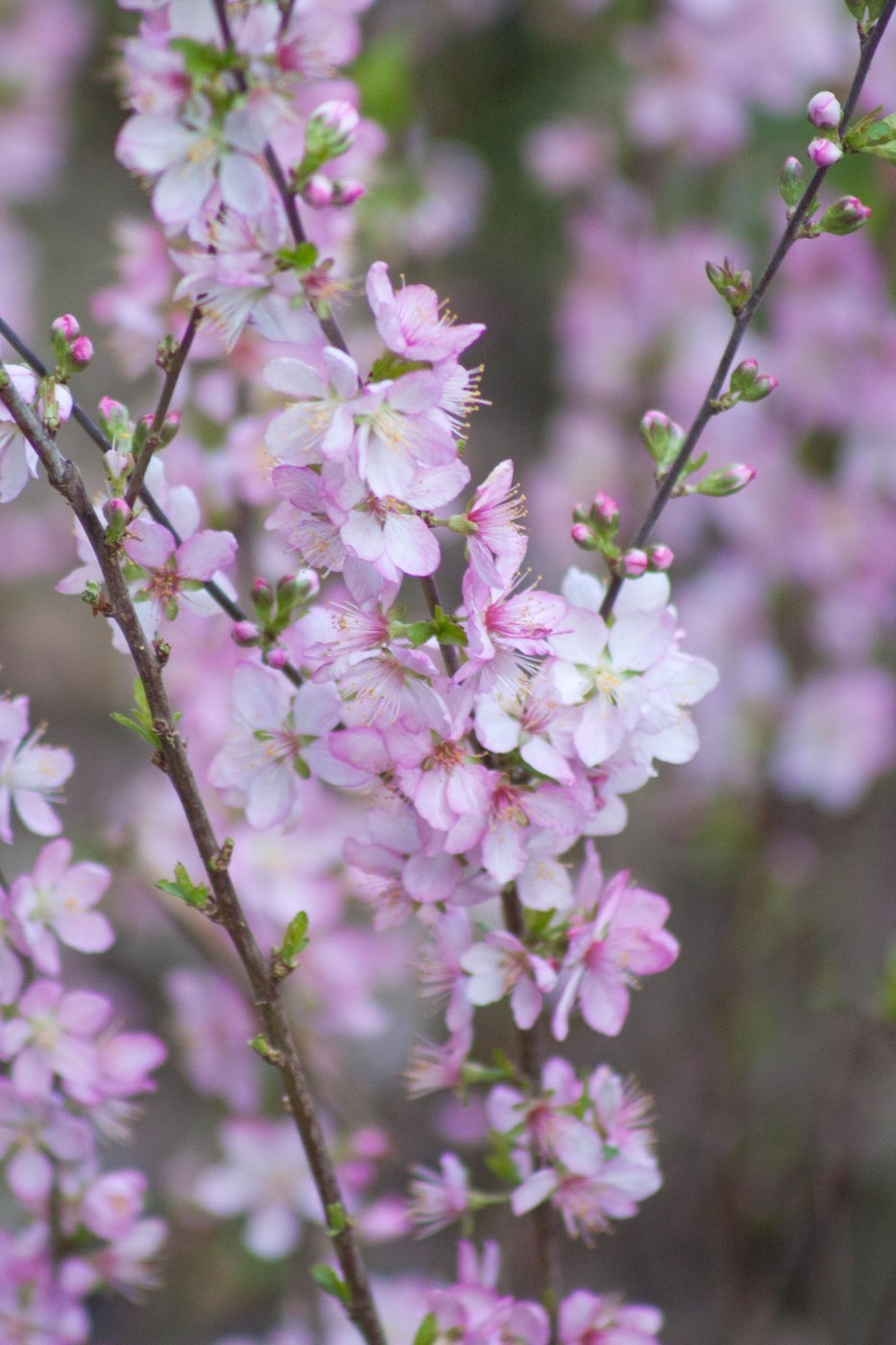
Key Identifying Features
Flowering almond is a small deciduous shrub grown almost entirely for its showy early-spring bloom. The name covers two closely related ornamentals: Prunus glandulosa (dwarf flowering almond, 3-5 ft) and Prunus triloba (flowering plum/almond, 8-12 ft). Both belong to the cherry/plum genus Prunus, not the true almond. Look for these traits together:
- Densely doubled, pompom-like pink (or white) flowers lining the bare stems before leaves emerge
- Slender, upright-arching twiggy branches forming a rounded, sometimes leggy shrub
- Small flowers, about ½-1 inch wide, packed so thickly the stems look like fuzzy pink ropes
- A short, dramatic bloom window in early to mid spring (often March-April)
Leaves & Stems
Leaves emerge after or near the end of flowering. They are alternate, simple, oval to obovate, roughly 1-3 inches long, with finely serrated (toothed) margins and a pointed tip. Prunus triloba often shows a slightly three-lobed leaf tip, hinting at its species name triloba. Foliage is medium green and generally unremarkable in summer, turning pale yellow at best in fall.
Stems are thin, gray-brown, and numerous, rising from the base in a multi-stemmed habit. Bark on older stems is smooth with scattered lenticels typical of cherries. Twigs lack thorns.
Flowers & Fruit
The flowers are the signature. Most cultivated forms are fully double, with 20+ petals giving a carnation- or rose-like rosette. Color ranges from soft baby pink to rich rose-pink, occasionally white. Each flower is stalkless or short-stalked and clustered tightly along year-old wood. Because the popular double forms are largely sterile, fruit is rare or absent; single-flowered plants may set a small, dry, reddish drupe.
How to Tell It Apart from Look-Alikes
- Flowering cherry (Prunus serrulata): a tree, not a low shrub, with flowers on long stalks in loose clusters rather than dense stem-hugging puffs.
- Flowering quince (Chaenomeles): has thorny stems and waxy, often orange-red five-petaled flowers, plus apple-like fruit.
- Forsythia: blooms the same season but is bright yellow, with four-petaled flowers and opposite leaves.
- True almond (Prunus dulcis): a tree with single, paler pink-white flowers.
The combination of shrub habit + tightly doubled pink pompoms on bare arching twigs is diagnostic.
Where You'll Find It
Flowering almond is a planted ornamental in USDA zones 4-8, common in older home foundations, shrub borders, and cottage gardens across temperate North America, Europe, and East Asia (its native region). It is not a wild plant; finding one means someone planted it. It tolerates full sun to light shade and average soils.
Quick ID Checklist
- Small to medium multi-stemmed deciduous shrub
- Bare twigs covered in dense, double pink pompom flowers in early spring
- Flowers ½-1 inch, packed tightly along the stems
- Small toothed oval leaves emerging after bloom; triloba may show a 3-lobed tip
- Thornless gray-brown twiggy stems with cherry-like lenticels
- Little or no fruit on the common double forms
If you see a leggy shrub briefly transformed into ropes of pink puffballs before any leaves appear, you are almost certainly looking at a flowering almond.
Frequently asked questions
How do I tell Prunus glandulosa from Prunus triloba?
P. glandulosa is a low dwarf shrub (3-5 ft) with smaller leaves, while P. triloba is taller (8-12 ft) with larger leaves that often show a faint three-lobed tip. Both have the same dense double-pink spring bloom.
When does flowering almond bloom?
In early to mid spring, typically March to April depending on climate, with flowers appearing on bare stems before or just as the leaves emerge. The display lasts only a couple of weeks.
Is it a tree or a shrub?
It is a shrub. It grows multiple slender stems from the base into a rounded, somewhat leggy form rather than a single trunk, which helps separate it from flowering cherry trees.
What stem and bark features help identify flowering almond?
Look for thin, numerous gray-brown twiggy stems rising from the base, smooth older bark dotted with cherry-like lenticels, and twigs that lack thorns, combined with the dense double pink spring flowers along year-old wood.
Flowering Almond identified by the community
Recent Flowering Almond specimens identified with Plant Identifier.