
Flowering Peach Identification Guide
How to identify the Flowering Peach (Prunus persica) by its long narrow leaves, showy often-double spring flowers, and fuzzy ornamental fruit.
Read the full Flowering Peach encyclopedia entry →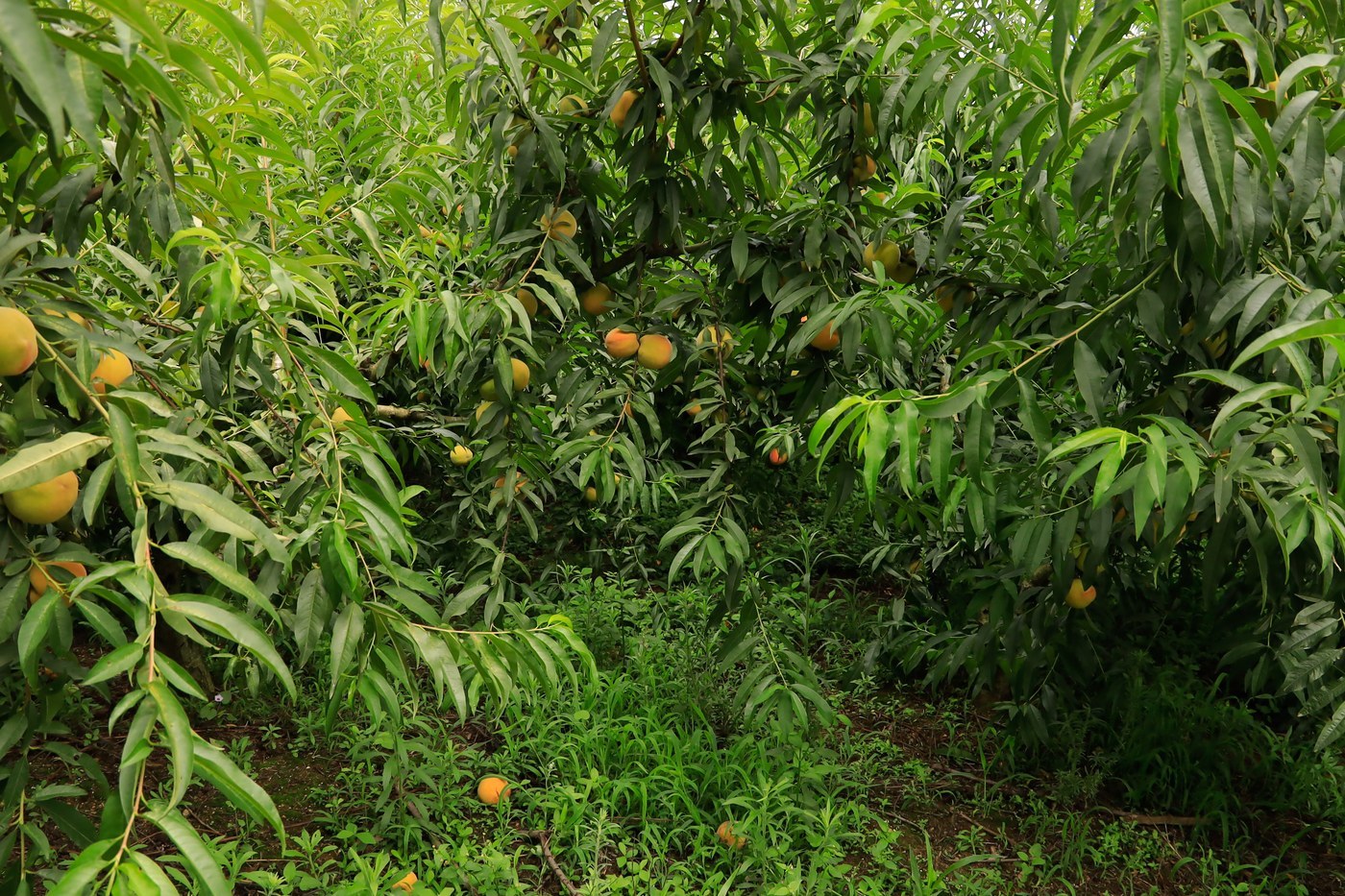
Key Identifying Features
The Flowering Peach (ornamental forms of Prunus persica) is a small tree grown for its large, showy, often double spring flowers in pink, red, or white. It is closely related to the orchard peach but selected for bloom rather than fruit.
- Showy single or double flowers in pink, rose, red, white, or bicolor
- Long, narrow, lance-shaped leaves
- Fuzzy, peach-like fruit (often small and dry in ornamental forms)
- Rounded small tree, typically 3-6 m tall
Leaves & Stems
Leaves are the most reliable separator within the cherry/plum/peach group: they are alternate, simple, long and narrow (lance-shaped), 7-15 cm long, finely toothed, and taper to a slender point. They are often folded along the midrib and bright glossy green. A typical Prunus persica clue is small glands at the base of the leaf or on the leaf stalk.
Twigs are slender, green to reddish, and the bark is gray-brown with horizontal lenticels. The crown is rounded and spreading. Buds are often fuzzy.
Flowers & Fruit
- Flowers appear in early-to-mid spring, before or with the leaves, borne close along the twigs. They are larger than most plum or cherry blossoms (3-4 cm) and frequently double (many petals), creating a rose-like or carnation-like look. Colors include pure pink, deep red, white, and striking bicolor or 'peppermint' forms with red-and-white striped or mixed flowers on one tree.
- Fruit, if set, is a small, fuzzy, peach-like drupe with a wrinkled stone; in ornamental cultivars it is usually small, hard, and not worth eating, since selection favored flowers over fruit.
How to Tell It Apart from Look-Alikes
- Flowering Plum has broader oval leaves (often purple in popular forms) and smaller single flowers; the peach's leaves are distinctly long and narrow.
- Flowering Cherry has clustered flowers on stalks and oval, sharply toothed leaves, whereas peach flowers sit tight against the twig on very short stalks.
- Flowering Almond/Nectarine are close relatives; peach is distinguished by its fuzzy fruit and long folded leaves, and the frequent double and bicolor flowers.
Where You'll Find It
Derived from the peach of China, flowering peach cultivars are planted worldwide as ornamental garden and street trees in temperate climates, prized in East Asian gardens and for spring festivals. They prefer full sun and well-drained soil and bloom best after winter chill.
Quick ID Checklist
- Long, narrow, lance-shaped finely toothed leaves, often folded
- Large, showy, frequently double flowers tight against the twigs
- Flower colors include pink, red, white, and bicolor/striped forms
- Fuzzy peach-like fruit (usually small in ornamentals)
- Gray-brown bark with horizontal lenticels; rounded small tree
Frequently asked questions
Can I eat the fruit of a flowering peach?
Usually not worthwhile. Ornamental flowering peaches are bred for their blossoms, so any fruit they set is typically small, hard, dry, or sparse, unlike the large juicy fruit of orchard peach varieties.
How do I tell a flowering peach from a flowering cherry?
Look at the leaves and flower attachment. Peach has long, narrow, lance-shaped leaves and flowers that sit tight against the twig, while cherries have broader oval leaves and flowers on longer stalks, often in clusters.
Why does one tree have both red and white flowers?
Some flowering peach cultivars (such as 'Versicolor' or peppermint types) are bred to produce bicolor blooms, with red, white, and striped flowers appearing on the same tree, a striking and reliable identification clue.
When does the flowering peach bloom?
It flowers in early to mid spring, usually before or as the leaves emerge, after it has received enough winter chill. The bloom is showy and dense, lining the twigs with large single or double flowers.