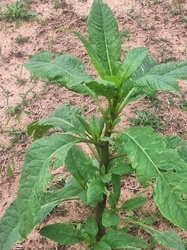
Flowering Tobacco Identification Guide
Recognize flowering tobacco (Nicotiana) by its long-tubed, star-shaped flowers, large sticky basal leaves, and evening fragrance.
Read the full Flowering Tobacco encyclopedia entry →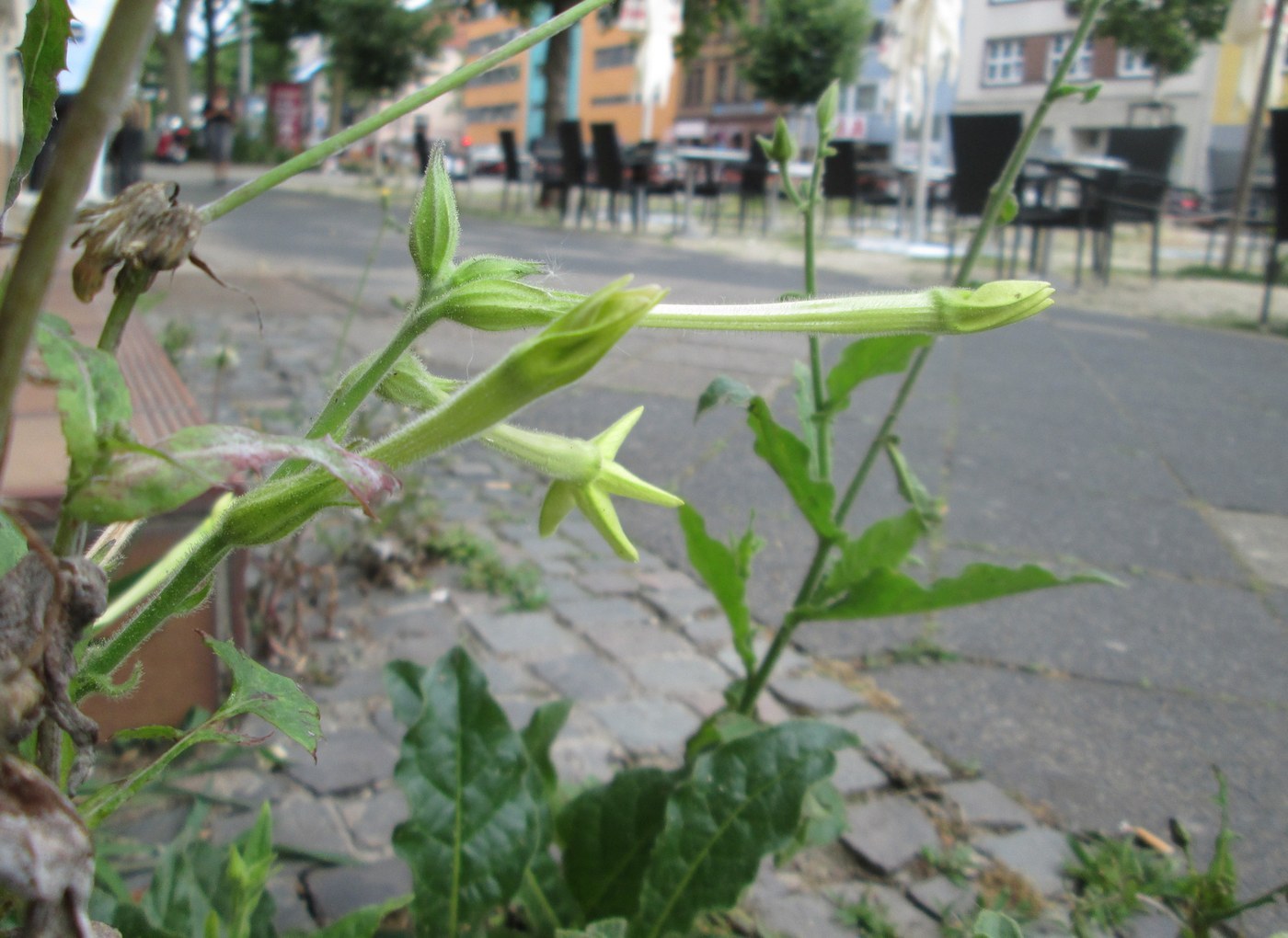
Key Identifying Features
Flowering tobacco (Nicotiana species, especially N. alata and N. sylvestris) is identified by its trumpet-shaped flowers with a long slender tube flaring into a flat five-pointed star, and its large, soft, sticky-hairy leaves. Many forms release a strong sweet jasmine-like fragrance in the evening.
- Long-tubed flowers (1–4 inches) opening to a five-lobed star face
- Colors include white, green, pink, red, and lime
- Large, soft, fuzzy, sticky leaves
- Upright stems, often 2–5 feet tall (some species taller)
Leaves & Stems
The leaves are large, oval to spoon-shaped, and form a substantial basal rosette, becoming smaller up the stem. They are covered in fine glandular hairs that make them sticky and slightly clammy to the touch, and they have a faint tobacco smell when bruised. Stems are upright, branching, and also sticky-hairy. Nicotiana sylvestris can reach 5 feet with a candelabra of drooping white flowers, while bedding types like N. alata and N. x sanderae stay 1–3 feet.
Flowers & Fruit
Flowers are the clearest feature: a narrow tube that suddenly opens into a flat, five-lobed, star-shaped face. They are held in loose clusters at the stem tips. Many open or intensify their scent at dusk to attract moths. After bloom, small dry capsules form, filled with numerous tiny seeds.
How to Tell It Apart from Look-Alikes
- Petunia: Related and similar trumpet shape, but petunia flowers are shorter-tubed, wider, and bloom in dense mounding plants; flowering tobacco is taller with longer tubes and star-pointed lobes.
- Datura/Brugmansia: Have much larger, broader trumpets and very different coarse leaves.
- Phlox: Has five-lobed flowers but much shorter tubes and smooth, non-sticky leaves.
- The long tube + sticky tobacco-scented foliage + evening fragrance combination is diagnostic.
Where You'll Find It
Flowering tobacco is a popular garden annual in beds, borders, cottage gardens, and containers, valued for evening fragrance and for attracting moths and hummingbirds. It is native to South America. It prefers full sun to part shade and moist, fertile soil. Taller species are often planted at the back of borders; compact bedding strains are used as front-of-border color.
Quick ID Checklist
- Long-tubed flowers flaring into a five-pointed star
- Sweet jasmine-like fragrance, strongest at dusk
- Large, soft, sticky-hairy leaves with faint tobacco smell
- Upright plant 2–5 ft tall
- Colors of white, green, lime, pink, or red
Frequently asked questions
Why is it called flowering tobacco?
It belongs to the genus Nicotiana, the same group as commercial tobacco, and its leaves smell faintly of tobacco when crushed. It is grown for its ornamental flowers.
When is flowering tobacco most fragrant?
Many species, especially the white-flowered ones, open or intensify their sweet jasmine-like scent in the evening to attract night-flying moths, making dusk the best time to confirm the plant by smell.
How do I tell flowering tobacco from a petunia?
Both have trumpet flowers, but flowering tobacco has a much longer narrow tube ending in a star-pointed face and grows taller, while petunias are shorter-tubed, wider-faced, and form low mounds.
Flowering Tobacco identified by the community
Recent Flowering Tobacco specimens identified with Plant Identifier.