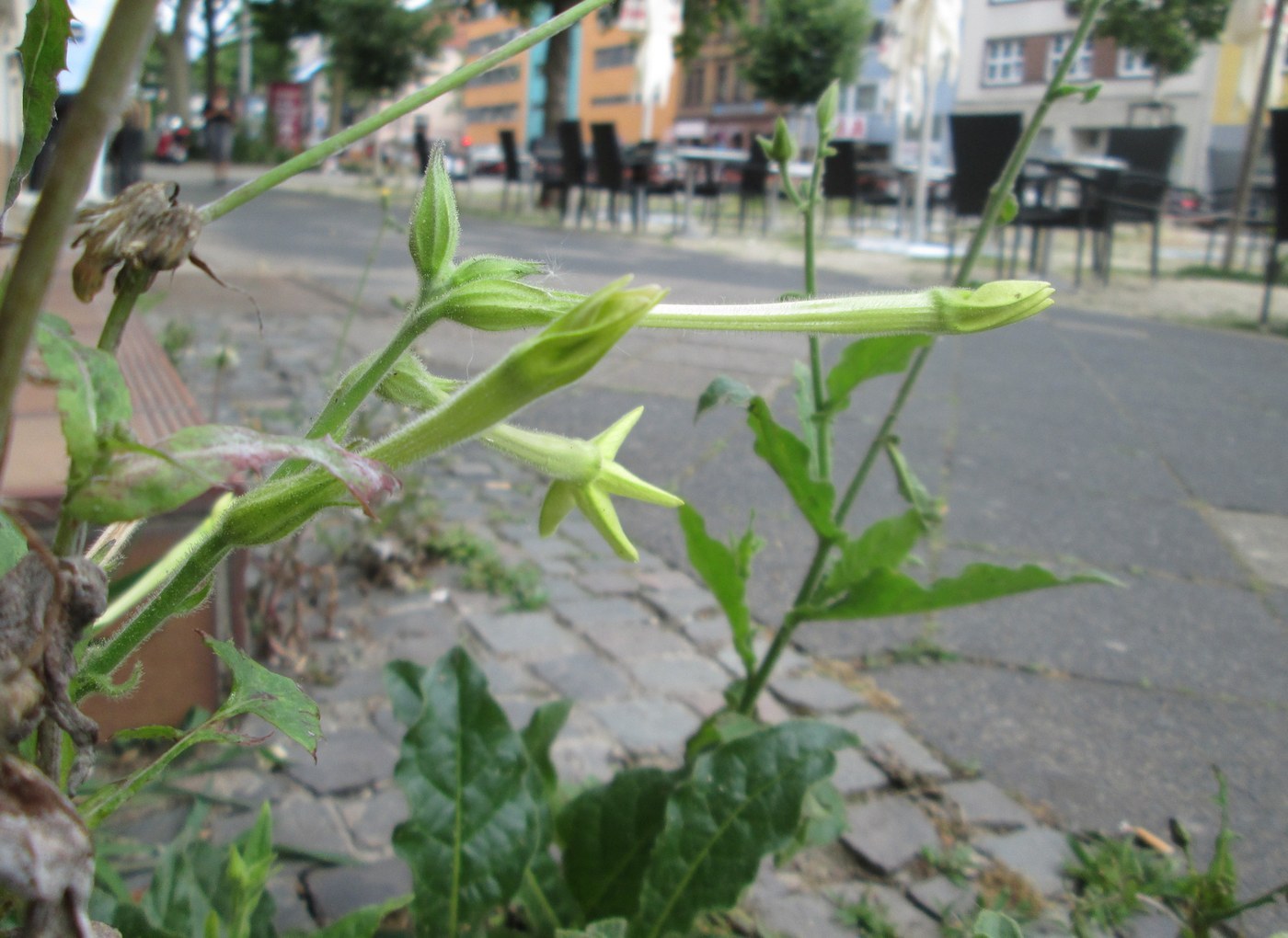
Flowering Tobacco
Nicotiana alata
An ornamental relative of commercial tobacco grown for its tubular, star-shaped flowers that open and release a jasmine-like scent in the evening. It comes in white, green, red and pink, attracting moths and hummingbirds.
- Light
- Full sun to part shade
- Water
- Keep evenly moist
- Difficulty
- Easy
Got a plant like this?
Identify any plant from a photo, free.
Overview
Flowering tobacco is a tender perennial usually grown as an annual for its fragrant, trumpet-shaped blooms. Many older varieties perfume the garden strongly at dusk, while modern hybrids offer compact habits and a wide color range.
The plant belongs to the nightshade family and is an ornamental cousin of commercial tobacco, but it is raised purely for beauty and scent.
How to identify it
- Upright plant from 1 ft dwarf hybrids to over 3 ft (1 m) on species forms
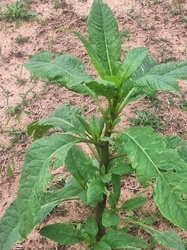
- Leaves are large, soft, oval and sticky-hairy, forming a basal rosette and clasping the stem
- Flowers are long-tubed and flare into a five-pointed star at the mouth, carried in loose clusters
- Colors include white, lime green, red, pink and pastel shades; many open and scent the air in the evening
Care & growing
- Light: Full sun to partial shade; light shade helps in hot regions
- Water: Keep soil evenly moist for continuous bloom
- Soil: Fertile, moist, well-drained soil rich in organic matter
- Temperature: Warmth-loving and frost-tender
- Feeding: Feed monthly with a balanced fertilizer
- Propagation: From tiny seed surface-sown indoors; needs light to germinate. Often self-sows
Deadhead to extend flowering. Tall species types may need shelter from wind.
Habitat & origin
Nicotiana alata is native to South America, particularly Brazil, Argentina and neighboring regions, where it grows in open and disturbed sites.
It is grown worldwide as an ornamental annual in borders, cottage gardens and containers, especially in spots where evening fragrance can be enjoyed.
Frequently asked questions
When is flowering tobacco most fragrant?
Many varieties, especially older white forms, release their strongest jasmine-like scent in the evening and at night to attract moths.
Does flowering tobacco come back every year?
It is a tender perennial grown as an annual in most areas, but it self-sows readily and often reappears from dropped seed.
Why are some nicotiana varieties not very fragrant?
Breeding for compact size and bright colors has reduced scent in some modern hybrids; choose species or heirloom types for the strongest fragrance.
Flowering Tobacco guides
In-depth guides for identifying, growing, and caring for Flowering Tobacco.
How to Care for Flowering Tobacco
Grow fragrant, star-shaped flowering tobacco with sun to part shade, steady moisture, and rich, well-drained soil.
Flowering Tobacco Identification Guide
Recognize flowering tobacco (Nicotiana) by its long-tubed, star-shaped flowers, large sticky basal leaves, and evening fragrance.
Flowering Tobacco identified by the community
Real specimens identified with Plant Identifier.