
Foamflower Identification Guide
How to identify foamflower (Tiarella) by its maple-like lobed leaves, often with dark central markings, and frothy spikes of tiny starry white-to-pink flowers.
Read the full Foamflower encyclopedia entry →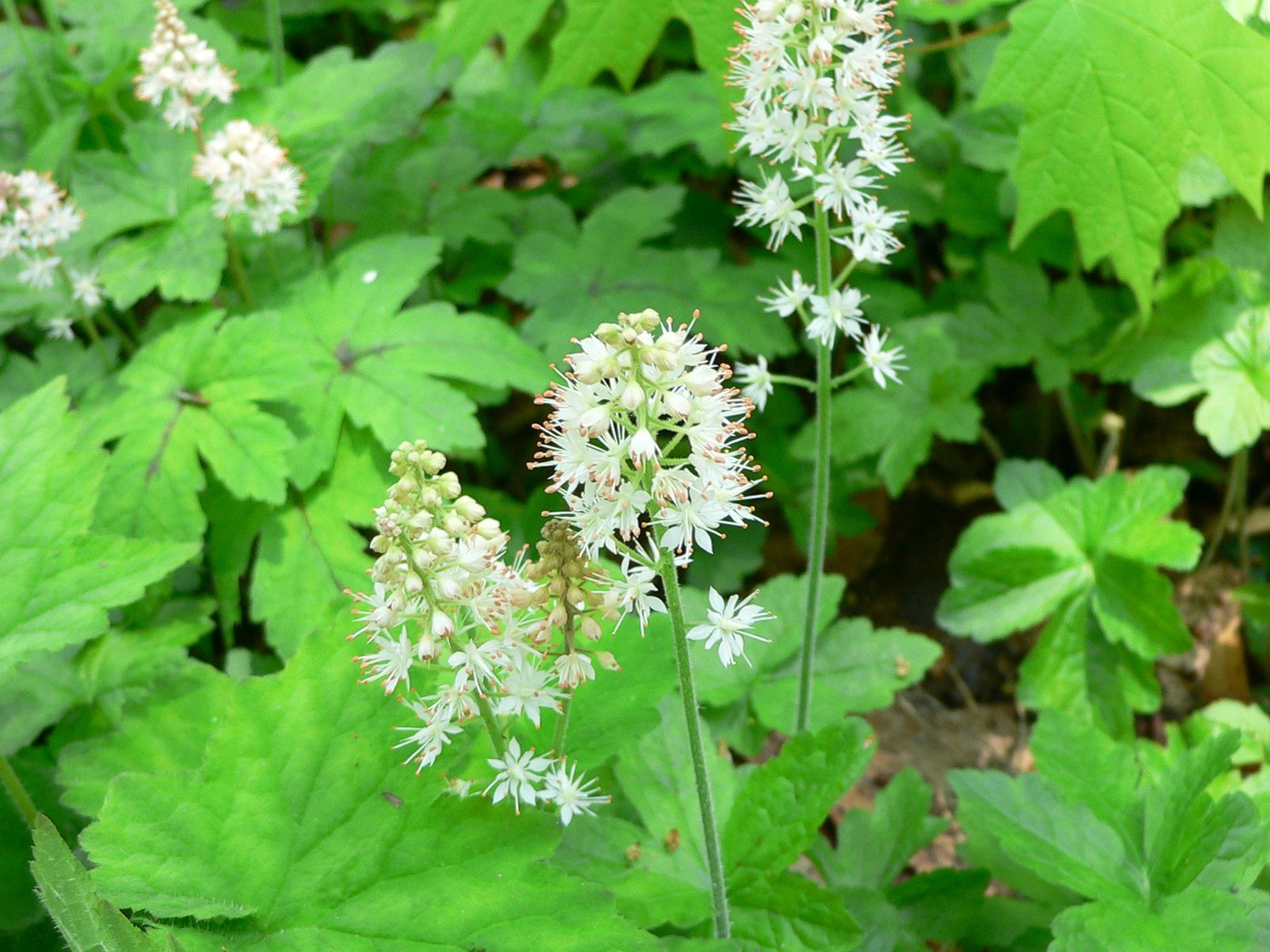
Key Identifying Features
Foamflower (Tiarella) is a low woodland perennial in the saxifrage family (Saxifragaceae). Its name comes from the frothy, foam-like spikes of tiny star-shaped flowers held above a clump of maple- or heart-shaped lobed leaves, which often carry a dark maroon central blotch or veining.
- Frothy, bottlebrush spikes of tiny white to pink flowers
- Flowers with long, thread-like protruding stamens giving the fuzzy look
- Leaves lobed (maple-like) or heart-shaped, often with dark central markings
- Low, mounding, mat-forming plant for shade
Leaves & Stems
Leaves are mostly basal, on slender hairy stalks, broadly heart-shaped to palmately lobed (3–7 lobes) with toothed margins, often 3–10 cm wide. Many forms have striking dark red, purple, or chocolate markings along the central veins. Leaves are softly hairy and some are semi-evergreen, taking on bronze tints in cold weather. Flower stems are leafless, slender, and erect, rising above the foliage. Some species spread by runners, others form tidy clumps.
Flowers & Fruit
The flower spike (raceme) is a narrow, fluffy plume of many tiny 5-petaled star flowers, each only a few millimeters across, with conspicuous long stamens that create the soft "foam" texture. Color ranges white to soft pink, blooming in spring to early summer. Fruit is a small two-parted capsule. The combination of foamy white spikes over dark-marked lobed leaves is the surest identifier.
How to Tell It Apart from Look-Alikes
- Heuchera (coral bells): very close relative with similar lobed mounded leaves, but flowers are tiny bells on wiry airy panicles, not dense foamy spikes; leaves usually lack the dark central V-markings.
- × Heucherella: the hybrid of the two — intermediate, often with both foamy spikes and colorful leaves.
- Mitella (bishop's cap): related, but flowers are greenish and fringed, far less showy.
- Tellima (fringecups): taller greenish-pink fringed flowers, different texture.
Where You'll Find It
Foamflower is native to moist deciduous woodlands of North America (and a few East Asian relatives) and is grown as a shade ground cover in woodland and shade gardens. It likes moist, humus-rich, well-drained soil and dappled shade, spreading into attractive low colonies under trees.
Quick ID Checklist
- Frothy, foam-like spikes of tiny starry flowers
- Flowers white to pink with long protruding stamens
- Lobed/heart-shaped leaves, often with dark central markings
- Low mound or mat in shade, spring bloom
- Saxifrage family; differs from Heuchera by its dense foamy flower spikes
Frequently asked questions
What gives foamflower its frothy appearance?
Each flower spike packs many tiny star-shaped flowers, and each flower has long, thread-like protruding stamens. Together they create a soft, foamy or fuzzy bottlebrush texture, hence the name.
How do I tell foamflower from coral bells (Heuchera)?
They are close relatives with similar lobed leaves, but foamflower has dense, foamy flower spikes and often dark central leaf markings, while Heuchera has tiny bell-shaped flowers on airy, open panicles.
Are the dark marks on the leaves important for ID?
They are a helpful clue. Many foamflowers have distinctive maroon or chocolate markings along the central leaf veins, though not every form shows them strongly.
Where does foamflower grow best?
It is a woodland plant that thrives in dappled shade and moist, humus-rich soil, spreading into low ground-covering colonies under trees and shrubs.