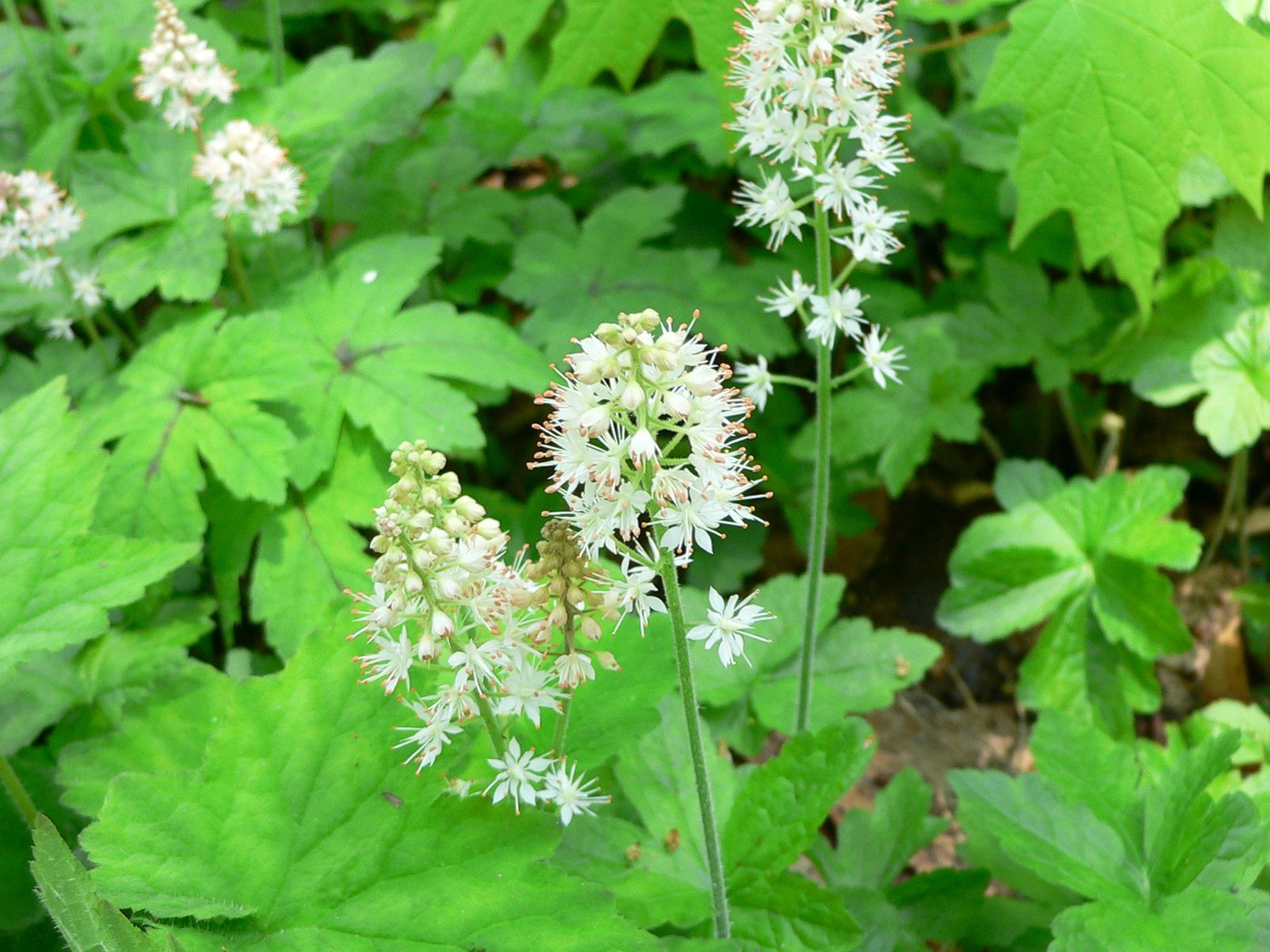
Foamflower
Tiarella cordifolia
Foamflower is a charming native woodland perennial with maple-like, often patterned leaves and frothy spikes of tiny, star-shaped white or pink flowers in spring. It forms a delicate groundcover for shady gardens.
- Light
- Part to full shade
- Water
- Regular; keep evenly moist
- Difficulty
- Easy
Got a plant like this?
Identify any plant from a photo, free.
Overview
Foamflower (Tiarella cordifolia) is a low-growing perennial native to North American woodlands, named for its airy, foam-like flower spikes. It belongs to the saxifrage family and is closely related to heuchera, with which it is crossed to create heucherella.
In spring it sends up bottlebrush spikes of tiny, fluffy white to soft-pink flowers above mounds of lobed, often dark-veined or mottled leaves.
It spreads gently by runners in some forms to make an attractive, easygoing groundcover for shaded spots.
How to identify it
Frothy flower spikes over lobed, veined leaves.
- Flowers: Tiny, star-shaped white to pale-pink blooms with long stamens, in soft, foamy spikes
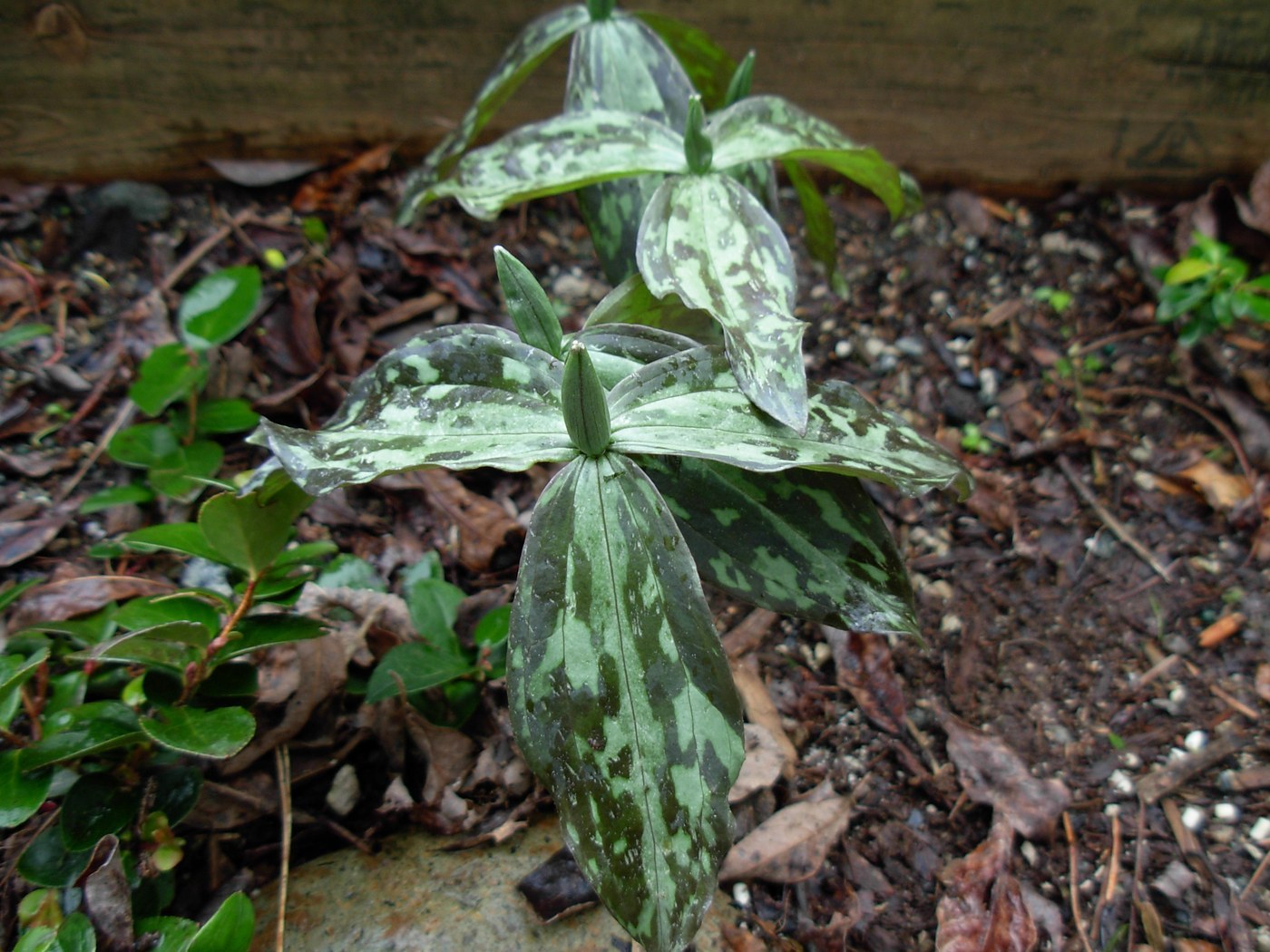
- Leaves: Heart-shaped to maple-like with lobes, often marked with dark veining or central blotches; some color red in fall
- Habit: Low mounds 6-12 in tall; some spread by runners, others stay clumping
- Bloom time: Mid to late spring
Care & growing
Easy in moist shade.
- Light: Partial to full shade; mimics its woodland origins
- Water: Regular; keep soil consistently moist
- Soil: Rich, humus-rich, well-drained woodland soil
- Temperature: Hardy in USDA zones 3-8
- Feeding: Light; a leaf-mold or compost mulch suits it well
- Propagation: Division, or separating rooted runners on spreading types
- Tip: Apply a mulch of leaf litter to mimic the forest floor and retain moisture
Habitat & origin
Foamflower is native to eastern North America, from Canada south through the Appalachians, where it carpets cool, moist, shaded forest floors and stream banks.
It is widely planted in native, woodland, and shade gardens as a groundcover and is a parent of many garden hybrids.
Frequently asked questions
What's the difference between foamflower and coral bells?
Foamflower (Tiarella) has frothier flower spikes and lobed leaves, while coral bells (Heuchera) have bell-shaped flowers. Crossing them produces Heucherella.
Does foamflower spread?
Some varieties spread gently by runners to form a groundcover, while others stay in tidy clumps. Check the specific cultivar.
Will foamflower grow in full shade?
Yes, it's a true woodland plant that thrives in partial to full shade with consistently moist, humus-rich soil.
When does foamflower bloom?
It produces its foamy white-to-pink flower spikes in mid to late spring, sometimes with sporadic rebloom.
Foamflower guides
In-depth guides for identifying, growing, and caring for Foamflower.
How to Care for Foamflower
Grow Tiarella cordifolia, a woodland shade perennial with airy white flower spikes and lobed leaves, with this easy care guide.
Foamflower Identification Guide
How to identify foamflower (Tiarella) by its maple-like lobed leaves, often with dark central markings, and frothy spikes of tiny starry white-to-pink flowers.