
How to Care for Forsythia
A tough, easy deciduous shrub that blankets bare branches in brilliant yellow flowers at the first sign of spring.
Read the full Forsythia encyclopedia entry →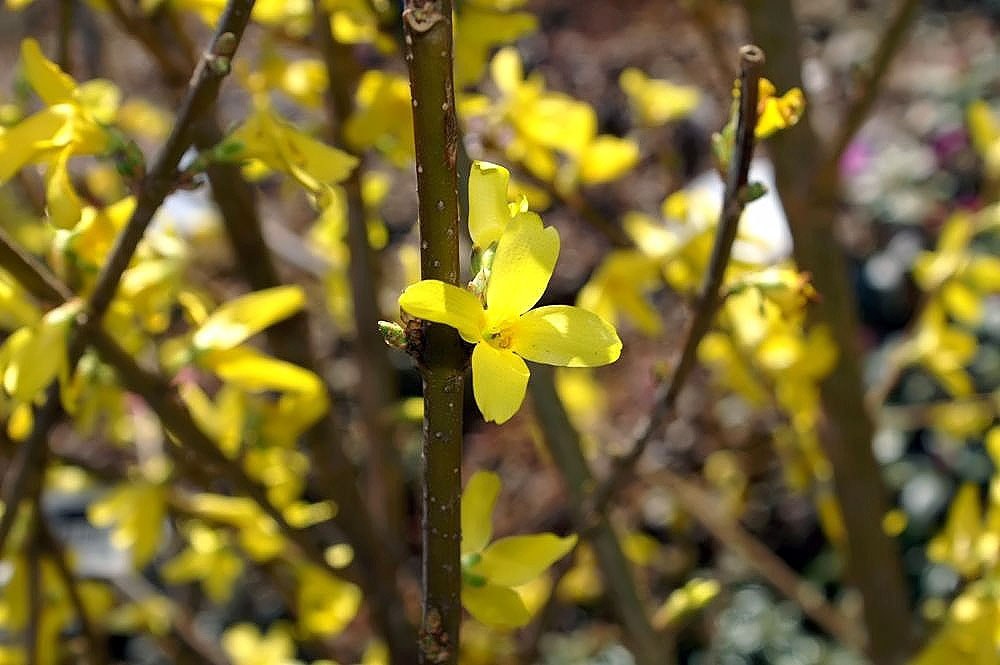
Forsythia (Forsythia x intermedia) is a fast-growing, deciduous shrub beloved for the cascade of bright yellow flowers that cover its bare branches in very early spring, before the leaves emerge. It is exceptionally easy and adaptable, making it a classic beginner's shrub.
Light
Grow forsythia in full sun to part shade. It flowers most profusely in full sun, where the arching branches become solid ribbons of yellow. In part shade it still grows vigorously but blooms less densely. Enough sun is the single biggest factor in a good spring display.
Water
Forsythia needs only moderate water. Keep young plants evenly moist through their first year to establish a strong root system, watering during dry spells. Once established it is quite drought-tolerant and generally thrives on rainfall, needing supplemental water only in extended summer drought. It dislikes constantly soggy ground.
Soil & Potting
This shrub is unfussy about soil and grows in almost anything with reasonable drainage, from loam to clay, across a wide pH range. It performs best in moderately fertile, well-drained soil improved with compost. Mulch over the roots conserves moisture and suppresses weeds. It is a large landscape shrub and is rarely container-grown.
Humidity & Temperature
Forsythia is very cold-hardy, roughly USDA zones 5 to 8, and its flower buds need winter chill to bloom well. It handles ordinary humidity and summer heat without issue. Late hard frosts after warm spells can occasionally damage open flowers, but the shrub itself shrugs off cold.
Feeding
Feeding needs are minimal. An application of balanced slow-release fertilizer or a topdressing of compost in early spring supports vigorous growth and bloom. Overfeeding, especially with high nitrogen, encourages excess leafy growth and fewer flowers, so keep feeding light.
Propagation
Forsythia is one of the easiest shrubs to propagate. Softwood cuttings root quickly in early summer, and hardwood cuttings taken in fall or winter succeed too. Even simpler, low branches that touch the ground often root on their own, so layering is nearly foolproof; sever the rooted section and replant.
Repotting / Pruning
Prune immediately after flowering, since forsythia blooms on old wood from the previous season. Remove up to a third of the oldest canes at the base each year to keep the shrub renewed and prevent a tangled, twiggy interior. It responds well to hard rejuvenation pruning. Avoid shearing into formal shapes, which spoils its natural fountain form and removes flower buds.
Common Problems & Pests
Forsythia is remarkably pest-free. Occasionally you may see minor leaf spot or, in some regions, galls on the stems, both usually cosmetic. The most common complaint is poor flowering, which typically results from too much shade, pruning at the wrong time, or flower buds killed by an unusually harsh late cold snap.
Seasonal Care Tips
Expect the star performance in very early spring. Prune right after the flowers fade to shape and renew the shrub. Cut a few budded branches in late winter to force into bloom indoors. Mulch in spring, water young plants through summer dry spells, and let the shrub rest fully dormant through winter with no protection required.
Frequently asked questions
When should I prune forsythia?
Prune right after it finishes flowering in spring. Forsythia blooms on old wood, so pruning later in the season removes next year's flower buds. Remove up to a third of the oldest canes at the base to renew the shrub.
Why didn't my forsythia bloom?
The most common reasons are too much shade, pruning at the wrong time, or flower buds damaged by a harsh late frost. Give it full sun, prune only just after flowering, and avoid heavy nitrogen feeding that favors leaves over flowers.
How do I keep forsythia from getting overgrown?
Prune yearly right after bloom, removing the oldest canes at ground level to renew growth. For a badly overgrown plant, hard rejuvenation pruning close to the ground is well tolerated and brings back a tidy, vigorous shrub.
Can I force forsythia to bloom indoors?
Yes. In late winter, cut budded branches and place them in water in a bright indoor spot. Within a couple of weeks the warmth coaxes the buds to open, giving you an early splash of yellow before the outdoor shrub blooms.