Forsythia
Forsythia x intermedia
A tough deciduous shrub that bursts into brilliant yellow flowers along bare branches in early spring, before its leaves appear. One of the earliest and most reliable harbingers of spring in temperate gardens.
- Light
- Full sun to part shade
- Water
- Moderate; water during dry spells
- Difficulty
- Easy
Got a plant like this?
Identify any plant from a photo, free.
Overview
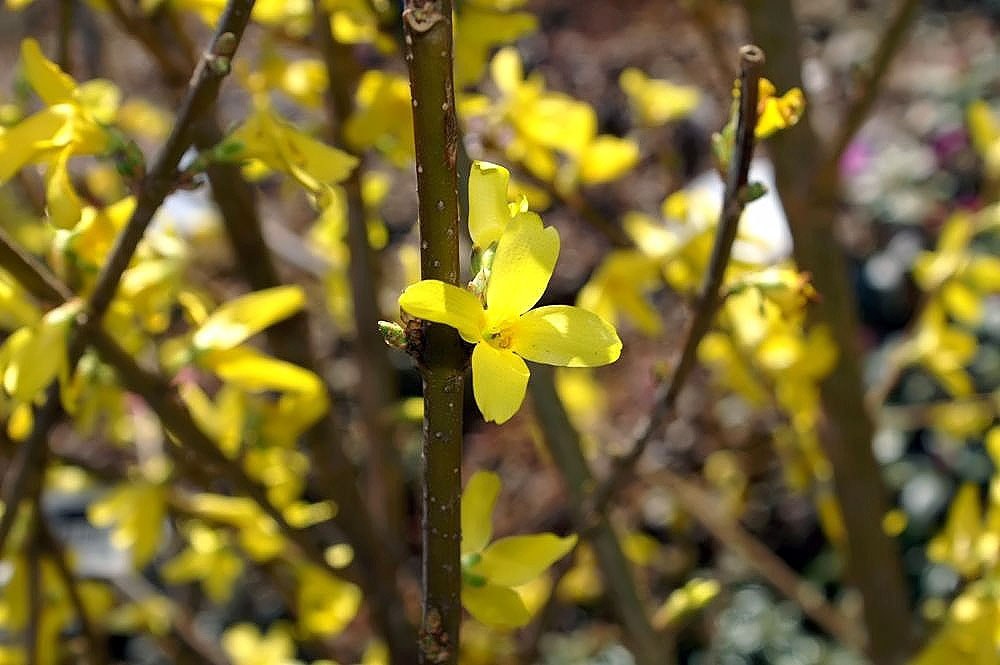
Forsythia is a deciduous shrub celebrated for its profuse, bright yellow bell-shaped flowers that line the bare branches in very early spring, often before any other shrub blooms. The popular garden form is the hybrid Forsythia x intermedia.
Vigorous, arching and easy to grow, it is widely used for informal hedges, screens and as a stand-alone splash of early color. The flowers appear on the previous year's wood.
After flowering it forms a fountain of green foliage, sometimes with modest yellow-purple fall color.
How to identify it
- Flowers: bright yellow, four-petaled, bell-shaped, densely lining bare stems in early spring
- Bloom time: very early spring, before the leaves emerge
- Leaves: opposite, lance-shaped to oval, toothed, medium green, appearing after flowers
- Habit: upright then arching, multi-stemmed, fast-growing
- Stems: long, cane-like, often rooting where they touch the ground
- Size: typically 6–10 ft (1.8–3 m) tall and wide
Care & growing
Grow in full sun to part shade; best flowering is in full sun.
- Water: water during dry spells; tolerates a range of conditions once established
- Soil: adaptable to most well-drained soils
- Temperature: hardy roughly USDA zones 5–8
- Pruning: prune right after flowering—it blooms on old wood, so pruning later removes next year's buds; renewal-prune old canes to the base
- Feeding: minimal
- Propagation: very easy from cuttings or by layering arching stems
Avoid shearing into formal shapes, which spoils its natural fountain form and reduces bloom.
Habitat & origin
The genus Forsythia is native mainly to eastern Asia (China, Korea, Japan), with one species in southeastern Europe. The common garden plant is a hybrid of two East Asian species.
It is now grown throughout temperate regions as one of the most popular early-spring flowering shrubs for borders, hedges and naturalized plantings.
Frequently asked questions
When should I prune forsythia?
Right after it finishes flowering in spring. It blooms on old wood, so pruning in summer, fall or winter removes the buds for next year's flowers.
Why didn't my forsythia bloom?
Common causes are pruning at the wrong time (removing flower buds), too much shade, or a hard late frost that killed the buds.
Can I force forsythia branches indoors?
Yes—cut budded branches in late winter and place them in water indoors to force early yellow blooms.
How fast does forsythia grow?
Quite fast. It can put on a foot or more of growth per year and roots easily where arching stems touch soil, so give it room.
Forsythia guides
In-depth guides for identifying, growing, and caring for Forsythia.
How to Care for Forsythia
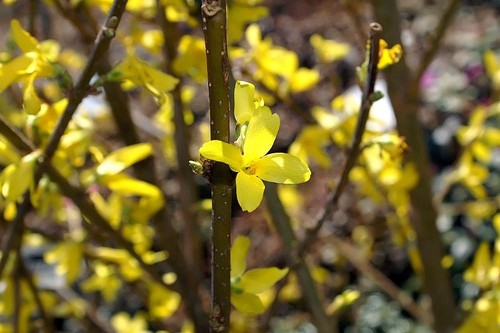
A tough, easy deciduous shrub that blankets bare branches in brilliant yellow flowers at the first sign of spring.
Forsythia Identification Guide
Identify Forsythia by its arching canes covered in bright yellow four-petaled flowers in very early spring, blooming before the leaves emerge.