
Fothergilla Identification Guide
Identify Fothergilla by its honey-scented white bottlebrush flowers in spring, blue-green ribbed leaves, and brilliant multicolored fall foliage.
Read the full Fothergilla encyclopedia entry →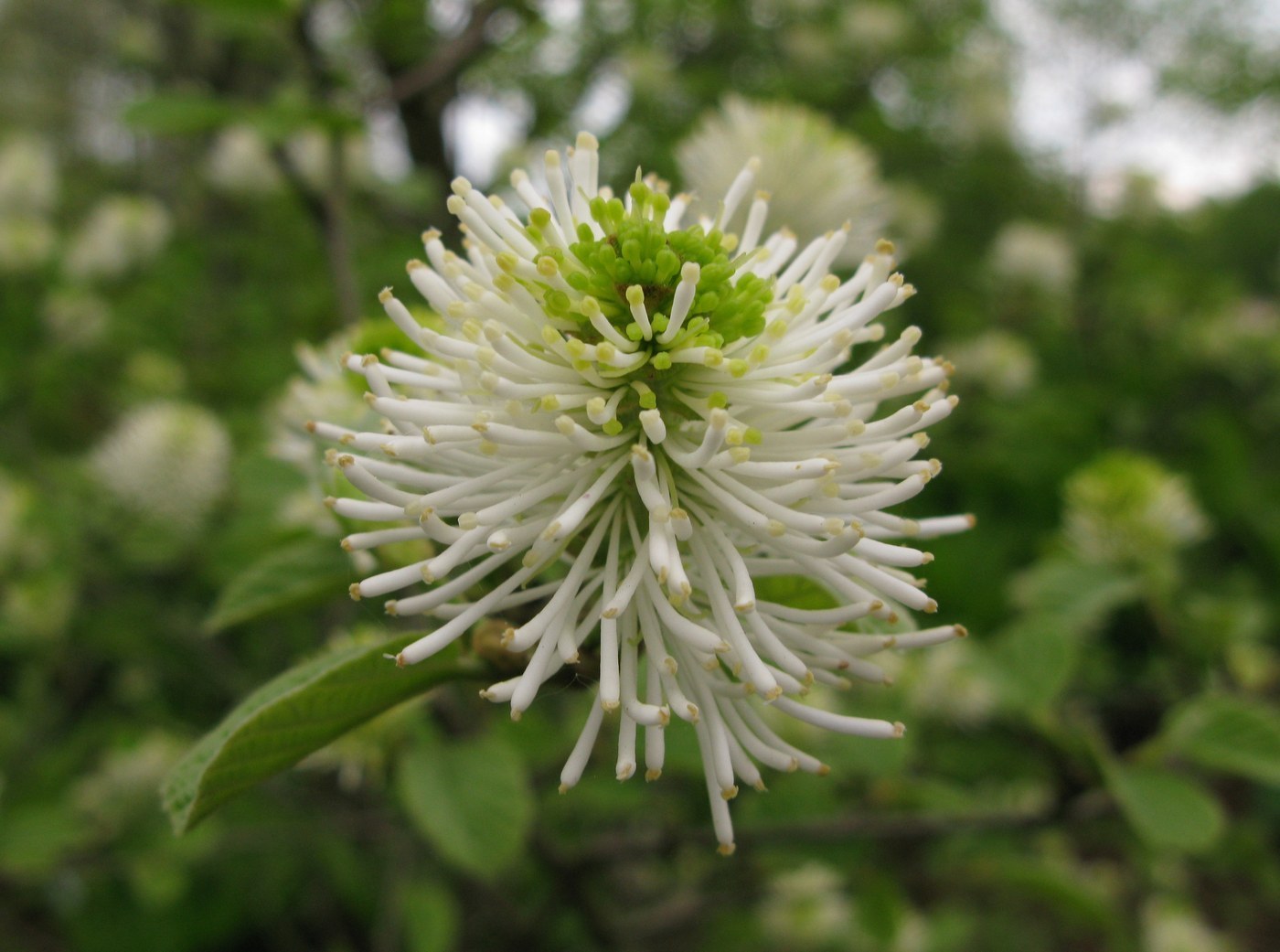
Key Identifying Features
Fothergilla is a deciduous shrub in the witch hazel family (Hamamelidaceae), native to the southeastern United States. The two common species are Fothergilla gardenii (dwarf) and Fothergilla major (large), plus hybrids. It is recognized by fragrant white bottlebrush flowers in spring (before or with the leaves), ribbed blue-green to gray-green leaves, and spectacular yellow-orange-red fall color.
- Rounded, multi-stemmed deciduous shrub; dwarf forms 2–3 ft, large forms 6–10 ft
- White, honey-scented, bottlebrush flower spikes in spring
- No true petals — the showy parts are white stamens
- Outstanding mixed fall foliage color
Leaves & Stems
Leaves are alternate, ovate to obovate, 1–4 in long, with a coarsely toothed upper half and prominent impressed veins giving a corrugated, ribbed look. The upper surface is dark to blue-green and the underside is paler, often bluish or grayish and slightly hairy. In autumn the same leaves turn a striking blend of yellow, orange, and scarlet, often on the same leaf. Stems are zigzag and finely hairy when young.
Flowers & Fruit
Flowers form dense, erect, terminal spikes 1–2.5 in long that resemble white bottlebrushes. They have no petals; the showy white effect comes from clusters of long stamens tipped with pale yellow anthers, and they are sweetly, honey-scented. Bloom occurs in early to mid-spring. Fruit is a small, inconspicuous two-beaked capsule.
How to Tell It Apart from Look-Alikes
- Bottlebrush (Callistemon): Has red flower spikes and narrow evergreen leaves; Fothergilla is deciduous with white spikes and toothed, ribbed leaves.
- Witch hazel (Hamamelis): Same family but has strappy yellow/orange fringe flowers, not white bottlebrushes.
- Itea (sweetspire): Has drooping white flower racemes and finely toothed, narrower leaves; flowers later and the spikes nod rather than stand erect.
The erect white petal-less bottlebrush + toothed blue-green ribbed leaves + mixed fall color combination is diagnostic.
Where You'll Find It
Native to moist woodlands, bogs, and coastal plains of the southeastern U.S. In gardens it's grown across USDA zones 5–8 in shrub borders and woodland edges. It prefers moist, acidic, well-drained soil and full sun to part shade (more sun yields better flowering and fall color).
Quick ID Checklist
- Deciduous shrub with zigzag, hairy young stems
- Erect white bottlebrush flower spikes (no petals, just stamens)
- Sweet, honey-like fragrance in spring
- Alternate, coarsely toothed, ribbed blue-green leaves
- Pale, often hairy leaf undersides
- Brilliant yellow-orange-red fall foliage
Frequently asked questions
Why do Fothergilla flowers have no petals?
The white, fluffy bottlebrush look comes entirely from clusters of long stamens; Fothergilla flowers lack petals, which is normal for the witch hazel family.
Do Fothergilla flowers smell?
Yes, the spring blooms have a distinct sweet, honey-like fragrance that helps confirm the identification.
How is Fothergilla different from a true bottlebrush plant?
Callistemon bottlebrush has red spikes and evergreen needle-like leaves, while Fothergilla is a deciduous shrub with white spikes and toothed, blue-green leaves.
What makes Fothergilla popular in gardens?
It offers three seasons of interest: fragrant white spring flowers, clean blue-green summer foliage, and exceptional multicolored fall color.