Fothergilla
Fothergilla gardenii
Fothergilla is a native deciduous shrub offering fragrant white bottlebrush flowers in spring and spectacular orange-red-yellow foliage in fall. It is a low-fuss, multi-season ornamental.
- Light
- Full sun to part shade
- Water
- Regular; keep evenly moist
- Difficulty
- Moderate
Got a plant like this?
Identify any plant from a photo, free.
Overview
Fothergilla, sometimes called witch alder, is a deciduous shrub native to the southeastern United States and a member of the witch hazel family. It earns garden space through two strong seasons: honey-scented white spring flowers and brilliant fall color.
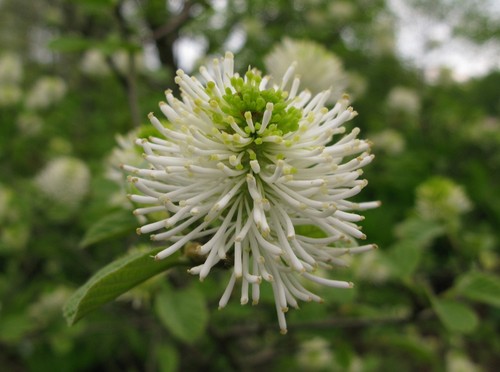
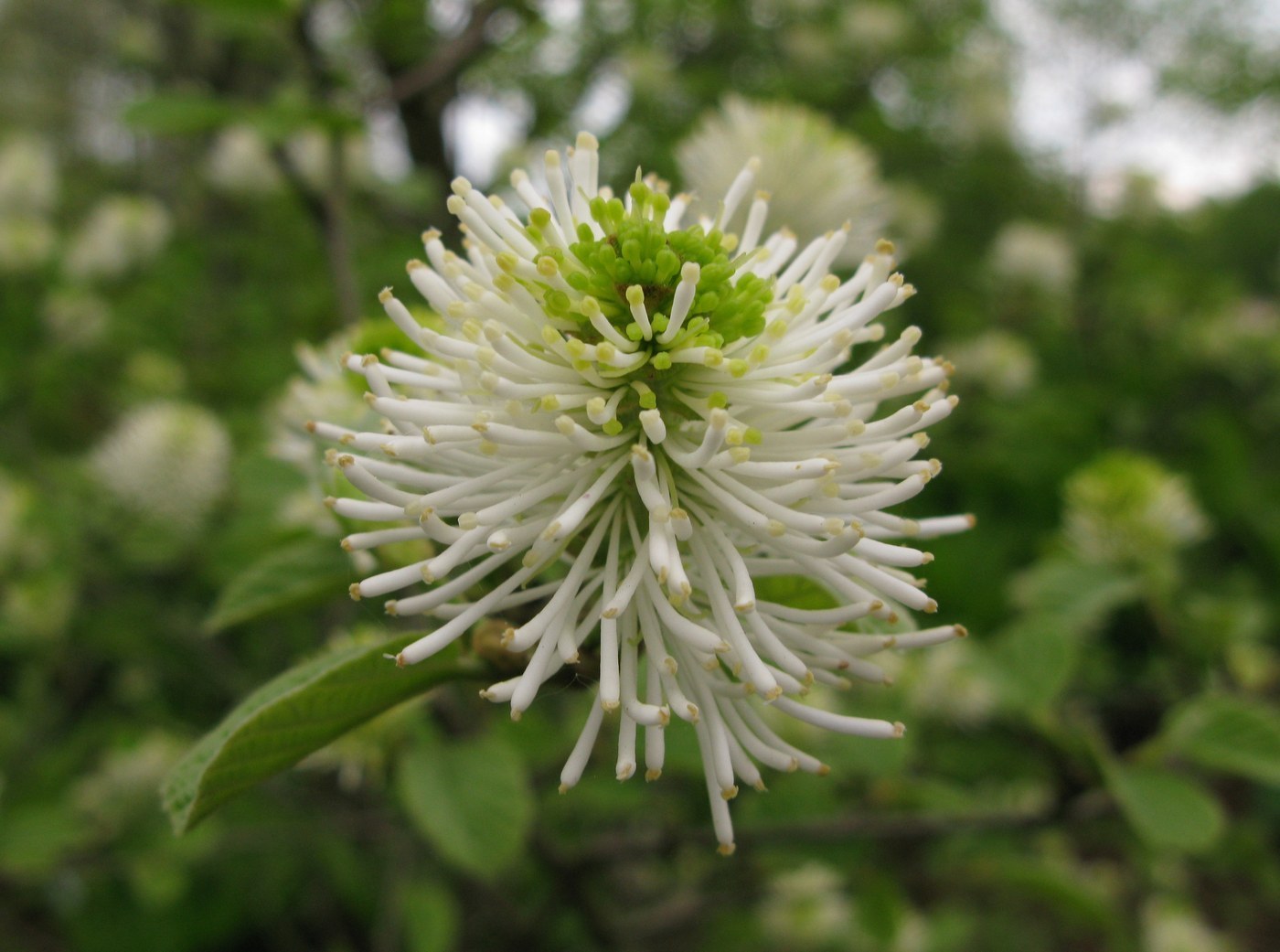
In spring, before or as leaves emerge, the branches carry upright, petal-less bottlebrush spikes made of showy white stamens. In autumn the blue-green summer foliage turns vivid blends of yellow, orange, and red.
Dwarf fothergilla (F. gardenii) stays compact, while large fothergilla (F. major) and the hybrid 'Mount Airy' grow taller—all share the same easy, four-season appeal.
How to identify it
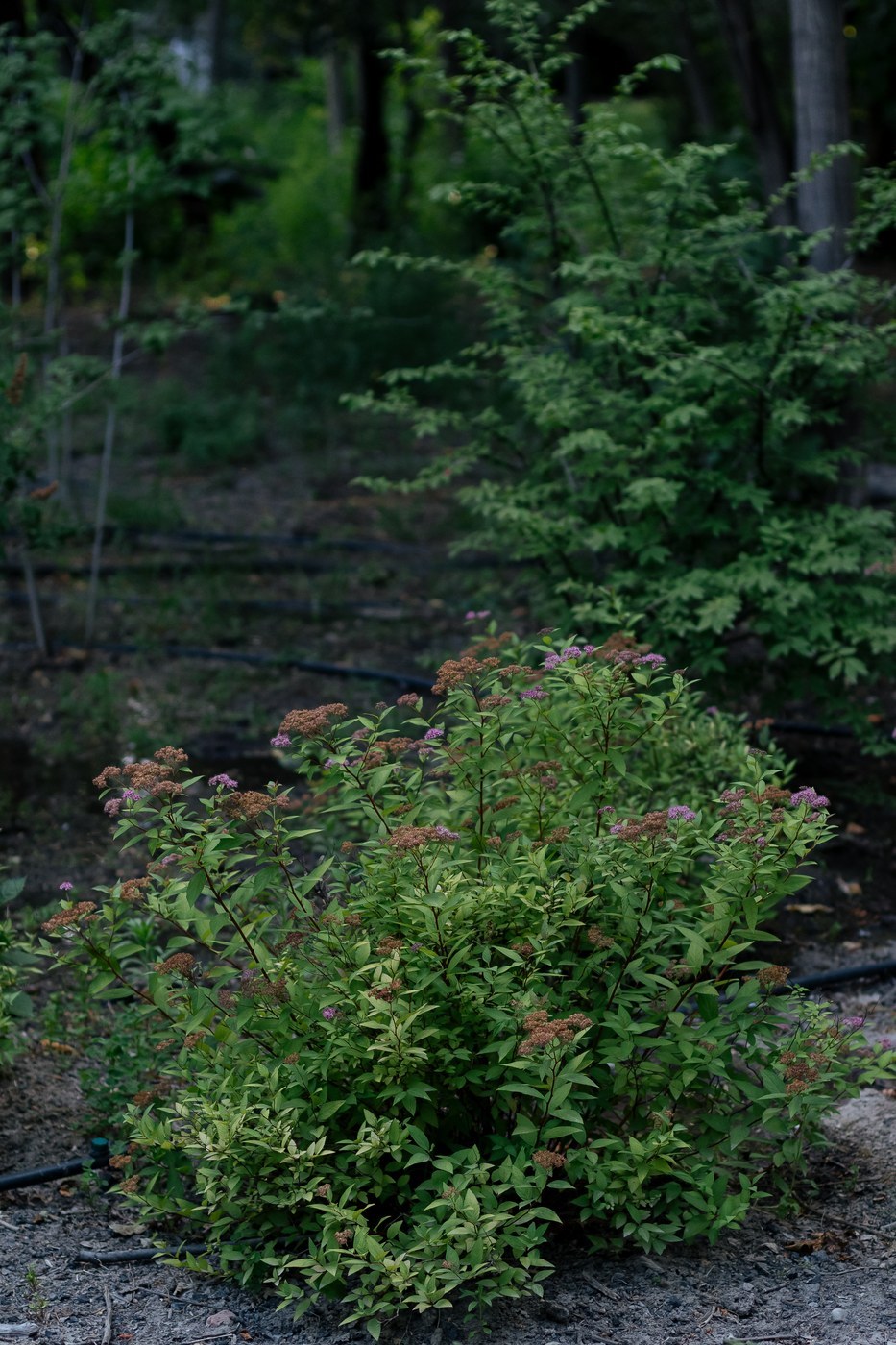
A rounded, twiggy deciduous shrub.
- Flowers: white, petal-less, fragrant bottlebrush spikes of stamens in early to mid spring
- Leaves: oval to obovate, blue-green, with scalloped edges and prominent veins
- Fall color: outstanding mixtures of yellow, orange, and scarlet, often on the same leaf
- Habit: dense, rounded, suckering; 2–3 ft (dwarf) up to 6–10 ft (large)
- Bloom timing: flowers appear with or just before the leaves
Care & growing
Easy in the right soil, fussier in poor conditions.
- Light: full sun gives the best flowering and fall color; tolerates light shade
- Water: keep soil consistently moist, especially in dry spells
- Soil: needs moist, acidic, well-drained, organic-rich soil—it dislikes alkaline or heavy clay
- Temperature: hardy in USDA zones 5–8
- Feeding: light spring application of acidifying fertilizer
- Pruning: minimal; remove suckers or shape lightly after flowering
- Propagation: by softwood cuttings, layering, or division of suckers
Habitat & origin
Fothergilla gardenii is native to the coastal plain of the southeastern United States, where it grows in moist, acidic woodlands, pocosins, and savanna edges. F. major comes from the Appalachian uplands.
In gardens it is planted in shrub borders, woodland gardens, and foundation plantings throughout the eastern U.S. and other temperate regions with suitably acidic soil.
Frequently asked questions
Do fothergilla flowers have a scent?
Yes, the white bottlebrush blooms have a sweet, honey-like fragrance in early spring.
Why is my fothergilla struggling?
It needs moist, acidic, well-drained soil. Alkaline soil, heavy clay, or drought stress are the usual causes of poor performance.
How big does fothergilla get?
Dwarf fothergilla stays around 2–3 ft, while large fothergilla and 'Mount Airy' can reach 5–10 ft tall.
When does it show fall color?
In autumn its blue-green leaves turn brilliant blends of yellow, orange, and red, usually peaking in mid to late fall.
Fothergilla guides
In-depth guides for identifying, growing, and caring for Fothergilla.