How to Care for Four O'Clock
Grow Four O'Clock (Mirabilis jalapa), an easy, bushy flower with fragrant trumpet blooms that open in late afternoon and often in mixed colors.
Read the full Four O'Clock encyclopedia entry →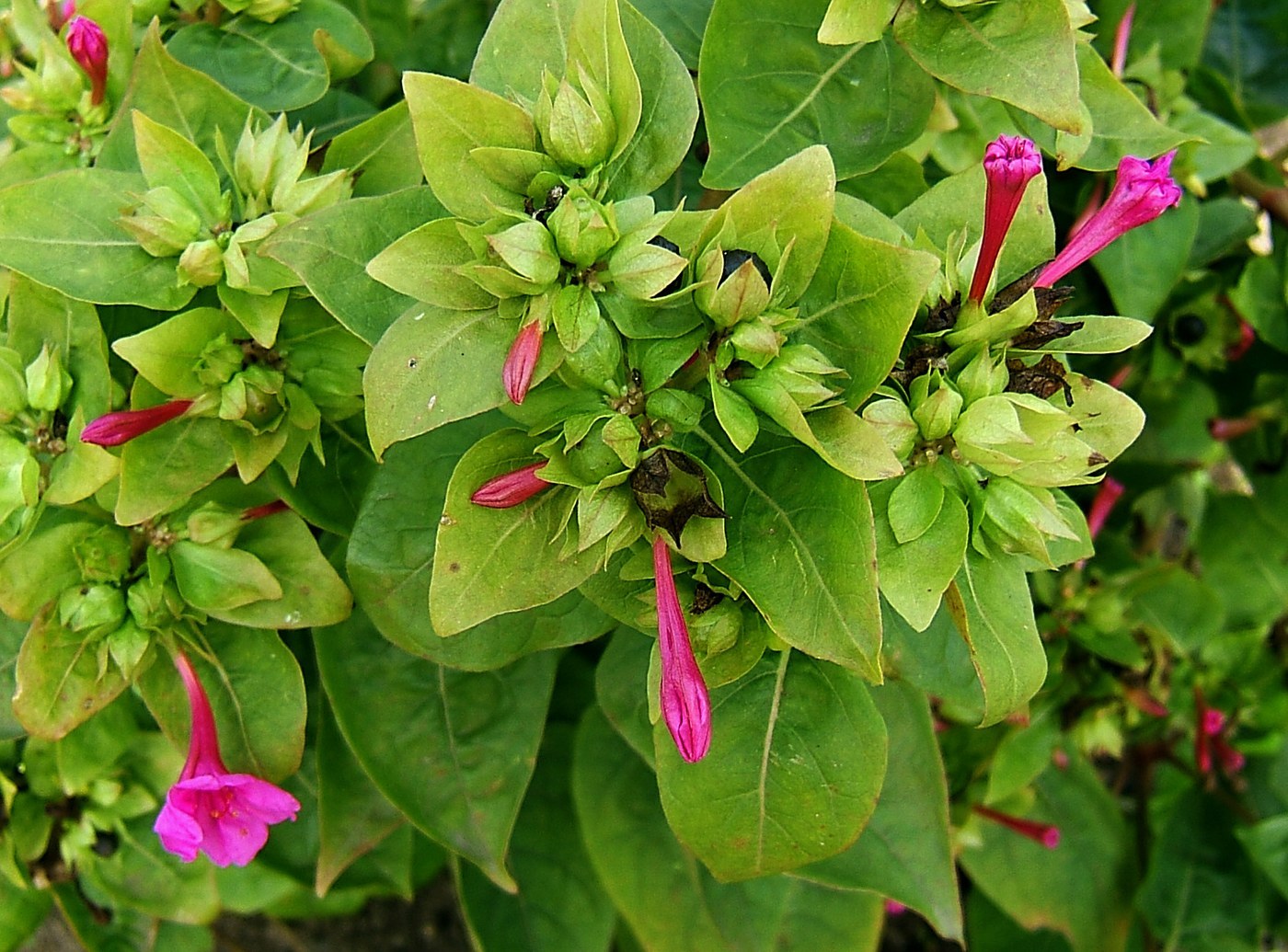
Four O'Clock (Mirabilis jalapa) is an easy, bushy, fast-growing flowering plant named for its fragrant, trumpet-shaped blooms that typically open in the late afternoon and stay open through the evening. A single plant can bear flowers in several colors at once, and it forms a rounded, shrub-like mound over a season.
Light
Grow in full sun to part shade. Full sun yields the most abundant flowering and the densest, most compact plants, while a little afternoon shade is fine and can help in very hot climates. The flowers famously open in the cooler light of late afternoon and on overcast days.
Water
Water needs are moderate, and plants become quite drought-tolerant once established, thanks to a thick tuberous root. Keep young plants watered as they settle in, then water when the top inch or two of soil dries. Deep, occasional watering suits it better than frequent shallow sips. Avoid soggy soil, which can rot the tubers.
Soil & Potting
Four O'Clock is undemanding about soil and grows in average, well-drained garden soil across a range of textures. It tolerates poorer ground but rewards moderately fertile, loose soil with lush growth. Ensure good drainage, especially where tubers overwinter. In containers, use a quality potting mix in a roomy pot to give the tuber space.
Humidity & Temperature
This is a warm-season, heat-loving plant that thrives in summer warmth and average humidity. It is frost-tender; foliage is killed by frost, though in mild-winter regions the underground tuber survives to resprout. In colder zones it is grown as an annual or the tubers are lifted and stored dry over winter.
Feeding
Feed lightly. Rich soil or a modest application of balanced fertilizer in spring and midsummer keeps it blooming, but heavy nitrogen produces leggy growth with fewer flowers. A topdressing of compost at planting is often all it needs. Container plants benefit from occasional dilute liquid feeding through the growing season.
Propagation
Propagate easily from its large, hard seeds, which sprout readily when sown after the soil warms; nick or soak them to speed germination. It also self-sows generously. Additionally, the tuberous roots can be dug, divided, and replanted, and stored tubers can be started to get a head start on the season.
Repotting / Pruning
Little pruning is needed. Pinch young plants to encourage bushiness, and trim back straggly growth to keep the mound tidy. Deadheading is optional; removing spent flowers and developing seed reduces prolific self-seeding if that is a concern. For potted plants, repot or divide the tuber when it outgrows its container.
Common Problems & Pests
Four O'Clock is generally robust and pest-resistant. Occasional issues include aphids, whiteflies, and leaf-chewing beetles such as Japanese beetles, along with rust or leaf spot in humid, crowded conditions, and root rot in waterlogged soil. Good spacing, sun, and drainage prevent most trouble. Its main nuisance is enthusiastic self-seeding, easily managed by removing seed heads.
Seasonal Care Tips
Sow seed or plant tubers after the last frost once soil is warm. Through summer, water during dry spells and enjoy the fragrant evening display; deadhead if you want to curb reseeding. As frost approaches in cold climates, either treat plants as annuals or cut back and lift the tubers to store in a cool, dry, frost-free place for replanting in spring.
Frequently asked questions
Why won't my Four O'Clock flowers open during the day?
That is normal behavior. Four O'Clock blooms open in the late afternoon and evening, and on cloudy days, then close by the next morning. Enjoy them in the cooler part of the day.
Are Four O'Clocks annual or perennial?
It depends on climate. In warm regions the tuberous root survives winter and returns each year, while in cold-winter areas it is grown as an annual or the tubers are lifted and stored over winter.
How do I keep Four O'Clock from self-seeding everywhere?
Deadhead spent blooms before they form seed, and remove developing seed heads. This curbs the plant's naturally prolific reseeding while still letting you enjoy the flowers.
Can I save Four O'Clock tubers over winter?
Yes. In cold climates, after frost cut the plant back, dig the tuber, let it dry, and store it in a cool, dry, frost-free spot. Replant it in spring once the soil warms.
Four O'Clock identified by the community
Recent Four O'Clock specimens identified with Plant Identifier.