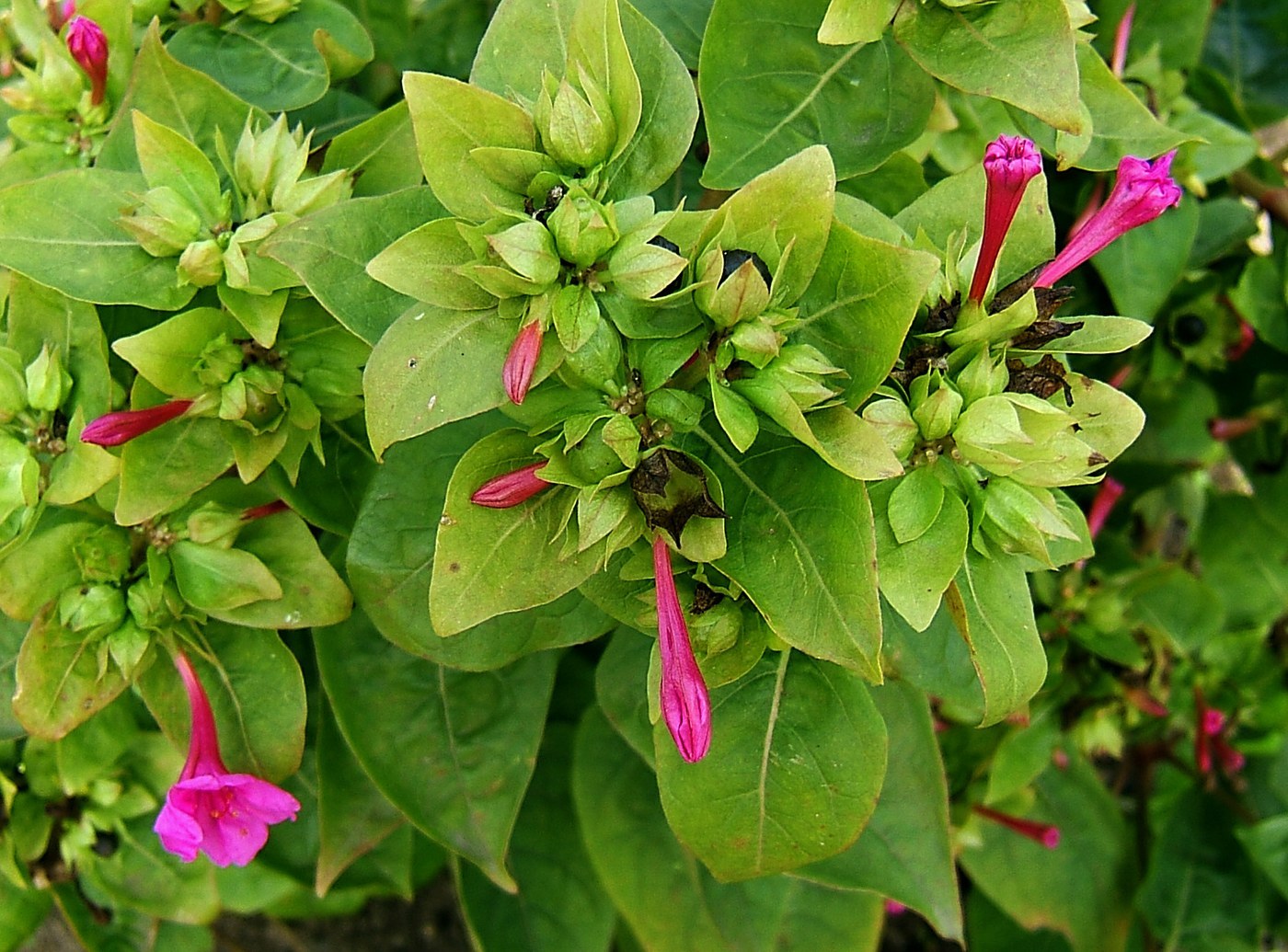
Four O'Clock
Mirabilis jalapa
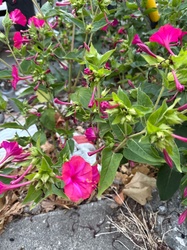
A bushy tuberous perennial famous for fragrant trumpet flowers that open in late afternoon and stay open through the night, then close by morning. A single plant can bear differently colored blooms, sometimes flecked on the same flower.
- Light
- Full sun to part shade
- Water
- Moderate; drought-tolerant once established
- Difficulty
- Easy
Got a plant like this?
Identify any plant from a photo, free.
Overview
Four o'clock, or Marvel of Peru, is a fast-growing, mounding plant that forms a thick tuberous root. It is grown as an annual in cold climates and a perennial where winters are mild.
Its charm lies in the timing of its bloom: the fragrant flowers unfurl in the late afternoon (around four o'clock) and remain open overnight to attract moths, closing again the next morning.
How to identify it
- Bushy, branching plant 2-3 ft (60-90 cm) tall and nearly as wide
- Leaves are simple, heart-shaped to oval, mid-green and arranged opposite on the stems
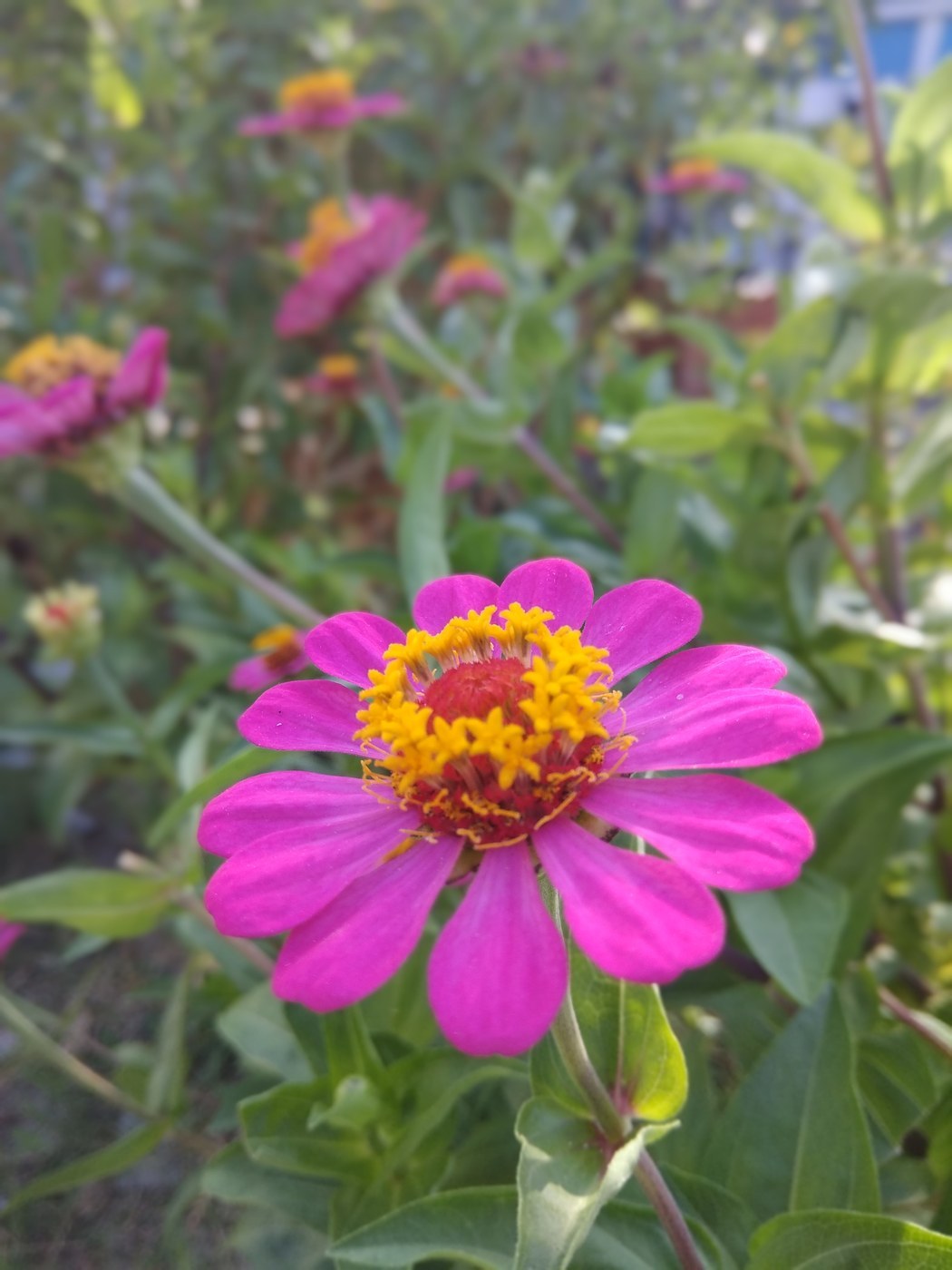
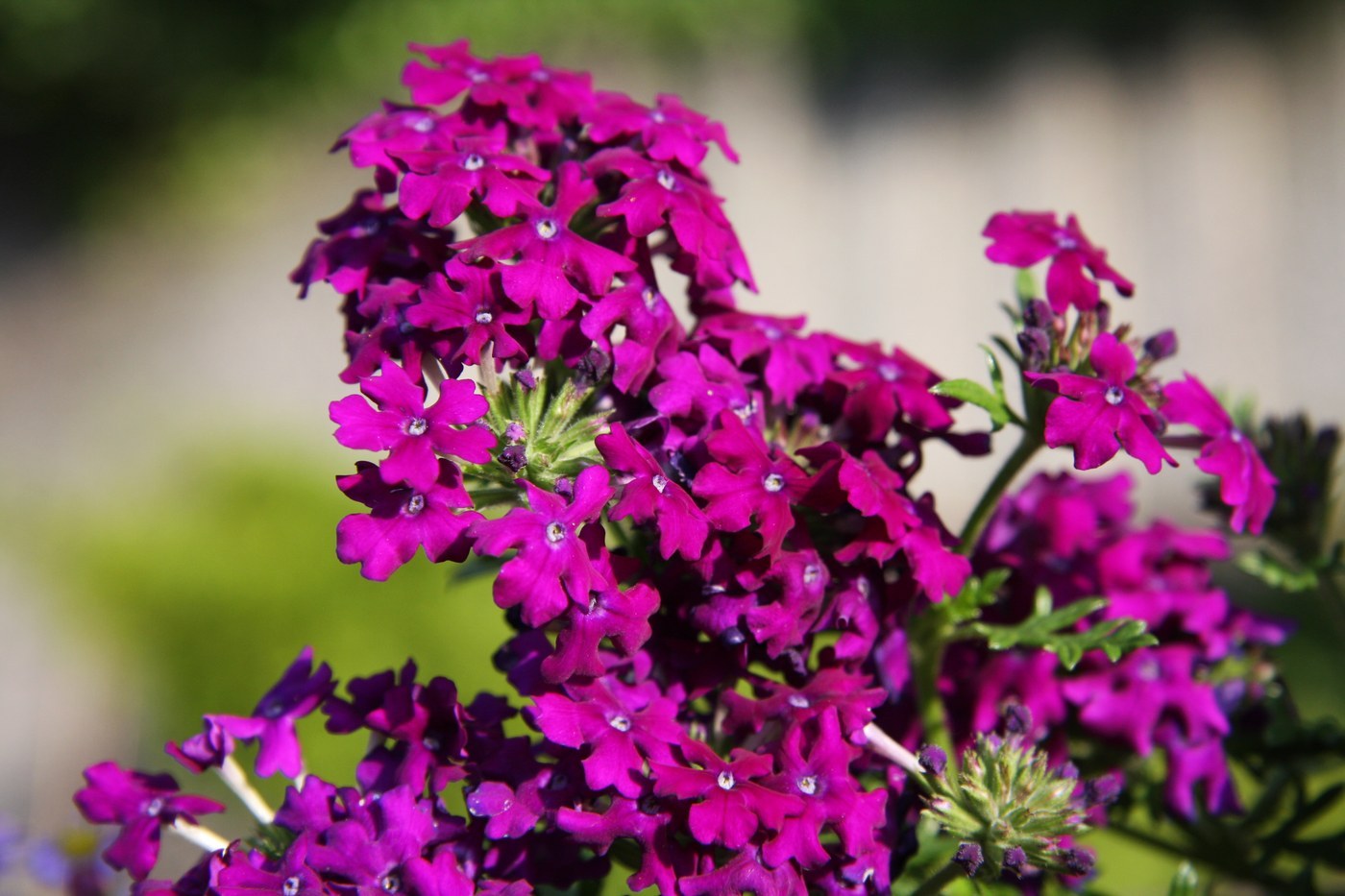
- Flowers are funnel-shaped, about 1-1.5 in across, in magenta, pink, red, yellow, white or bicolor
- Striking trait: one plant can produce several colors, and single blooms may be streaked or flecked
- Forms a large black, wrinkled seed and a fleshy underground tuber
Care & growing
- Light: Full sun to partial shade
- Water: Moderate; established plants tolerate drought
- Soil: Adaptable to most well-drained soils
- Temperature: Heat-tolerant; tops die back with frost but tubers can be lifted and stored
- Feeding: Light feeding is sufficient; rich soil already supports vigorous growth
- Propagation: Easy from seed, and tubers can be dug, stored over winter and replanted
It self-sows readily and can spread, so deadhead if you want to limit volunteers.
Habitat & origin
Native to tropical South America, notably Peru, the plant has naturalized widely across warm regions of the world.
It is a popular old-fashioned garden flower grown in beds, borders and as an informal hedge, valued for easy care and evening fragrance.
Frequently asked questions
Why is it called four o'clock?
The flowers typically open in the late afternoon, around four o'clock, stay open all night and close by the following morning.
Can one four o'clock plant have different colored flowers?
Yes, a single plant often bears blooms of several colors, and individual flowers may be streaked or flecked due to genetic variation.
Do four o'clocks come back every year?
In mild climates the tuberous roots survive winter and resprout; in cold areas they are grown as annuals or the tubers are lifted and stored.
Four O'Clock guides
In-depth guides for identifying, growing, and caring for Four O'Clock.
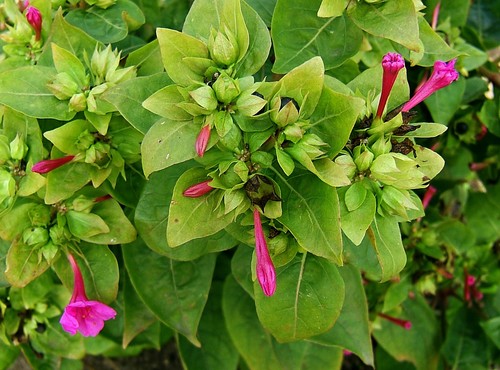
How to Care for Four O'Clock
Grow Four O'Clock (Mirabilis jalapa), an easy, bushy flower with fragrant trumpet blooms that open in late afternoon and often in mixed colors.
Four O'Clock Identification Guide
Identify the four o'clock (Mirabilis jalapa) by its fragrant trumpet flowers that open in late afternoon and its bushy habit with multicolored, sometimes marbled blooms.
Four O'Clock identified by the community
Real specimens identified with Plant Identifier.