
Four o'clock flower
Mirabilis jalapa
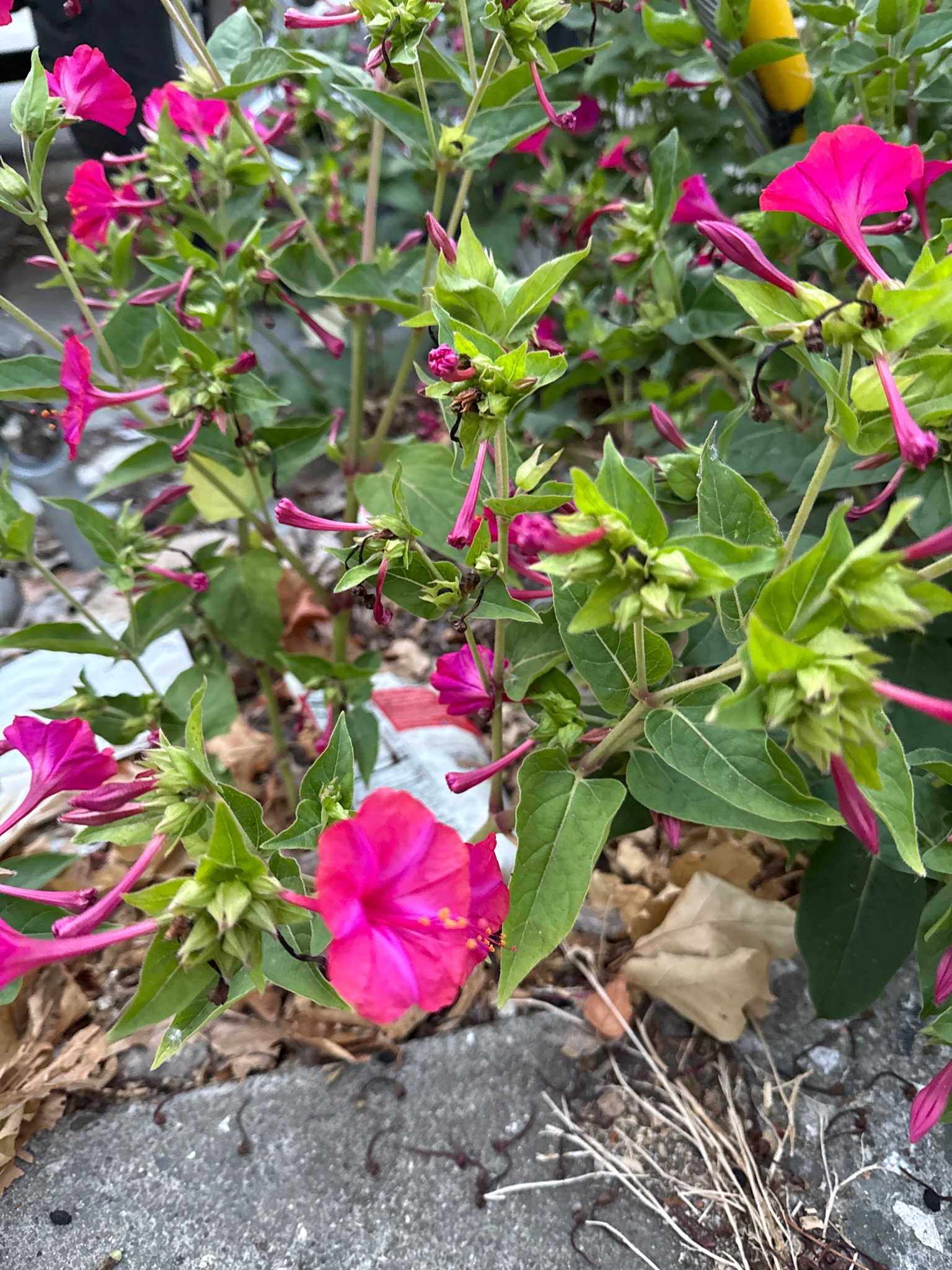
An herbaceous, bushy perennial with opposite, ovate green leaves and trumpet-shaped flowers that open in the late afternoon, featuring vibrant shades of pink, magenta, yellow, and white.
- Light
- Full sun to partial shade, requiring at least 6 hours of direct sunlight daily for optimal flowering.
- Water
- Moderate water needs; drought tolerant once established. Water when the top soil layer dries out completely. Avoid waterlogged soil to prevent root issues.
- Growth
- A bushy, upright perennial that grows with a rounded form, typically reaching mature heights of 2 to 3 feet with a similar spread, exhibiting a fast growth rate.
Care instructions
Provide full sun to partial shade in well-draining soil. Water deeply when the top inch of soil feels dry, allowing it to dry out slightly between waterings. Apply a balanced liquid fertilizer monthly during the active growing season.
Growing details
Sunlight
Full sun to partial shade, requiring at least 6 hours of direct sunlight daily for optimal flowering.
Watering
Moderate water needs; drought tolerant once established. Water when the top soil layer dries out completely. Avoid waterlogged soil to prevent root issues.
Soil
Prefers rich, loamy, well-draining soil with a neutral to slightly alkaline pH range between 6.0 and 7.5.
Hardiness zone
USDA zones 9 through 11 as a perennial, often grown as an annual in cooler temperate regions.
Growth habit
A bushy, upright perennial that grows with a rounded form, typically reaching mature heights of 2 to 3 feet with a similar spread, exhibiting a fast growth rate.
Bloom season
Blooms from mid-summer through autumn with trumpet-shaped flowers that open in the late afternoon or evening and release a sweet, noticeable fragrance.
Propagation
Easily propagated from large black seeds sown directly in spring after the last frost, or through the division of mature tuberous roots.
Common pests & issues
Generally resilient, but can occasionally be affected by powdery mildew in humid conditions and root rot if overwatered. Prevent by ensuring proper air circulation and good drainage.
Similar species
Petunia species, though Petunias have distinct sticky foliage and funnel-shaped flowers that stay open continuously rather than opening exclusively in the late afternoon.