
Foxtail Pine Identification Guide
How to identify foxtail pine (Pinus balfouriana) by its dense, foxtail-like five-needle shoots, short needles, and high-elevation Californian habitat. Covers needles, cones, bark, and look-alikes.
Read the full Foxtail Pine encyclopedia entry →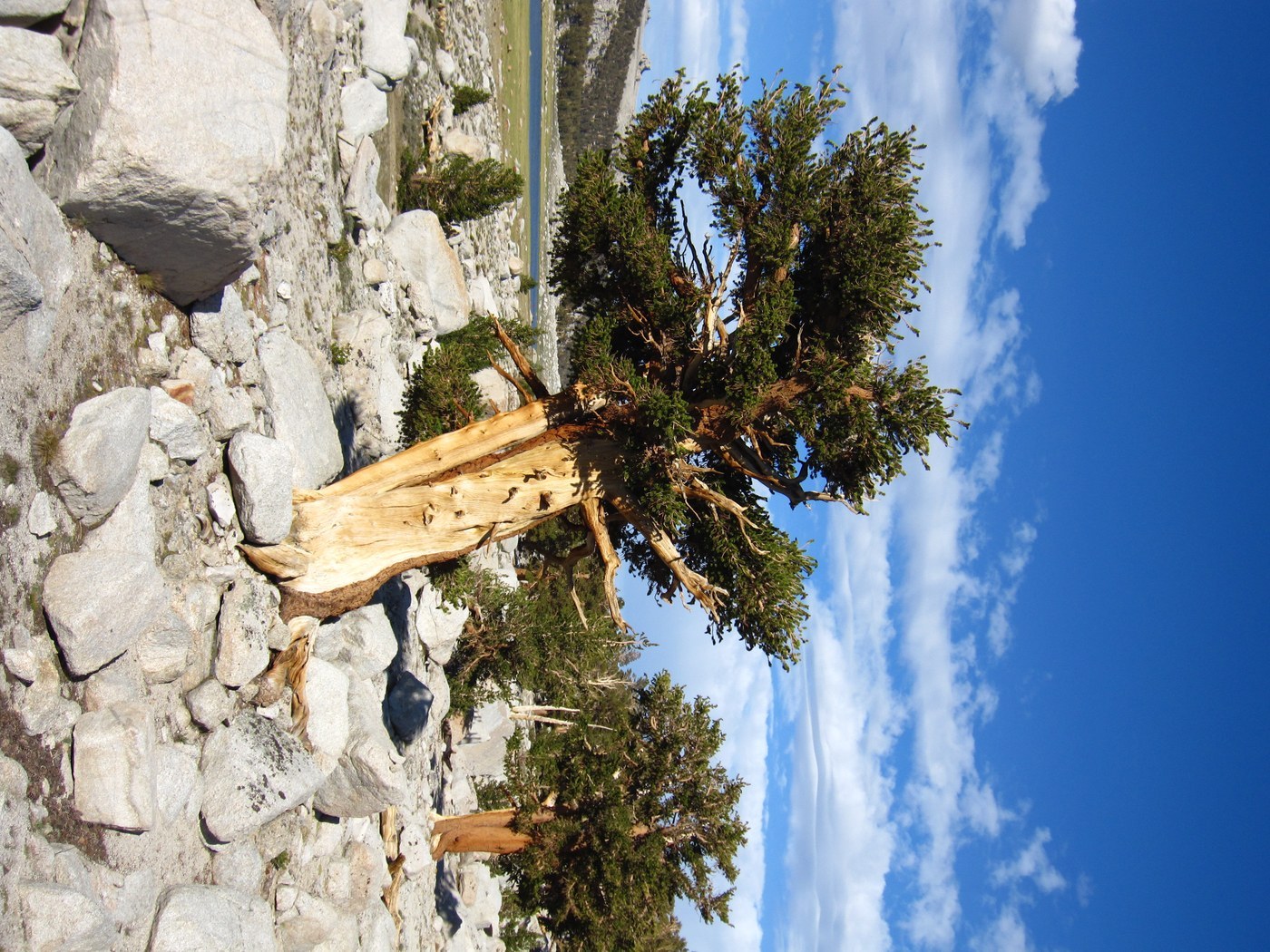
Key Identifying Features
Foxtail pine (Pinus balfouriana) is a rugged high-mountain five-needle pine named for its dense, bushy shoots that resemble a fox's tail, formed by short needles packed tightly along several years of growth. It is a close relative of the bristlecone pines and shares their gnarled, ancient look.
- Needles in bundles of five, short (2–4 cm)
- Needles densely packed and held many years, making shoots look like a foxtail/bottlebrush
- Needles curve inward against the twig, often whitish-green
- High-elevation, twisted, long-lived tree
Leaves & Stems
Needles are short (about 2–4 cm), stiff, and come five to a bundle, with a persistent basal sheath that soon falls. They are deep green on the outer face and whitish (stomatal lines) on the inner faces, curve inward and lie close to the stout shoots, and—crucially—persist for 10–15 years, so each branch end is sheathed in a thick cylinder of foliage like a foxtail. Unlike bristlecone pine, foxtail needles usually lack the white resin flecks seen on bristlecone foliage. Twigs are stout and orange-brown. Bark is reddish to grey-brown, becoming deeply furrowed into blocky plates on old trees.
Flowers & Fruit
Cones are cylindrical-ovoid, 6–12 cm long, purplish when young ripening dull red-brown, with thin scales bearing a tiny, slender, fragile prickle (much smaller than bristlecone's long incurved bristle). They open to release winged seeds and fall in a few years. Male cones are small, reddish, clustered at shoot bases in early summer.
How to Tell It Apart from Look-Alikes
- Bristlecone pines (P. longaeva, P. aristata): Cones have long, prominent incurved bristles; bristlecone needles often show white resin dots. Foxtail cone prickles are tiny and the needles cleaner.
- Limber/whitebark pine: Five needles but longer, not densely foxtailed along the shoot; different cones.
- Lodgepole/other 2-needle pines: Bundles of two, not five.
Where You'll Find It
Endemic to California, in two disjunct areas: the southern Sierra Nevada and the Klamath Mountains of the north, at high elevations (roughly 1,800–3,700 m) near treeline. Look for gnarled, picturesque, often half-dead trees on rocky alpine slopes, with dense foxtail branch ends.
Quick ID Checklist
- Needles five per bundle, short (2–4 cm)
- Dense, persistent needles forming a foxtail/bottlebrush shoot
- Needles curve inward; whitish inner faces, usually no resin dots
- Cones with tiny fragile prickles (not long bristles)
- High-elevation, twisted, ancient-looking tree in California
A short-needled five-needle pine with dense foxtail shoots near the California treeline is foxtail pine.
Frequently asked questions
Why is it called foxtail pine?
Its short needles are packed densely along several years of shoot growth and persist for over a decade, so each branch tip is clothed in a thick cylinder of foliage that resembles a fox's bushy tail.
How do I tell foxtail pine from bristlecone pine?
Bristlecone cones have long, conspicuous incurved bristles and the needles often show white resin flecks, whereas foxtail pine cones have only tiny fragile prickles and cleaner needles. They are close relatives that grow in different California ranges.
How many needles are in a bundle?
Five, as in all the white pines. The bundles are short, stiff, and curve inward against the stout shoots.
Where can I find foxtail pine?
It is endemic to California, growing near treeline in the southern Sierra Nevada and, separately, the Klamath Mountains in the north, often as gnarled, ancient-looking specimens.