
How to Care for Garlic Mustard
Garlic Mustard is a shade-tolerant biennial with heart-shaped leaves and small white flowers; grow it in moist soil and contain its vigorous self-seeding.
Read the full Garlic Mustard encyclopedia entry →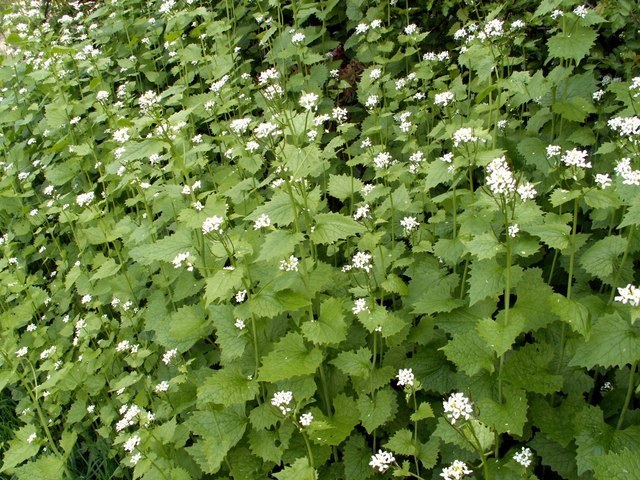
Garlic Mustard (Alliaria petiolata) is a shade-tolerant biennial forming a low rosette of kidney- to heart-shaped, scalloped leaves in its first year and sending up flowering stems of small four-petaled white blooms in its second. It is undemanding and grows readily in cool, moist, shaded ground. Note that it self-seeds aggressively and is considered invasive in many regions, so grow it only where you can contain it.
Light
Part shade to full shade is ideal. Garlic Mustard evolved as a woodland-edge plant and thrives under trees, along hedgerows, and in dappled light. It tolerates some morning sun but struggles in hot, exposed, full-sun sites where the soil dries.
Water
Moderate watering keeps this plant happy; it prefers consistently moist soil and dislikes prolonged drought. In dry spells the foliage wilts and the rosettes stall. It does not need standing wet conditions, just steady moisture typical of a shaded woodland floor.
Soil & Potting
Adaptable to most soils, it does best in rich, moist, well-drained loam with plenty of organic matter. Neutral to slightly alkaline pH is preferred, though it grows across a wide range. In containers, use a general-purpose potting mix and keep it shaded and evenly moist.
Humidity & Temperature
A hardy, cool-climate biennial, Garlic Mustard withstands cold winters and emerges early in spring. It favors the moist, moderately humid microclimate of shaded ground. Hot, dry summer air accelerates flowering, seed set, and die-back of the second-year plants.
Feeding
Feeding is rarely necessary in decent soil. If grown in poor ground, a light spring dressing of compost supports leafy rosette growth. Avoid heavy fertilization, which only encourages even more vigorous spread.
Propagation
Propagation is by seed, which the plant produces in great abundance. Sow fresh seed in autumn onto moist, shaded soil; it typically needs a period of cold to germinate the following spring. First-year plants form rosettes, then flower and set seed in year two before dying. Because it self-sows so freely, deliberate propagation is seldom needed.
Repotting / Pruning
As a biennial there is little long-term maintenance. To manage its spread, cut or pull the flowering stems before the slender seed pods ripen and scatter. This is the single most important task with this plant. Remove second-year stalks after flowering to prevent unwanted seedlings.
Common Problems & Pests
Garlic Mustard is remarkably free of pests and diseases, which is part of why it spreads so successfully. Occasional downy mildew or leaf spot may appear in crowded, damp conditions. The real "problem" is its invasiveness: monitor closely, deadhead before seed drop, and remove volunteer seedlings promptly to keep it from taking over a bed or naturalizing beyond your garden.
Seasonal Care Tips
In early spring, overwintered rosettes bolt and flower; this is the window to cut stems before seeds form. Through summer, second-year plants die back after seeding while new first-year rosettes establish. In autumn, thin or remove excess rosettes. In winter, the evergreen rosettes persist at ground level, ready to surge again in spring.
Frequently asked questions
Is Garlic Mustard a perennial?
No, it is a biennial. It forms a leafy rosette in its first year, flowers and sets seed in its second year, then dies. It persists in a garden only because it reseeds so prolifically.
How do I keep Garlic Mustard from taking over?
Cut or pull the flowering stems before the seed pods ripen, and remove volunteer rosettes as they appear. Because a single plant sheds hundreds of seeds, preventing seed set is the key to control.
Will Garlic Mustard grow in deep shade?
Yes. It is one of the more shade-tolerant plants and grows well under trees and in woodland conditions, provided the soil stays reasonably moist.
Why are my second-year plants dying?
That is normal. Garlic Mustard is biennial, so second-year plants naturally die after they flower and set seed. New first-year rosettes take their place for the following season.