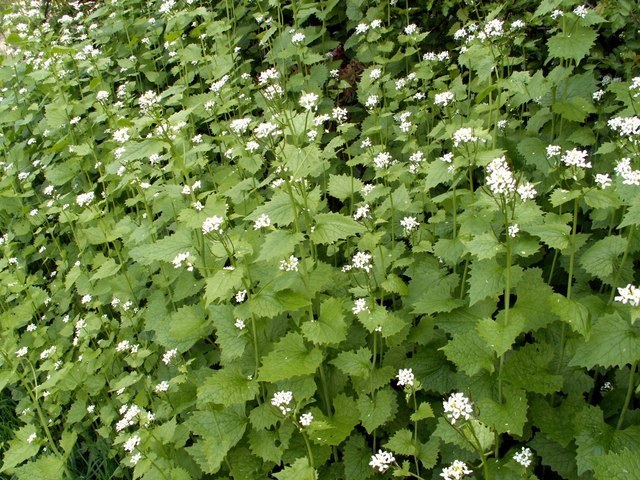
Garlic Mustard
Alliaria petiolata
Garlic mustard is an aggressive biennial herb with garlic-scented leaves and small white flowers, and one of North America's most damaging invasive plants.
- Light
- Part shade to shade
- Water
- Moderate; prefers moist soil
- Difficulty
- Easy
Got a plant like this?
Identify any plant from a photo, free.
Overview
Garlic mustard (Alliaria petiolata) is a biennial herb in the mustard family that emits a garlic-like odor when its leaves are crushed. Native to Europe, it has become a highly invasive plant in North American woodlands.
It is especially destructive because it releases chemicals that inhibit native plants and disrupt soil fungi, allowing it to dominate the forest floor. In its first year it forms a rosette, and in its second year it bolts, flowers, sets abundant seed, and dies.
How to identify it
Identified by its garlic smell and toothed leaves.
- Smell: Crushed leaves and stems smell distinctly of garlic
- First-year leaves: Kidney-shaped, scalloped, in a low rosette
- Second-year leaves: Triangular to heart-shaped with toothed margins along an upright stem
- Flowers: Small, white, four-petaled, in clusters at stem tips
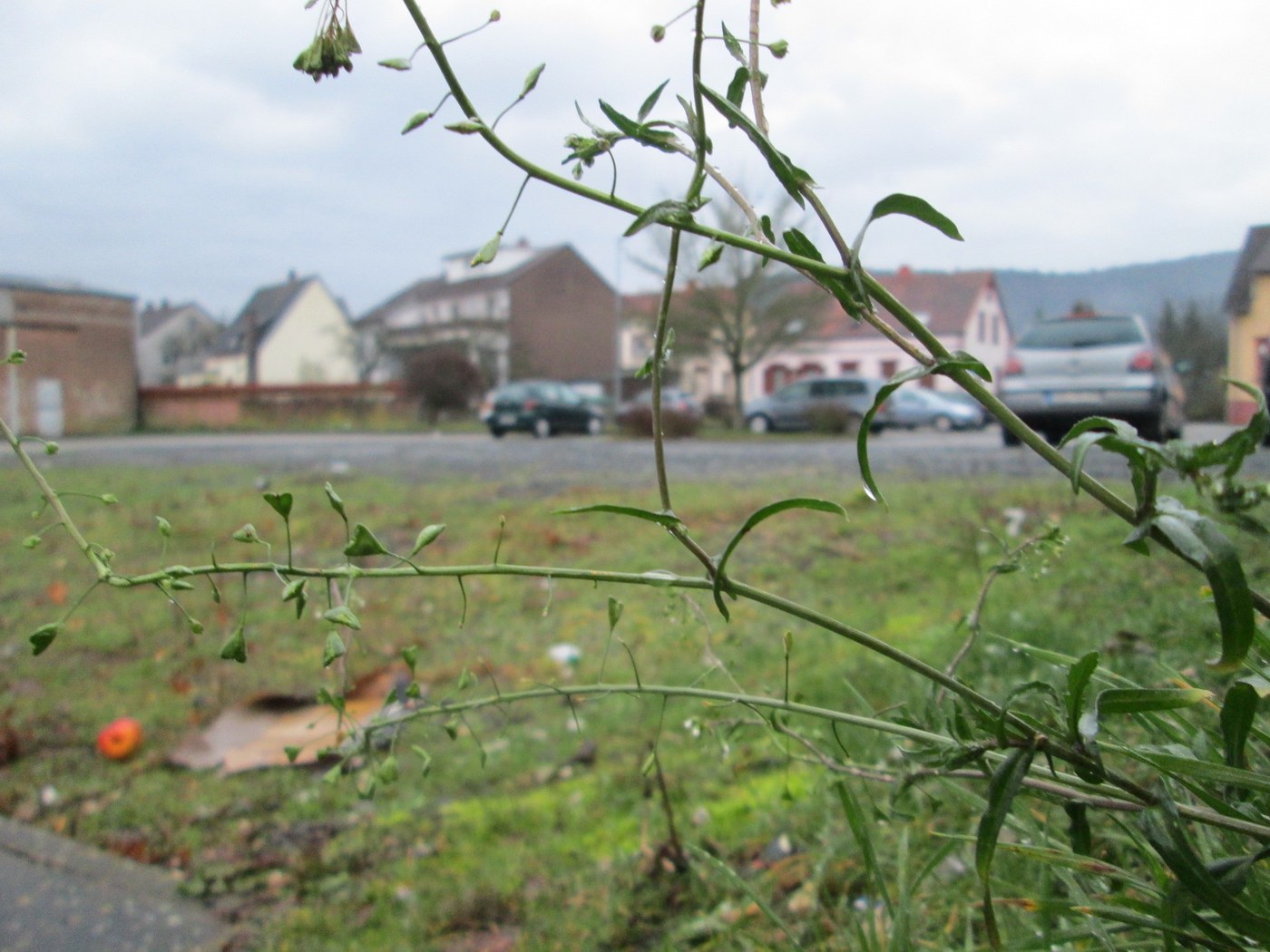
- Seed pods: Slender, upright capsules (siliques) that release many small black seeds
- Size: Flowering plants reach 1-4 feet tall
Care & growing
Not cultivated; included for control of this invasive.
- Light: Thrives in shade and part shade, including dense forest understory
- Water: Prefers moist, well-drained soils
- Soil: Tolerates a range of soils; common in rich woodland
- Temperature: Cold-hardy biennial
- Control: Hand-pull (including the taproot) before seeds set, bag and dispose of plants; repeat for several years to exhaust the seed bank
- Spread: By prolific seed only
Habitat & origin
Native to Europe and parts of Asia and Africa, garlic mustard was introduced to North America in the 1800s as a garden herb. It is now a major invasive across the eastern and midwestern United States and Canada.
It invades shaded woodlands, forest edges, trails, floodplains, and roadsides, displacing native wildflowers and harming forest ecosystems.
Frequently asked questions
Why is garlic mustard so invasive?
It produces abundant seed, thrives in shade, and releases chemicals that suppress native plants and the soil fungi they depend on, letting it dominate forest floors.
How do I get rid of garlic mustard?
Hand-pull plants including the taproot before they set seed, bag and dispose of them rather than composting, and repeat each year for several years to deplete the seed bank.
How do I recognize garlic mustard?
Crush a leaf, which smells strongly of garlic, and look for toothed, heart- to kidney-shaped leaves and small four-petaled white flowers on a plant in shaded woods.
How tall does garlic mustard grow?
In its second, flowering year it reaches about 1-4 feet tall on an upright stem, after spending its first year as a low rosette.
Garlic Mustard guides
In-depth guides for identifying, growing, and caring for Garlic Mustard.
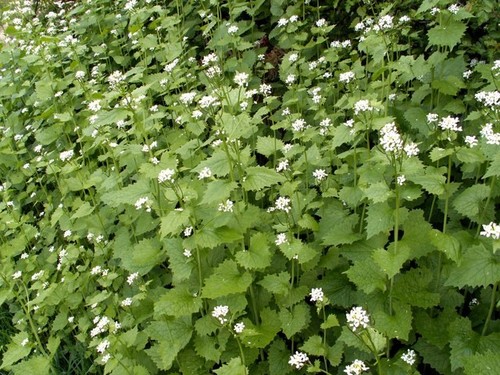
How to Care for Garlic Mustard
Garlic Mustard is a shade-tolerant biennial with heart-shaped leaves and small white flowers; grow it in moist soil and contain its vigorous self-seeding.
Garlic Mustard Identification Guide
How to identify garlic mustard (Alliaria petiolata) by its garlic-scented crushed leaves, scalloped to triangular leaves, and four-petaled white flowers.