
How to Care for Garlic
Grow robust garlic with full sun, rich loose soil, and a fall planting for the biggest bulbs come summer.
Read the full Garlic encyclopedia entry →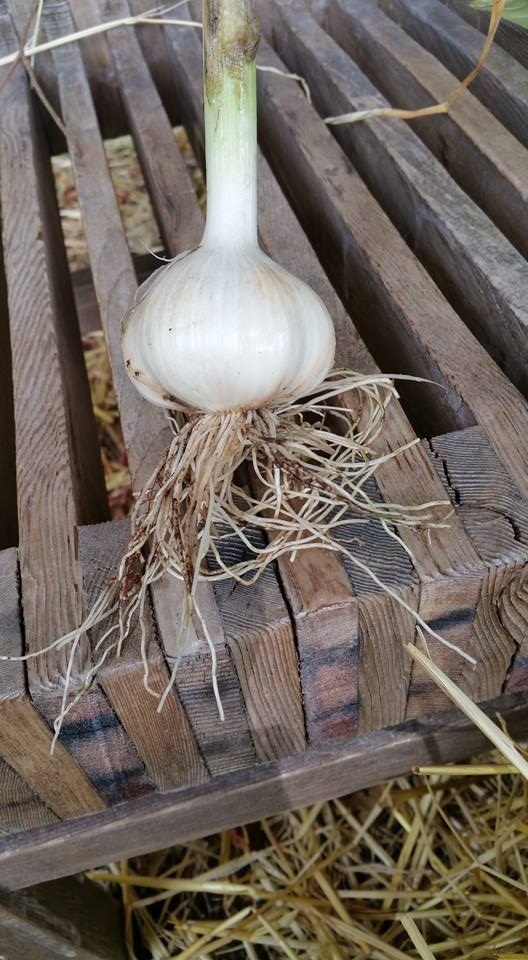
Garlic (Allium sativum) is a hardy, cool-season bulb grown from individual cloves that split and fatten underground over a long season. It is one of the easiest plants for a beginner: plant in autumn, mulch, and let winter do the work.
Light
Garlic demands full sun, at least 6 to 8 hours of direct light daily. The more sun the foliage receives, the more energy it stores in the developing bulb. In shade the plants stretch, stay pale, and produce small, loosely formed heads. Choose an open bed away from tall neighbors that would cast shadows as the season warms.
Water
Keep the soil evenly moist but never waterlogged during the active growing months, roughly an inch of water per week. As the plants approach maturity and the lower leaves begin to yellow and brown, reduce watering sharply; excess moisture at bulbing time encourages rot and staining of the papery wrappers. Stop irrigating entirely a couple of weeks before lifting.
Soil & Potting
Garlic thrives in deep, loose, fertile loam that drains freely, with a near-neutral pH around 6.0 to 7.0. Work in plenty of well-rotted compost before planting so the cloves can push roots down easily. Heavy clay produces misshapen bulbs, so lighten it with grit and organic matter or grow in raised beds. In containers, use a deep pot at least 8 inches deep filled with a rich, free-draining mix.
Humidity & Temperature
Garlic needs a cold period (vernalization) to split into a multi-clove head, which is why it is planted in fall in most climates. It tolerates hard frost and even snow cover once established. It grows best in the cool of spring, then finishes as summer heat arrives. In mild-winter regions, refrigerate seed cloves for several weeks before spring planting to mimic the chill.
Feeding
Garlic is a heavy feeder. Mix a balanced or nitrogen-rich fertilizer into the bed at planting, then side-dress with nitrogen in early spring as new growth surges to build big, leafy tops. Ease off nitrogen once bulbing begins in late spring so the plant channels energy into the head rather than the leaves.
Propagation
Garlic is propagated by separating a head into individual cloves and planting each one, pointed end up, about 2 inches deep and 6 inches apart. Use the largest, healthiest cloves for the biggest bulbs. Hardneck types also send up a curling flower stalk (scape) that can be removed to redirect energy into the bulb.
Repotting / Pruning
Garlic is a one-season crop rather than a permanent plant, so there is no repotting. The main maintenance task is snapping off the scapes on hardneck varieties once they curl, which encourages a larger bulb. Keep the bed weed-free, as garlic competes poorly with weeds for water and nutrients.
Common Problems & Pests
Watch for onion thrips, which silver and speckle the leaves, and onion maggots at the base. Fungal issues such as white rot, rust, and basal rot are worsened by wet, crowded conditions and poor rotation, so avoid planting garlic (or other alliums) in the same spot year after year. Yellowing that is not tied to maturity usually signals overwatering or nitrogen shortage.
Seasonal Care Tips
Plant cloves in autumn a few weeks before the ground freezes and mulch with straw for winter protection. In spring, pull back mulch as growth resumes and feed. Remove scapes in early summer. Lift the bulbs when about a third to half the leaves have browned, then cure them in a warm, airy, shaded spot for a few weeks before storing.
Frequently asked questions
When should I plant garlic?
In most climates, plant cloves in autumn a few weeks before the ground freezes so they root before winter and receive the cold period needed to form a multi-clove head. In very mild regions, chill cloves in the refrigerator and plant in early spring.
Why are my garlic bulbs small?
Small bulbs usually mean too little sun, crowding, weed competition, insufficient nitrogen early in the season, or planting small cloves. Give full sun, space cloves 6 inches apart, feed in spring, and always plant your largest cloves.
Should I remove the curly scapes?
Yes, on hardneck garlic. Snapping off the curling scape once it appears redirects the plant's energy from making a flower into fattening the underground bulb, producing a noticeably larger head.
How do I know when garlic is ready to harvest?
Stop watering and lift the bulbs when roughly a third to half of the lower leaves have yellowed and browned while the upper leaves are still green. Cure the heads in a warm, airy, shaded place for a few weeks.