How to Care for Gaura
Grow airy, long-blooming Gaura in full sun with lean, sharply drained soil for a cloud of butterfly-like flowers all summer.
Read the full Gaura encyclopedia entry →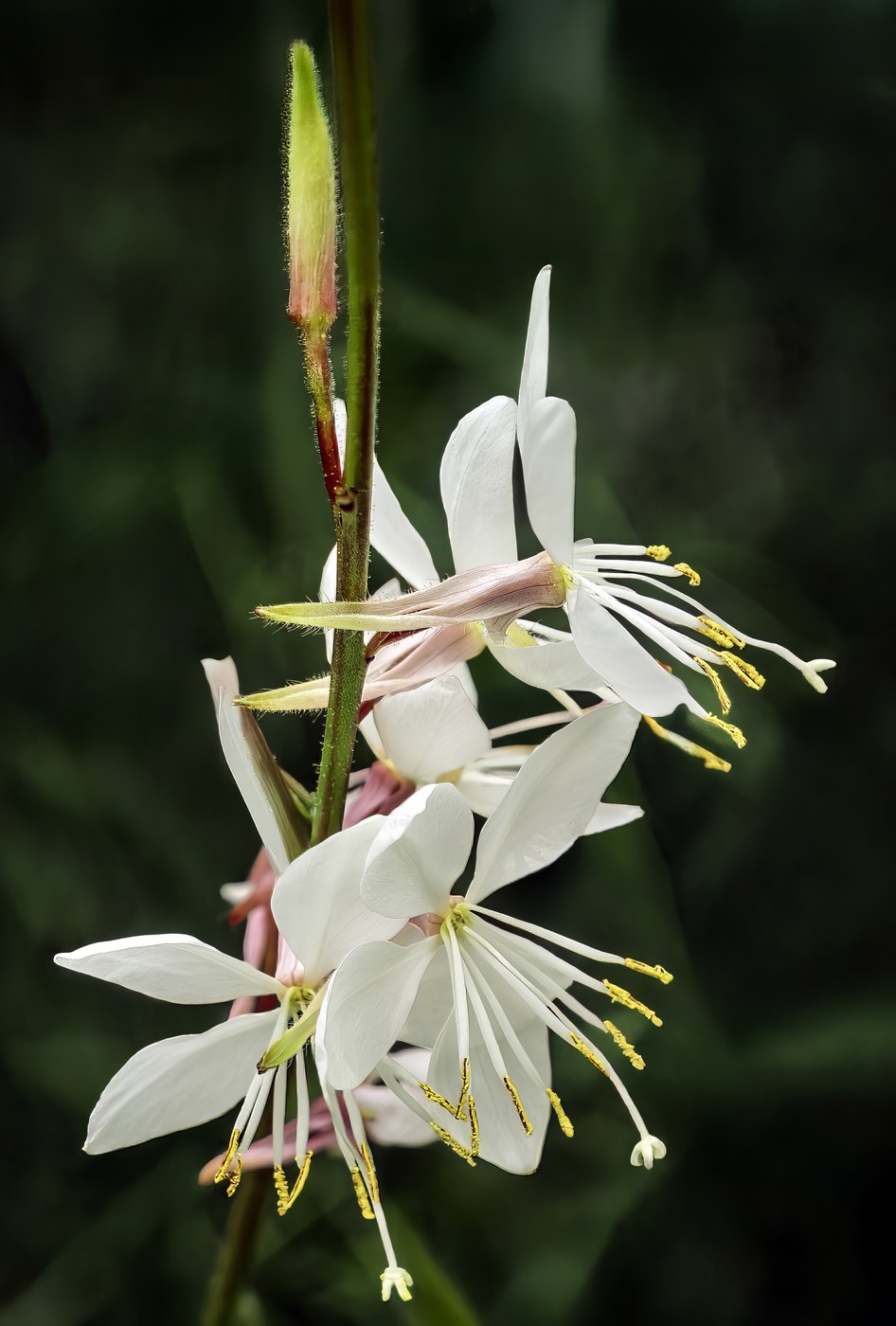
Gaura (Oenothera lindheimeri, long known as Gaura lindheimeri) is a wiry, prairie-tough perennial that sends up airy wands of pink-and-white blossoms that flutter on the slightest breeze. It is an easy, drought-tolerant plant that rewards a hot, sunny, well-drained spot with months of graceful bloom.
Light
Give Gaura full sun — at least six to eight hours of direct light daily. It is a sun-lover from the open plains and needs strong light to stay compact and flower heavily. In too much shade the stems stretch, flop, and bloom sparsely.
Water
Gaura is drought-tolerant once established. Water regularly the first season to help the deep taproot develop, then only during extended dry spells. Established plants prefer to run on the dry side; soggy soil is the fastest way to lose them. Always let the soil dry between waterings.
Soil & Potting
Sharp drainage is essential. Gaura thrives in lean, sandy or gravelly soils and resents heavy, wet clay. Amend dense ground with grit or coarse sand and plant on a slight mound if drainage is poor. It tolerates poor, low-fertility soil well and actually flops less when the soil is not too rich. In containers use a gritty, free-draining mix and a pot with ample drainage holes.
Humidity & Temperature
A warm-climate perennial, Gaura shrugs off heat and humidity and handles reflected warmth from paving beautifully. It is reliably perennial in mild regions and can be grown as a short-lived perennial or annual where winters are severe. Good airflow keeps the fine foliage healthy in humid summers.
Feeding
Gaura needs little feeding. Overly rich soil produces lax, floppy growth. A light application of a balanced slow-release fertilizer in spring is plenty; skip heavy feeding entirely in lean soils.
Propagation
Propagate from seed sown in spring, from softwood basal cuttings taken in late spring, or by careful division — though the deep taproot makes division tricky, so cuttings and seed are more reliable. Named cultivars come true only from cuttings.
Repotting / Pruning
Shear the plant back by a third to a half in midsummer to tidy sprawling stems and spark a fresh flush of bloom. Cut it back hard in late winter before new growth begins. In containers, refresh the mix and pot up in spring as needed, keeping drainage sharp.
Common Problems & Pests
Gaura is largely trouble-free. Its main enemies are root rot and crown rot from wet, heavy soil — solve these with drainage rather than treatment. Flopping is the most common complaint; lean soil, full sun, and a midseason haircut all help. Occasional aphids or powdery mildew appear in crowded, humid conditions; improve airflow and thin the stems.
Seasonal Care Tips
Plant in spring after frost. Deadhead or shear in midsummer to prolong blooming into fall. In cold regions, leave the old stems standing over winter as protection and cut back in early spring. Mulch lightly but keep mulch off the crown to prevent rot.
Frequently asked questions
Why is my Gaura flopping over?
Flopping usually comes from too little sun or overly rich, moist soil. Move it to a full-sun spot with lean, well-drained soil and shear it back by a third in midsummer to encourage sturdier, bushier growth.
How often should I water established Gaura?
Very little. Once the deep taproot is established, water only during prolonged drought and always let the soil dry out between waterings, since Gaura is highly drought-tolerant and rots in wet soil.
Can Gaura grow in a container?
Yes, if you use a gritty, fast-draining mix and a pot with good drainage holes, place it in full sun, and avoid overwatering. Compact cultivars perform best in pots.
Should I cut Gaura back in winter?
In cold regions, leave the stems standing over winter for crown protection and cut them back to a few inches in early spring before new growth emerges.
Gaura identified by the community
Recent Gaura specimens identified with Plant Identifier.