Gaura
Oenothera lindheimeri
Gaura is an airy, long-blooming perennial whose delicate pink or white flowers dance on slender, wiry stems like a cloud of butterflies. It is heat- and drought-tolerant and blooms for months.
- Light
- Full sun
- Water
- Drought-tolerant once established
- Difficulty
- Easy
Got a plant like this?
Identify any plant from a photo, free.
Overview
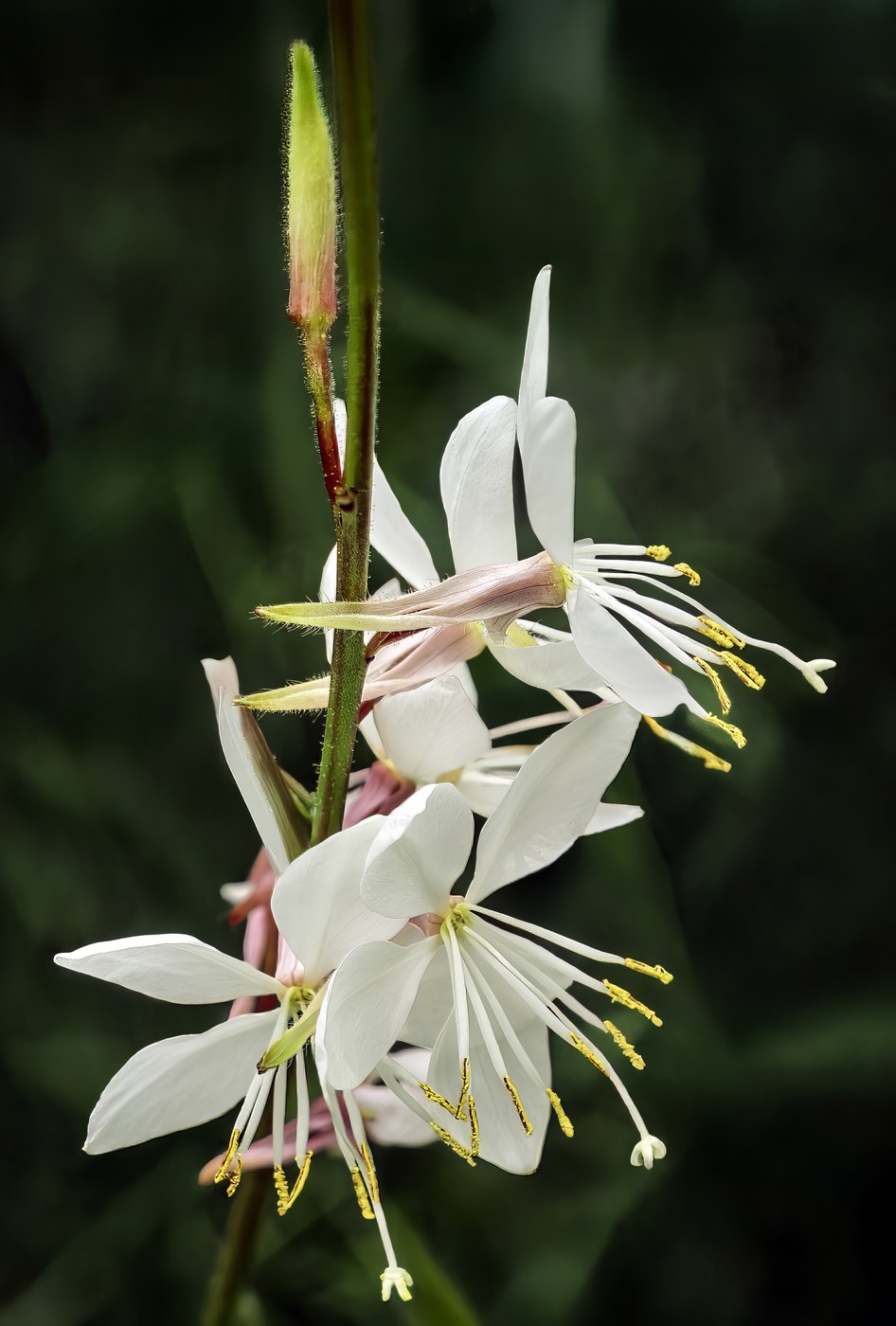
Gaura (Oenothera lindheimeri, formerly Gaura lindheimeri) is a graceful perennial in the evening primrose family (Onagraceae). Its common name 'whirling butterflies' captures how its four-petaled blooms flutter on thin, arching stems in the slightest breeze.
Native to the southern United States, it is exceptionally tough, blooming from late spring until frost with little care. The flowers open white and often age to soft pink.
With its loose, see-through habit, gaura adds movement and a long season of soft color to sunny borders and containers.
How to identify it
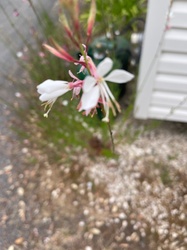
Identify gaura by its wiry stems and butterfly-like flowers.
- Flowers: Small, four-petaled, white to pink blooms with long protruding stamens, borne loosely along slender stems
- Leaves: Narrow, lance-shaped, sometimes spotted, forming a low basal clump
- Size: 2 to 4 feet tall with a loose, airy, fountain-like spread
- Stems: Thin, wiry, and wand-like, swaying readily in wind
- Bloom time: Late spring through autumn
Care & growing
A low-maintenance plant that thrives in heat and lean soil.
- Light: Full sun for best flowering and sturdy growth
- Water: Drought-tolerant once established; water sparingly and avoid soggy soil
- Soil: Well-drained, average to poor soil; resents wet, heavy ground
- Temperature: Hardy in USDA zones 5 to 9
- Feeding: Little to none; rich soil causes floppy growth
- Propagation: Seed, basal cuttings, or division (though its deep taproot resents disturbance); shear midseason to refresh
Habitat & origin
Native to prairies, open woodlands, and disturbed ground in Texas, Louisiana, and the south-central United States.
Its heat and drought tolerance suit it to sunny borders, gravel gardens, containers, and naturalistic prairie plantings. It is widely grown in warm temperate gardens worldwide, with many compact and richly colored cultivars.
Frequently asked questions
Why is gaura called whirling butterflies?
Its delicate flowers on thin, wiry stems flutter and sway in the breeze, resembling a swarm of butterflies.
How long does gaura bloom?
It is one of the longest-blooming perennials, flowering from late spring until the first hard frost.
Why is my gaura floppy?
Rich soil, too much water, or shade causes lax growth. Give it full sun and lean, dry soil, and shear it midseason.
Is gaura a perennial?
Yes, it is a short-lived perennial. It may self-sow to replace itself and is hardy in zones 5 to 9.
Gaura guides
In-depth guides for identifying, growing, and caring for Gaura.
Gaura identified by the community
Real specimens identified with Plant Identifier.