
Geum Identification Guide
How to identify Geum (avens) by its low rosettes of pinnate, lyre-shaped leaves and cheerful five-petaled flowers in red, orange, or yellow on wiry branching stems.
Read the full Geum encyclopedia entry →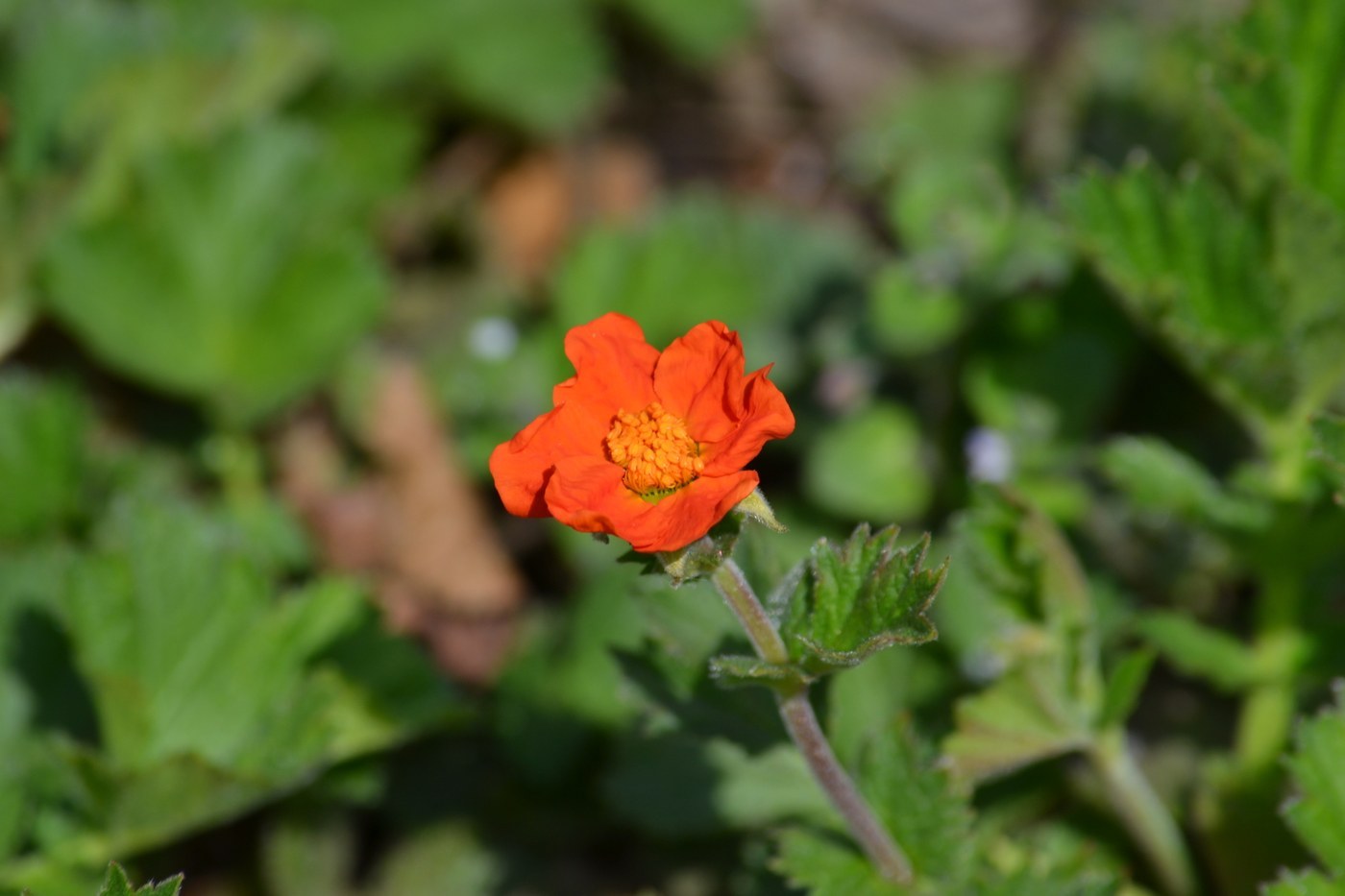
Key Identifying Features
Geum (commonly called avens) is a clump-forming perennial in the rose family (Rosaceae), grown for bright five-petaled flowers in warm reds, oranges, and yellows held on slender, branching stems above a low rosette of textured leaves.
- Low basal rosette of crinkled, lobed leaves
- Wiry, branching flower stems 12-24 inches tall
- Flowers single or semi-double, 5 petals, in red/orange/yellow
- Distinctive fluffy or hooked seed heads after bloom
Leaves & Stems
The basal leaves are the key vegetative clue: they are pinnately divided (lyre-shaped), meaning each leaf has a large rounded terminal lobe and smaller leaflets down the stalk, all with toothed, scalloped edges and a slightly hairy, crinkled texture. Stem leaves are smaller and three-lobed. Stems are thin, hairy, and branching, holding the flowers airily above the foliage.
Flowers & Fruit
Flowers are typically 1-1.5 inches across with five (or many, in doubles) rounded petals surrounding a boss of yellow stamens, in colors from scarlet and tangerine to apricot and bright yellow. Garden favorites include 'Mrs Bradshaw' (scarlet) and 'Totally Tangerine'. After flowering, Geum forms its most telltale feature: rounded seed heads of feathery plumes or tiny hooked styles (in some species the hooks cling to clothing and fur, aiding dispersal).
How to Tell It Apart from Look-Alikes
- Cinquefoil (Potentilla): also rose-family with five-petaled flowers, but leaves are usually palmate (hand-shaped, leaflets from one point) rather than the lyre-shaped pinnate leaf of Geum, and Potentilla lacks the feathery/hooked seed heads.
- Strawberry (Fragaria): white flowers, three-part leaves, and small red fruits, not Geum's warm-colored blooms.
- Buttercup (Ranunculus): glossy yellow petals, but deeply cut palmate leaves and no rosette of lyre-shaped foliage.
The combination of a lyre-shaped basal leaf plus feathery or hooked seed heads separates Geum from these relatives.
Where You'll Find It
Geum is grown in borders and cottage gardens in full sun to part shade and moist, well-drained soil. Wild species (such as Geum urbanum, wood avens) occur in woodland edges, hedgerows, and damp grassland, often as small yellow-flowered plants whose burr-like seed heads catch on socks. Bloom is mainly late spring into summer.
Quick ID Checklist
- Low rosette of lyre-shaped, pinnate, scalloped leaves
- Wiry branching stems holding flowers aloft
- Five-petaled flowers in red, orange, or yellow
- Feathery plume or hooked-burr seed heads
- Rose-family clump, blooming late spring to summer
A tidy rosette of crinkled lyre-shaped leaves topped by warm five-petaled flowers, followed by fuzzy or clingy seed heads, points to Geum.
Frequently asked questions
How do I tell geum from cinquefoil (Potentilla)?
Both are rose-family plants with five-petaled flowers, but geum has lyre-shaped pinnate leaves with a large end lobe and forms feathery or hooked seed heads, while Potentilla usually has palmate, hand-shaped leaves and lacks those seed heads.
What are the burrs on wild geum?
Some species, like wood avens, develop seed heads with tiny hooked styles that cling to clothing and animal fur to spread the seeds, much like small burrs.
What colors do geum flowers come in?
Garden geums bloom in warm shades of scarlet, orange, tangerine, apricot, and yellow, in single or semi-double forms.
When does geum bloom?
Most geums flower mainly in late spring and early summer, and some cultivars rebloom or flower over a long period if deadheaded.