How to Care for Ghost Plant
Grow Graptopetalum paraguayense, the pastel rosette succulent, with full sun, gritty soil, and a dry watering rhythm.
Read the full Ghost Plant encyclopedia entry →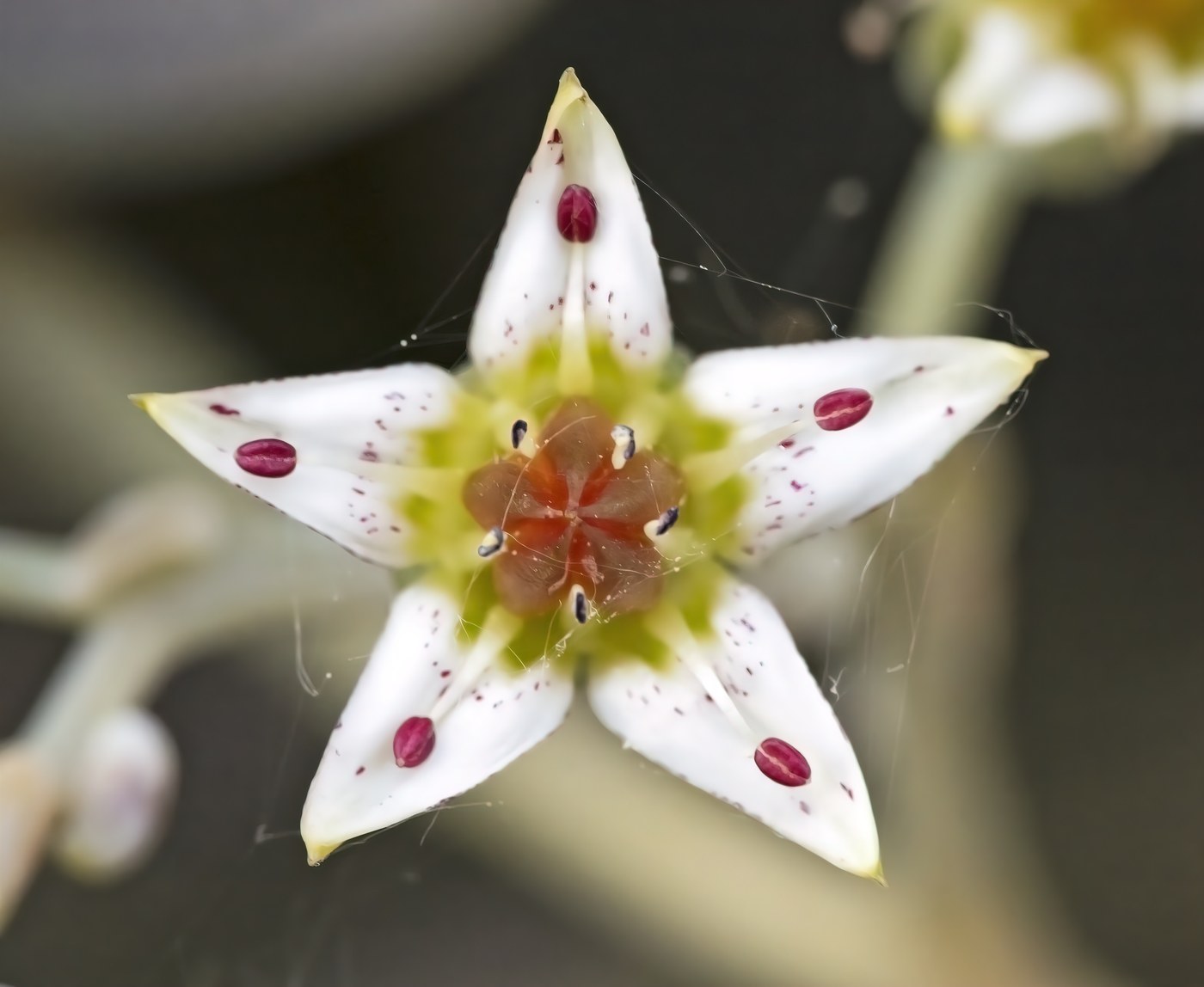
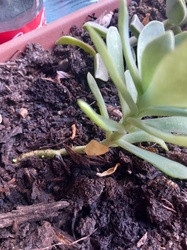
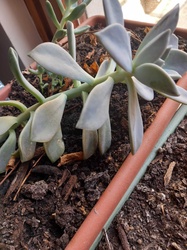
Ghost Plant (Graptopetalum paraguayense) is a trailing, mat-forming succulent prized for its ghostly rosettes that shift between silvery blue-gray, dusty lavender, and warm pink depending on light and season. It is one of the most forgiving succulents, thriving on neglect and rooting from the smallest fallen leaf.
Light
Give Ghost Plant as much light as you can. In full sun the rosettes tighten and blush pink and apricot, while the protective powdery farina (the pale bloom on the leaves) intensifies. In lower light the rosettes stretch, space out along elongating stems, and revert to a flatter blue-gray. Indoors, place it directly in the brightest south- or west-facing window you have. Move plants outdoors gradually in spring to avoid scorching, giving a week or two of morning sun before full exposure.
Water
Water infrequently and let the soil dry out completely between drinks. Soak the potting mix thoroughly, let excess drain away, then wait until the soil is bone dry and the lowest leaves feel slightly soft before watering again. In the heat of summer this may mean every 10-14 days; in winter, once every three to four weeks or less. Overwatering is the single biggest killer, causing translucent, mushy leaves and stem rot. Avoid wetting the powdery coating, as handling and water spots can leave permanent marks.
Soil & Potting
Use a fast-draining, mineral-heavy mix. A commercial cactus and succulent soil cut with 30-50% coarse perlite, pumice, or coarse sand works well. Ghost Plant has shallow roots, so a wide, shallow container suits its sprawling habit better than a deep pot. Always use a container with drainage holes; terracotta is ideal because it wicks moisture away from the roots.
Humidity & Temperature
This succulent prefers warm, dry air and average household humidity. It is comfortable in typical room temperatures and tolerates significant heat. It is only lightly frost-hardy, surviving brief dips near freezing in the ground but suffering damage in a hard freeze; bring container plants indoors or into a sheltered spot when temperatures approach the low 30s F. Good air circulation helps keep rot at bay.
Feeding
Feeding is optional. If you want faster growth, apply a dilute, balanced fertilizer or a formula made for cacti and succulents at quarter to half strength once in early spring and again in early summer. Skip feeding entirely in fall and winter. Over-fertilizing produces soft, etiolated growth that loses the compact charm and coloration.
Propagation
Ghost Plant is exceptionally easy to multiply. Gently twist off a healthy leaf so the whole base comes away cleanly, lay it on top of dry soil, and wait; roots and a tiny rosette will form at the base within a few weeks. Beheaded rosettes and stem cuttings also root readily. Let any cut or detached surface callus over for a day or two before setting it on soil, then water lightly only once roots appear. Fallen leaves often self-propagate in the pot.
Repotting / Pruning
Repot every two to three years, or when the plant sprawls beyond its container, doing so in spring. Handle by the stem rather than the leaves to preserve the farina. To keep a tidier shape, prune leggy stems and re-root the cuttings; this also encourages branching. Remove shriveled leaves from the base to improve airflow.
Common Problems & Pests
Soft, translucent, or yellowing leaves signal overwatering and possible rot; let the plant dry out and take healthy cuttings if the base is failing. Etiolation (stretched, pale growth with widely spaced leaves) means too little light. Mealybugs can nest in the crowns and leaf axils, appearing as white cottony tufts; dab them with a cotton swab dipped in isopropyl alcohol. Watch for aphids on flower stalks and fungus gnats in chronically wet soil.
Seasonal Care Tips
Spring and summer are the active growing season, when spring blooms of small star-shaped yellow-and-red flowers may appear on arching stalks and watering can be a bit more frequent. In fall, taper watering as growth slows. In winter, keep the plant cool, bright, and nearly dry to prevent rot, and protect it from frost. Rotate the pot periodically so all sides receive even light.
Frequently asked questions
Why is my Ghost Plant turning gray-blue instead of pink?
The pink and apricot tones develop only under strong, direct light and mild stress. In lower light the rosettes revert to a flatter blue-gray and stretch out. Move it to your sunniest window or acclimate it to more outdoor sun to restore the color.
How often should I water Ghost Plant?
Only when the soil is completely dry, roughly every 10-14 days in warm active growth and every three to four weeks in winter. Always let it dry fully between waterings, since soggy soil causes mushy leaves and rot.
The powdery coating rubbed off my leaves. Will it come back?
The pale farina does not regenerate on existing leaves once wiped away, so those leaves stay shiny where touched. New leaves emerge with a fresh coating, so handle the plant by its stems to preserve the look.
Can I grow Ghost Plant from a single fallen leaf?
Yes. Lay a cleanly detached leaf on dry succulent soil and leave it in bright light. Roots and a miniature rosette usually form within a few weeks, after which you can water lightly.
Ghost Plant identified by the community
Recent Ghost Plant specimens identified with Plant Identifier.