Ghost Plant Identification Guide
How to identify the Ghost Plant by its pale, powdery pastel rosettes that shift color from gray-blue to pink in sun.
Read the full Ghost Plant encyclopedia entry →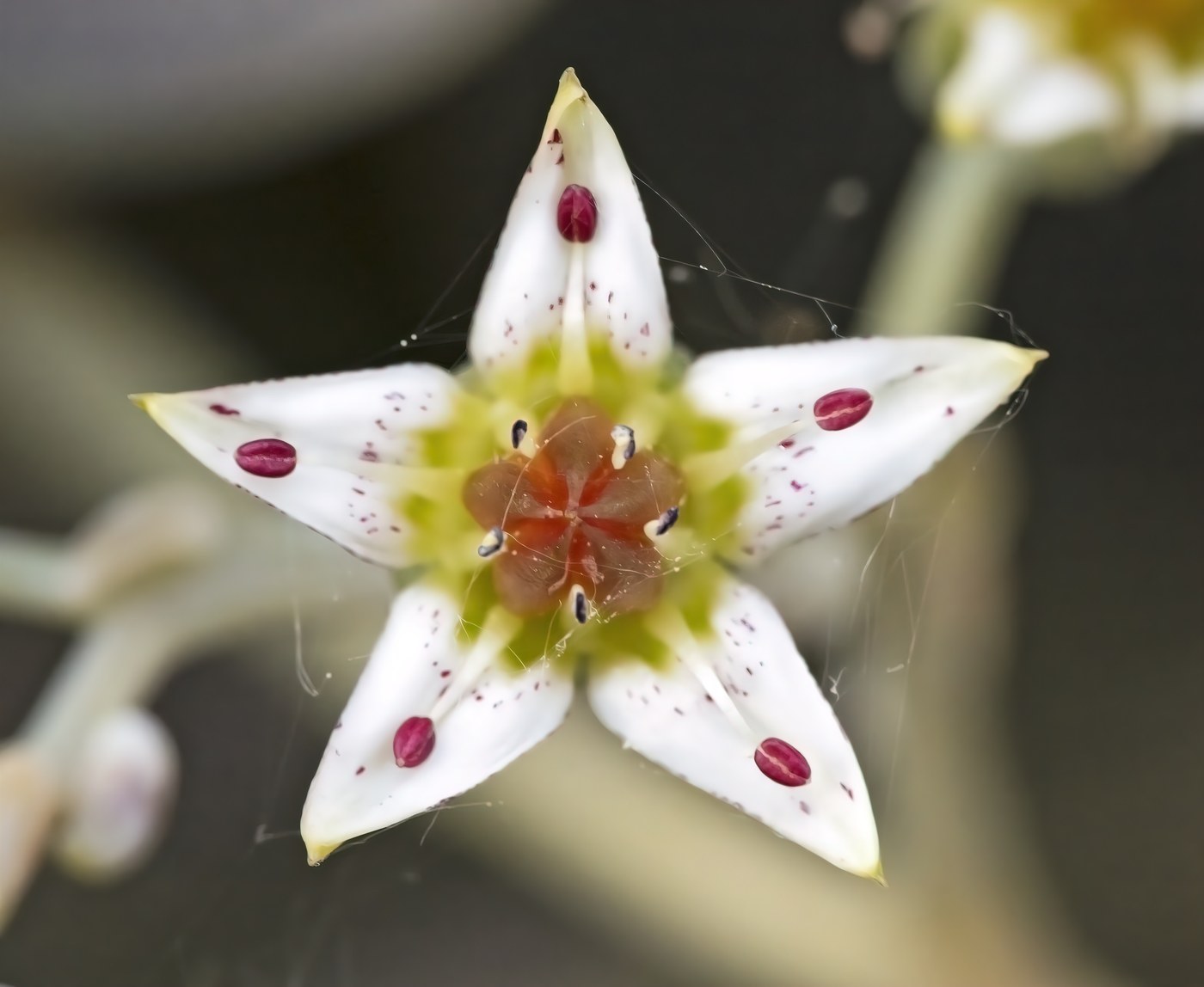
Key Identifying Features
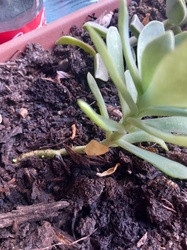
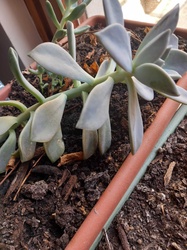
The Ghost Plant (Graptopetalum paraguayense) is a hardy rosette succulent known for its ghostly pale, color-shifting leaves.
- Loose rosettes of pointed, fleshy leaves
- A pale, powdery pastel color — gray-blue, lavender, pink, or yellow depending on light
- Trailing or sprawling stems as it grows
- Leaves coated in a chalky farina that rubs off
Leaves & Stems
Leaves are thick, flat-ish, pointed, and arranged in open rosettes about 3–4 in (8–10 cm) wide. Their surface carries a powdery waxy bloom that gives the muted, ghostly tone: bluish-gray in shade, blushing pink-to-peach or pale yellow in full sun and cold. As stems lengthen they trail and sprawl, dropping older rosettes and rooting along the way — making the plant spread easily. Fallen leaves readily root into new plants, a useful ID and propagation trait.
Flowers & Fruit
In spring, ghost plant produces small, star-shaped flowers with pale yellow petals speckled or streaked in red, borne on short stalks rising from the rosettes. The flowers are modest but distinctive, with the spotted petals characteristic of Graptopetalum.
How to Tell It Apart from Look-Alikes
- Echeveria: tighter, more symmetrical rosettes that stay compact rather than trailing; less powdery-pastel.
- Graptoveria hybrids: crosses of Graptopetalum and Echeveria that look intermediate.
- Sedum / Pachyphytum: chunkier leaves; ghost plant's leaves are flatter and pointed with the signature ghostly bloom.
The pale, powdery, color-shifting open rosettes on sprawling stems are the giveaway.
Where You'll Find It
Native to Mexico, it's an extremely common, easy-care succulent for rock gardens, hanging baskets, walls, and containers worldwide. It's tough, drought-tolerant, takes full sun to part shade, and is hardier to cold and neglect than many succulents.
Quick ID Checklist
- Open rosettes of pointed fleshy leaves
- Powdery pastel color (gray-blue to pink/yellow)
- Chalky farina that rubs off
- Trailing, sprawling stems that root along the way
- Star-shaped pale yellow, red-speckled spring flowers
- Fallen leaves root easily into new plants
Frequently asked questions
Why does my ghost plant change color?
Light and temperature shift the color. In shade it's gray-blue, but in full sun or cold it blushes pink, peach, or yellow. The chalky farina coating creates the ghostly tone.
How is the ghost plant different from an echeveria?
Ghost plant forms looser, more open rosettes on sprawling, trailing stems, while echeverias stay tight and compact. Ghost plant also has a more powdery, pastel look.
Can I grow new plants from fallen leaves?
Yes, very easily. Dropped leaves and rosettes root readily on the soil surface, which is one reason ghost plant spreads so well.
What do the flowers look like?
Small star-shaped blooms with pale yellow petals streaked or speckled in red, appearing on short stalks in spring.
Ghost Plant identified by the community
Recent Ghost Plant specimens identified with Plant Identifier.