
Giant Sequoia Identification Guide
Identify giant sequoia by its massive cinnamon-red fibrous bark, awl-shaped scale leaves, and small egg-shaped cones.
Read the full Giant Sequoia encyclopedia entry →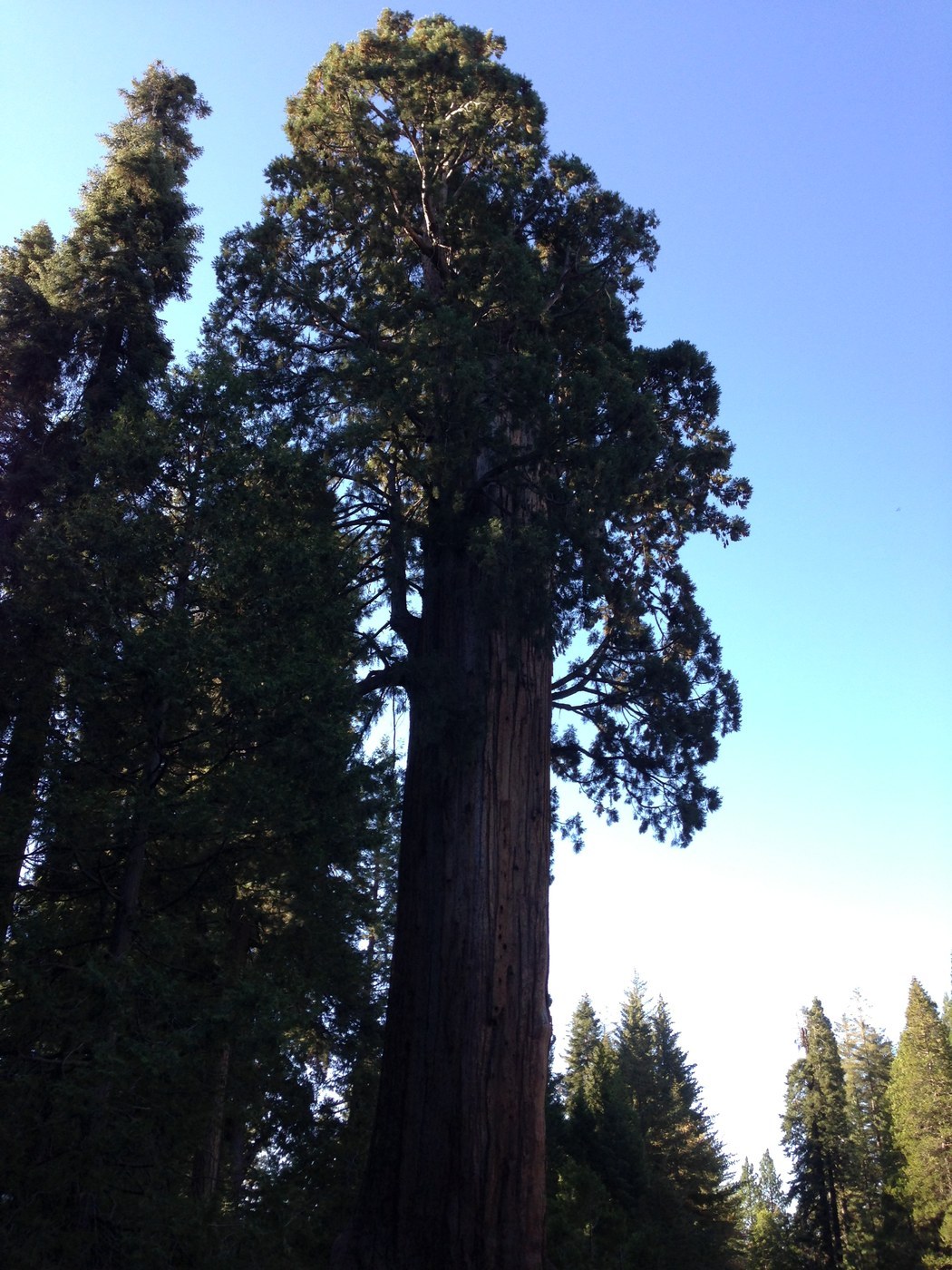
Key Identifying Features
Giant sequoia (Sequoiadendron giganteum) is the most massive tree on Earth by trunk volume, native to scattered groves on the western slope of California's Sierra Nevada.
- Enormous, buttressed trunk with thick, soft, cinnamon-red fibrous bark
- Awl-shaped, scale-like blue-green leaves that hug the twig
- Small, egg-shaped woody cones about the size of a chicken egg
- Massive columnar form, rounded crown on old trees
Leaves & Stems
Unlike its needle-bearing relatives, giant sequoia has short, awl-shaped (pointed) scale leaves 3-6 mm long that spiral around and press close to the twig, giving branchlets a cord-like, blue-green appearance somewhat like a juniper. Foliage is aromatic when crushed. The leaves overlap and clothe the slender drooping branchlets densely.
The bark is unmistakable: up to 60-90 cm thick, soft, spongy, and deeply furrowed, reddish-brown to cinnamon, fibrous enough to punch without injury and highly fire-resistant. The trunk is heavily buttressed at the base and tapers very gradually, with the lowest branches often very high up on ancient specimens.
Flowers & Fruit
Giant sequoia produces tiny pollen cones at branch tips in late winter. The seed cones are small (4-7 cm long), egg-shaped, woody, and green maturing to brown, with a spiral of wrinkled, diamond-shaped scales. Remarkably, cones can stay green and closed on the tree for up to 20 years, releasing tiny flake-like seeds when heat from fire or drying dries the scales.
How to Tell It Apart from Look-Alikes
- Coast redwood (Sequoia sempervirens): Has flat needle-like leaves arranged in two rows on most shoots, not awl scales; cones similar size but it grows in coastal fog belts, not the Sierra.
- Junipers / arborvitae: Also have scale leaves but are far smaller trees with different bark and small fleshy or tiny cones.
- Dawn redwood: Deciduous, with soft feathery needles, not scales.
The combination of awl-shaped scale leaves, massive cinnamon fibrous bark, and Sierra Nevada setting is conclusive.
Where You'll Find It
Native only to about 75 groves on the western slopes of the Sierra Nevada in California at 1,400-2,400 m elevation. Widely planted as an ornamental and specimen tree in parks and large gardens in temperate climates worldwide.
Quick ID Checklist
- Massive buttressed trunk, thick soft cinnamon-red fibrous bark
- Awl-shaped blue-green scale leaves hugging the twigs
- Small egg-shaped woody cones (chicken-egg size)
- Towering columnar form with rounded crown
- Native Sierra Nevada groves
Frequently asked questions
How do I tell giant sequoia from coast redwood?
Giant sequoia has awl-shaped scale leaves pressed to the twig and lives in the Sierra Nevada, while coast redwood has flat needle-like leaves in two rows and grows in the coastal fog belt.
Why is the bark so thick and soft?
The deep, fibrous, cinnamon-red bark can be over half a meter thick and provides excellent fire and insect resistance, helping these trees live for thousands of years.
How big are the cones?
Surprisingly small for such a huge tree, only about 4-7 cm long and egg-shaped. They can remain closed and green on the tree for many years.
Where do giant sequoias grow naturally?
Only in scattered groves on the western slope of California's Sierra Nevada, though they are planted as ornamentals around the world.