How to Care for Globe Thistle
A sculptural, drought-tough perennial with spiky steel-blue spheres and silvery foliage, thriving in poor, well-drained soil and full sun.
Read the full Globe Thistle encyclopedia entry →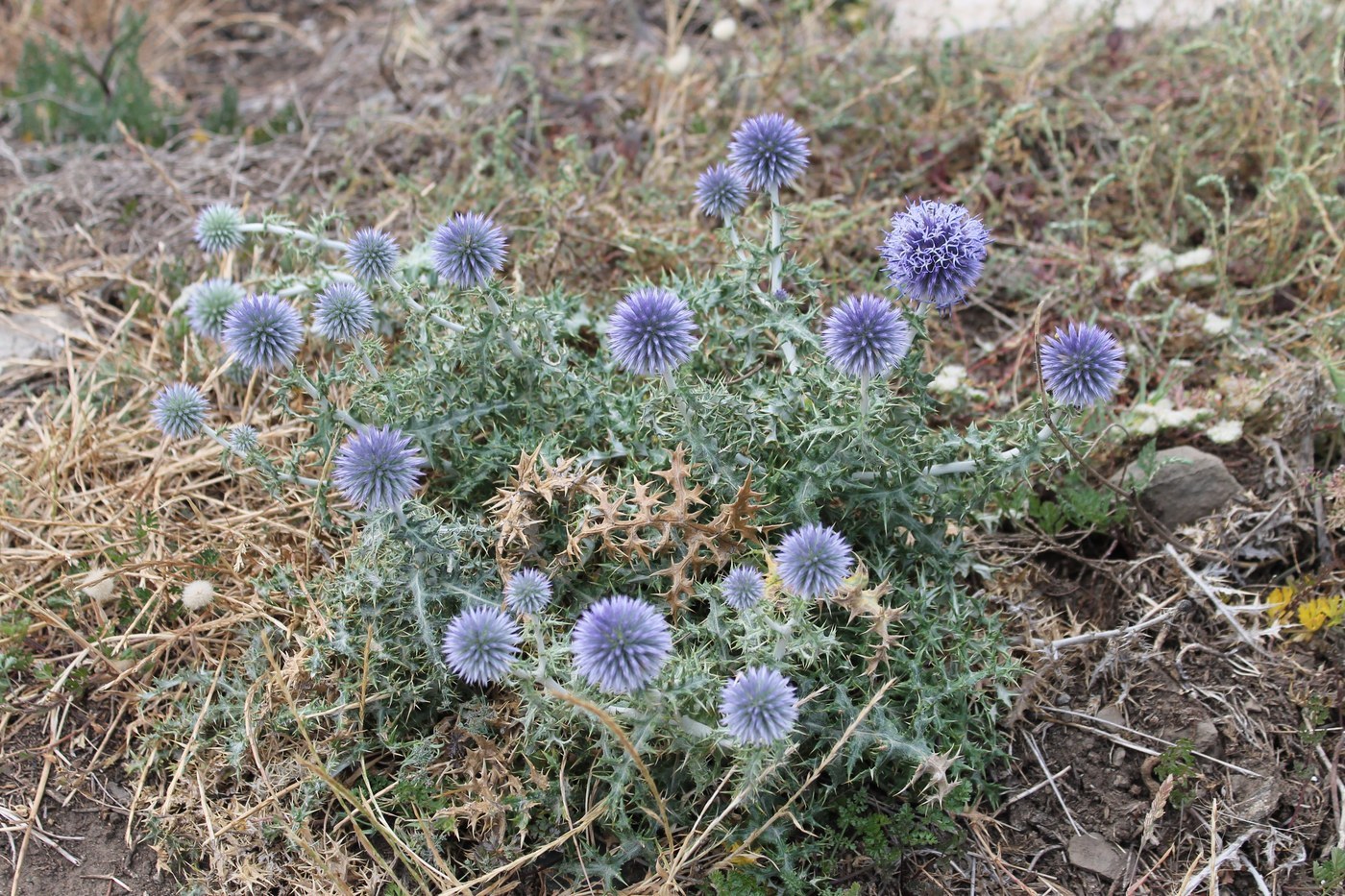
Globe Thistle (Echinops ritro) is an architectural perennial grown for its perfectly round, steel-blue flower globes held on stiff stems above deeply cut, silver-backed foliage. Tough, drought-tolerant, and a magnet for pollinators, it is one of the easiest sun-loving perennials for lean soils.
Light
Grow in full sun for compact, self-supporting stems and the most intense blue coloring. In too much shade the stems flop and flowering suffers.
Water
Once established, Globe Thistle is markedly drought-tolerant thanks to a deep taproot. Water new plants their first season to establish, then water only during extended dry spells. It resents wet feet, especially in winter, which can rot the crown.
Soil & Potting
It actually prefers poor to average, well-drained soil; overly rich or moist ground produces floppy growth and fewer blooms. Sharp drainage is essential, and it tolerates dry, rocky, and sandy sites well. If grown in a pot, use a gritty, free-draining mix and a deep container to accommodate the taproot.
Humidity & Temperature
A hardy perennial, it withstands cold winters and shrugs off summer heat. It prefers a drier atmosphere and open airflow; humid, stagnant conditions can encourage foliar problems.
Feeding
Minimal feeding is best. Rich diets cause weak, leggy growth. At most, a light topdressing of compost in spring is sufficient; skip high-nitrogen fertilizers entirely.
Propagation
Propagate by seed sown in spring, by division of the crown in early spring or fall, or from root cuttings taken in late winter. Divisions and root cuttings preserve the parent's form. Note that it self-seeds and can naturalize if spent heads are left.
Repotting / Pruning
Because of its taproot, mature plants dislike being moved, so site carefully. Cut stems back after flowering to prevent heavy self-seeding, or leave a few dried globes for winter interest. Cut the whole plant to the ground in late fall or early spring. Deadheading can encourage a lighter second flush.
Common Problems & Pests
Globe Thistle is remarkably trouble-free. The main risk is root and crown rot in wet, poorly drained soil, so ensure sharp drainage. Aphids sometimes gather on stems and buds and can be hosed off. In damp, crowded plantings powdery mildew may appear; improve spacing and airflow to prevent it.
Seasonal Care Tips
Plant in spring in a hot, dry, sunny spot. Water to establish, then largely leave alone. For dried arrangements, cut the globes just as the blue color develops but before they fully open. Deadhead to limit self-sowing, then cut the clump down in late fall or leave the striking seed heads standing for winter structure.
Frequently asked questions
Why are my Globe Thistle stems flopping?
Usually too much shade or overly rich, moist soil. Give it full sun and lean, well-drained ground, and avoid nitrogen-heavy feeding to keep stems stiff and upright.
How often should I water Globe Thistle?
Water regularly the first season to establish the taproot, then only during prolonged drought. It's very drought-tolerant and hates soggy soil.
Can I divide Globe Thistle?
Yes, but its deep taproot makes it resent disturbance. Divide in early spring or fall, or propagate more reliably from root cuttings or seed.
When should I cut Globe Thistle for drying?
Cut the globes just as they turn blue but before the tiny florets open fully; this gives the longest-lasting color in dried arrangements.
Globe Thistle identified by the community
Recent Globe Thistle specimens identified with Plant Identifier.