Globe Thistle
Echinops ritro
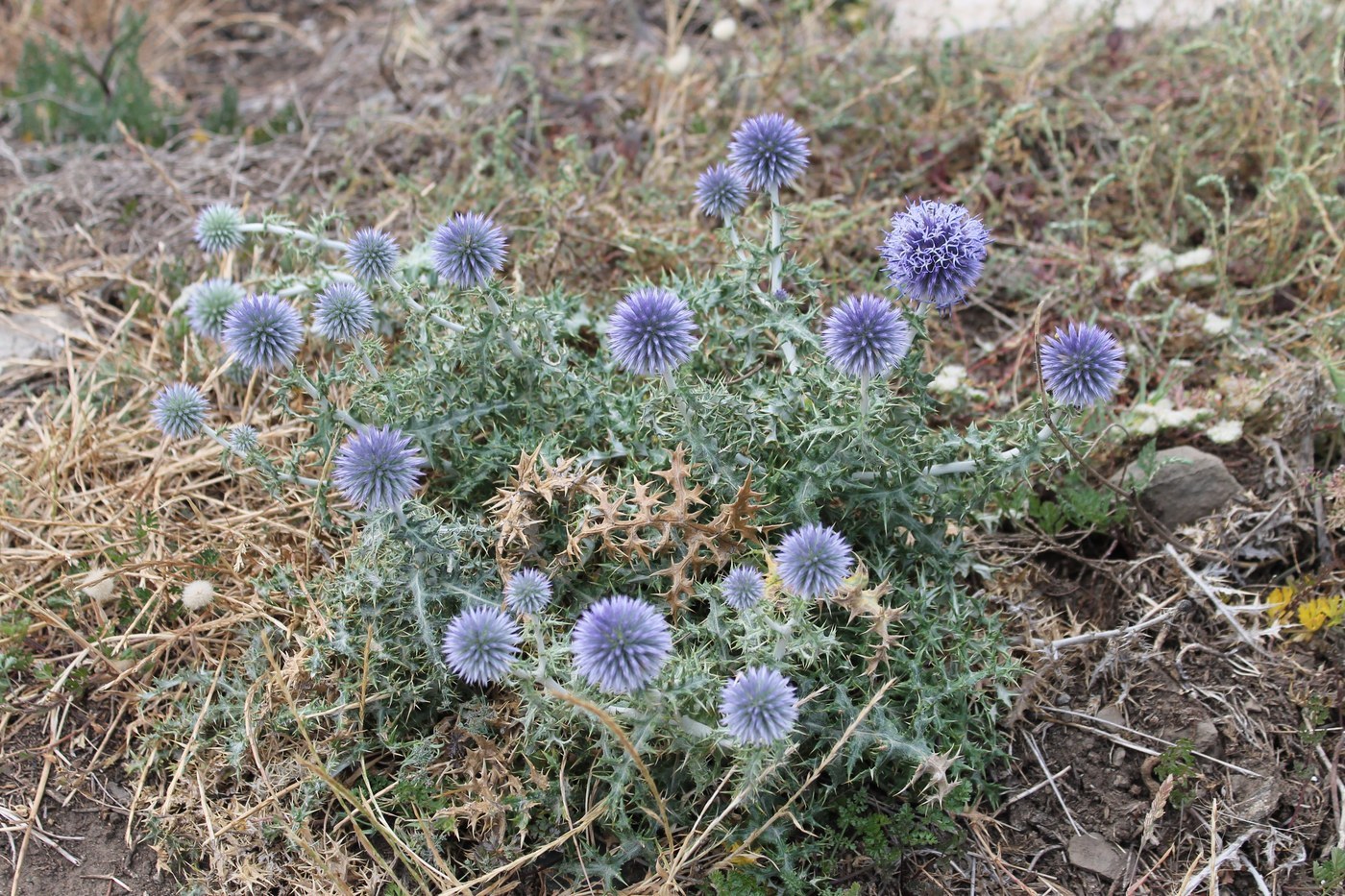
Globe thistle is a bold, architectural perennial topped with spherical, steel-blue flower heads above spiny, gray-green foliage. It is drought-tolerant and irresistible to bees.
- Light
- Full sun
- Water
- Drought-tolerant once established
- Difficulty
- Easy
Got a plant like this?
Identify any plant from a photo, free.
Overview
Globe thistle (Echinops ritro) is a striking perennial in the daisy family (Asteraceae), grown for its perfectly round, metallic-blue flower globes. The genus name Echinops comes from the Greek for hedgehog, a nod to its spiky form.
It forms a sturdy, upright clump of deeply cut, thistle-like foliage, with flower stems rising 2 to 4 feet or more. The spherical blooms appear in mid- to late summer and dry beautifully.
Tough, drought-resistant, and pest-free, it adds bold structure and cool color to sunny borders.
How to identify it
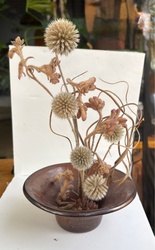
Identify globe thistle by its unmistakable spherical blue flower heads.
- Flowers: Perfectly round, spiky globes about 1.5 to 2 inches across, steel-blue to violet-blue
- Leaves: Deeply lobed, thistle-like, dark green above and gray-woolly beneath, with spiny edges
- Size: 2 to 4 feet tall (some species taller), forming an upright clump
- Stems: Stout, gray-green, and slightly cottony
- Bloom time: Mid- to late summer
Care & growing
One of the easiest perennials for hot, dry sites.
- Light: Full sun
- Water: Drought-tolerant once established; water only in extended dry spells
- Soil: Average to poor, well-drained soil; tolerates lean, dry ground and dislikes rich, wet soil
- Temperature: Hardy in USDA zones 3 to 9
- Feeding: None needed; rich soil causes floppy growth
- Propagation: Division in spring, root cuttings, or seed; deadhead to prevent excess self-seeding
Habitat & origin
Native to rocky slopes, dry grasslands, and open scrub across southern and eastern Europe and western Asia.
It excels in sunny, well-drained borders, gravel gardens, and naturalistic prairie-style plantings. It is widely grown in temperate gardens worldwide for its bold form and drought tolerance.
Frequently asked questions
Are globe thistle flowers really blue?
Yes, the spherical heads are a genuine metallic steel-blue, an unusual and prized color in the garden.
Do bees like globe thistle?
Very much. It is one of the top pollinator plants, often covered in bees when in bloom.
Can I dry globe thistle flowers?
Yes. Cut the globes just before they fully open and hang them to dry for long-lasting arrangements.
Is globe thistle invasive?
It can self-seed in ideal conditions. Deadheading spent flowers keeps it from spreading too freely.
Globe Thistle guides
In-depth guides for identifying, growing, and caring for Globe Thistle.
How to Care for Globe Thistle
A sculptural, drought-tough perennial with spiky steel-blue spheres and silvery foliage, thriving in poor, well-drained soil and full sun.
Globe Thistle Identification Guide
Spot Echinops by its perfectly spherical steel-blue flower heads, spiny thistle-like leaves, and white-woolly stems.
Globe Thistle identified by the community
Real specimens identified with Plant Identifier.