
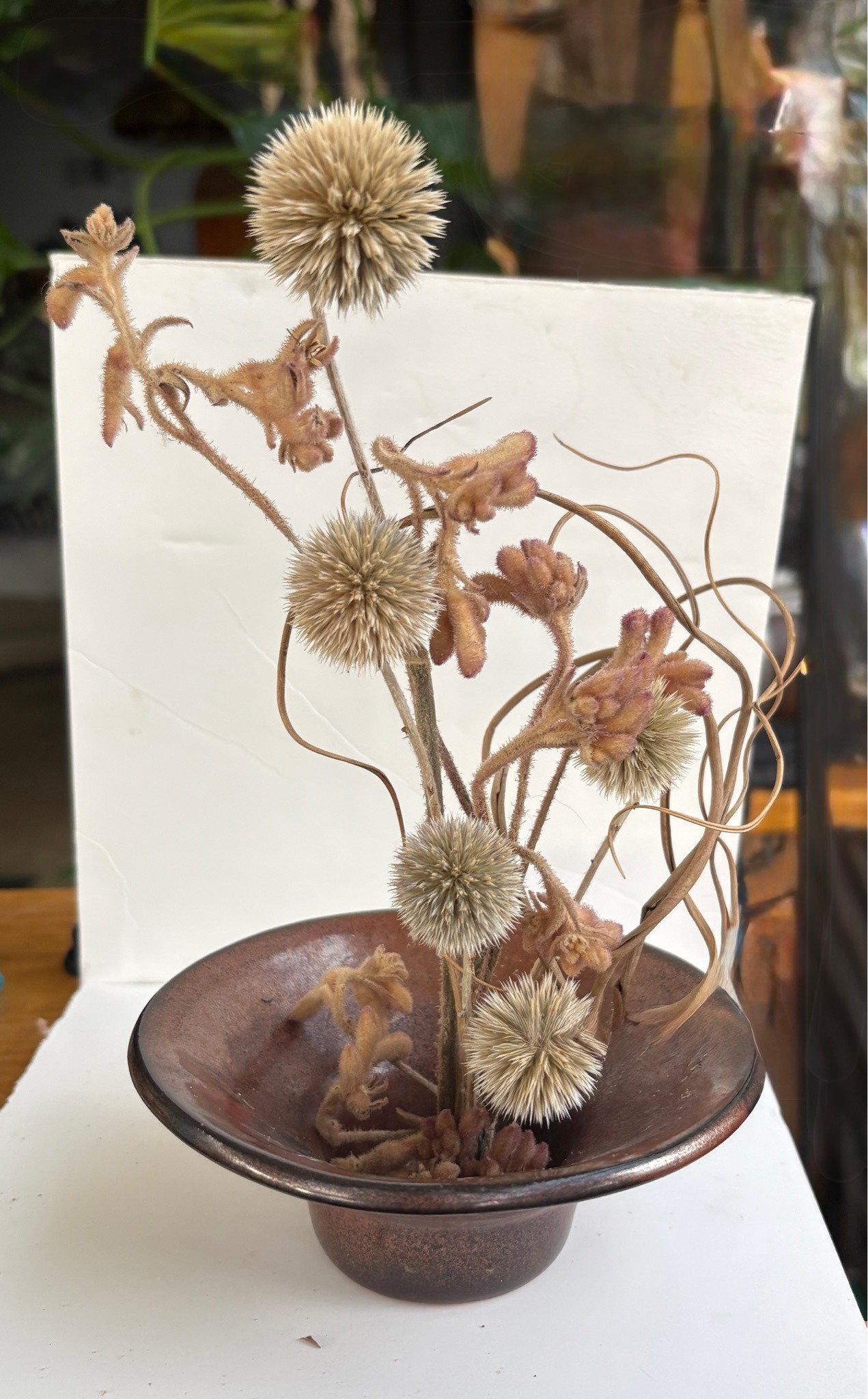
Globe Thistle and Kangaroo Paw arrangement
Echinops ritro and Anigozanthos flavidus
A dried floral arrangement featuring spherical, spiky seed heads of globe thistle combined with the fuzzy, paw-like tubular flower structures and arching stems of kangaroo paw.
- Light
- Full sun (6+ hours of direct light daily) for live plants.
- Water
- Low to moderate for live plants. Once established, both genera are drought-tolerant and prefer soil to dry between waterings. Dried arrangements require no water.
- Growth
- Herbaceous perennials forming clumps; Globe thistle grows 2-4 feet tall with upright stems, while Kangaroo paw reaches 2-5 feet in height with fans of strappy leaves.
Care instructions
As a live garden plant, grow in full sun with extremely well-draining soil and moderate watering during establishment. Fertilize minimally. As a dried arrangement shown, keep away from direct moisture, high humidity, and intense direct sunlight to maintain stem strength and form.
Growing details
Sunlight
Full sun (6+ hours of direct light daily) for live plants.
Watering
Low to moderate for live plants. Once established, both genera are drought-tolerant and prefer soil to dry between waterings. Dried arrangements require no water.
Soil
Requires very well-draining, lean to moderately fertile soil. Prefers neutral to slightly acidic pH ranges.
Hardiness zone
USDA Zones 3-8 (Echinops ritro); USDA Zones 9-11 (Anigozanthos flavidus)
Growth habit
Herbaceous perennials forming clumps; Globe thistle grows 2-4 feet tall with upright stems, while Kangaroo paw reaches 2-5 feet in height with fans of strappy leaves.
Bloom season
Mid-summer to early autumn (Echinops produce steel-blue or grey spherical heads); Spring to summer (Anigozanthos produce fuzzy paw-shaped flowers).
Propagation
Echinops by seed or root cuttings in winter; Anigozanthos by division of rhizomes or seed sown in autumn.
Common pests & issues
Root rot from soggy soil or poor drainage, aphids, and powdery mildew on live plants in damp conditions.
Similar species
Eryngium (Sea Holly) has spiky blue flowers but with distinct silvery bracts; Macropidia fuliginosa (Black Kangaroo Paw) shares similar fuzzy claw flowers but in black/green colors.