
How to Care for Goatsbeard
Grow shade-loving Goatsbeard for airy creamy plumes and lush foliage in consistently moist, woodland-style soil.
Read the full Goatsbeard encyclopedia entry →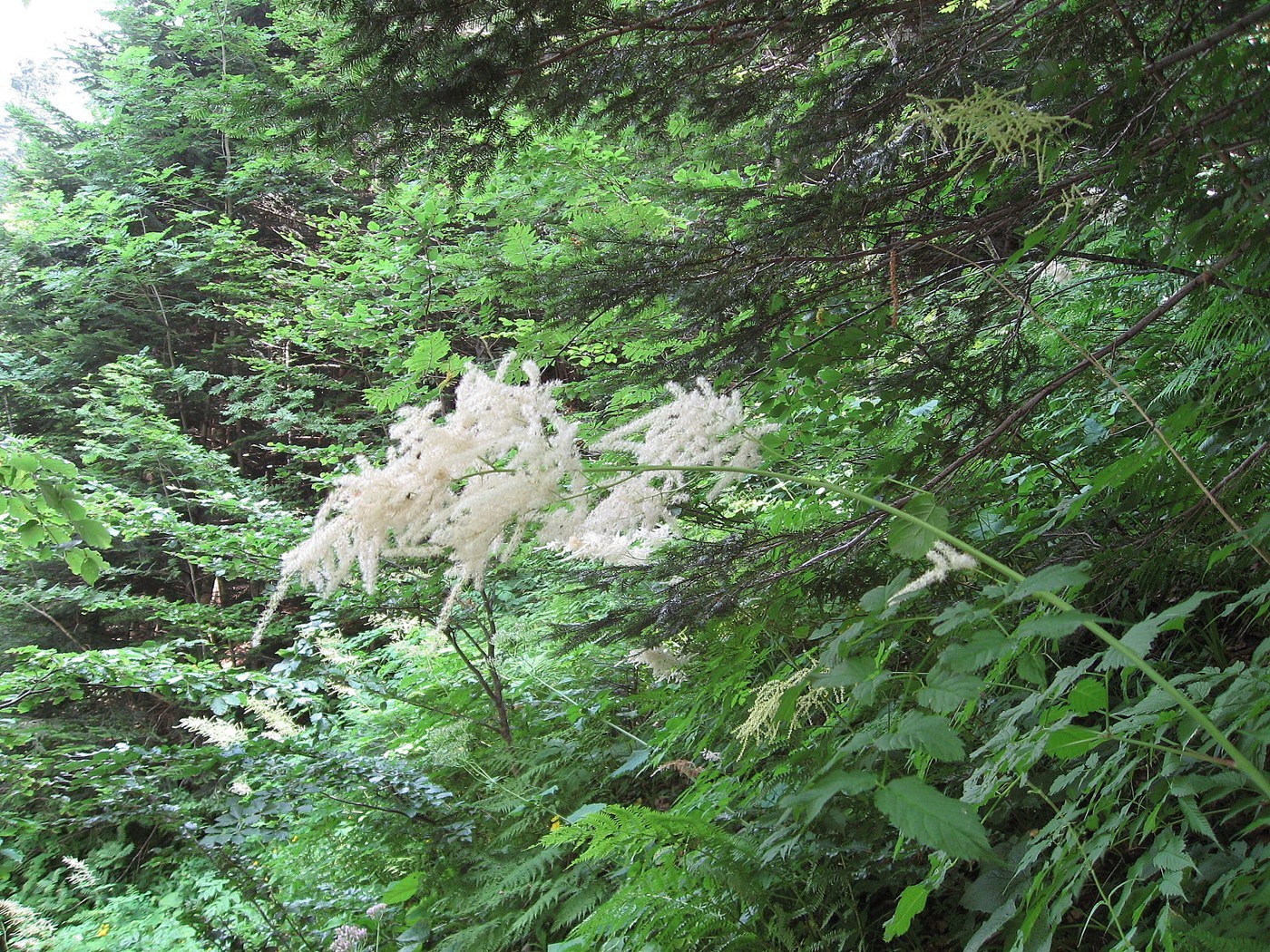
Goatsbeard (Aruncus dioicus) is a large, shrub-like perennial that thrusts up feathery, creamy-white plumes above mounds of ferny compound foliage in early summer. Native to moist woodland edges, it is an easy, long-lived plant for shaded, damp corners of the garden.
Light
Goatsbeard performs best in part shade to full shade, echoing its woodland origins. In cool-summer or northern climates it can take more sun as long as the soil stays reliably moist, but in hot regions afternoon shade is essential to prevent leaf scorch and wilting. Dappled light beneath high trees is ideal.
Water
Keep the soil consistently moist; goatsbeard has little tolerance for drought and will brown at the leaf edges when it dries out. Water deeply and regularly, especially during establishment and in hot, dry spells. A generous organic mulch helps lock in moisture and keeps the roots cool.
Soil & Potting
It favors rich, humus-heavy soil that holds moisture yet does not become stagnant. Amend planting holes generously with compost or leaf mold to mimic a forest floor. It adapts to a range of pH and to heavier soils better than many perennials, provided there is steady moisture. Give it room, as a mature plant can spread several feet wide.
Humidity & Temperature
A cool-climate, hardy perennial, goatsbeard tolerates cold winters well and dies back to the ground each year. It appreciates the cooler, more humid conditions of shaded woodland gardens and struggles in hot, dry, exposed sites. Site it where summer heat is buffered by shade and soil moisture.
Feeding
Goatsbeard is not a heavy feeder. An annual spring topdressing of compost or a light application of balanced granular fertilizer as growth resumes is generally enough. Rich soil and steady moisture matter far more than frequent fertilizing.
Propagation
Propagate by division in early spring or fall, though the tough, woody crown of an established plant can be difficult to cut and may need a sharp spade or saw. It can also be grown from seed, but plants are dioecious (separate male and female), and seed-grown specimens vary; male plants tend to bear showier, fuller plumes.
Repotting / Pruning
As a garden perennial it rarely needs dividing and resents disturbance once settled. Cut spent flower plumes if you prefer a tidier look, or leave them for structure. In late fall or early spring, cut the entire plant back to the ground to make way for fresh growth.
Common Problems & Pests
Goatsbeard is largely trouble-free. Its main enemy is drought, which causes crisped, browning foliage. Occasionally sawfly larvae may chew the leaves, and too much sun with insufficient water leads to scorch. Good moisture and shade prevent most issues.
Seasonal Care Tips
In spring, cut back old stems and topdress with compost as new shoots emerge. Through summer, keep the soil moist and enjoy the plumes, deadheading if desired. In fall, allow the plant to die back naturally, then mulch the crown for winter protection in colder zones.
Frequently asked questions
How much sun can Goatsbeard tolerate?
It prefers part to full shade. In cool northern climates it can handle more sun if the soil stays consistently moist, but in hot regions give it afternoon shade to avoid leaf scorch and wilting.
Why are the leaves browning at the edges?
Edge browning usually signals drought stress or too much sun. Goatsbeard needs steady moisture; water deeply and regularly, add mulch to keep roots cool, and move or shade plants that are getting too much afternoon sun.
How do I propagate Goatsbeard?
Divide the crown in early spring or fall, using a sharp spade or saw since the woody crown is tough. It can also be grown from seed, though plants are male or female and vary in plume quality.
Does Goatsbeard need cutting back?
Yes. Cut the whole plant to the ground in late fall or early spring. You can also remove spent plumes during summer for a tidier look, though many gardeners leave them for structure.