
How to Care for Golden Rain Tree
Grow Koelreuteria paniculata, a tough deciduous shade tree with golden summer flower panicles, in full sun and well-drained soil.
Read the full Golden Rain Tree encyclopedia entry →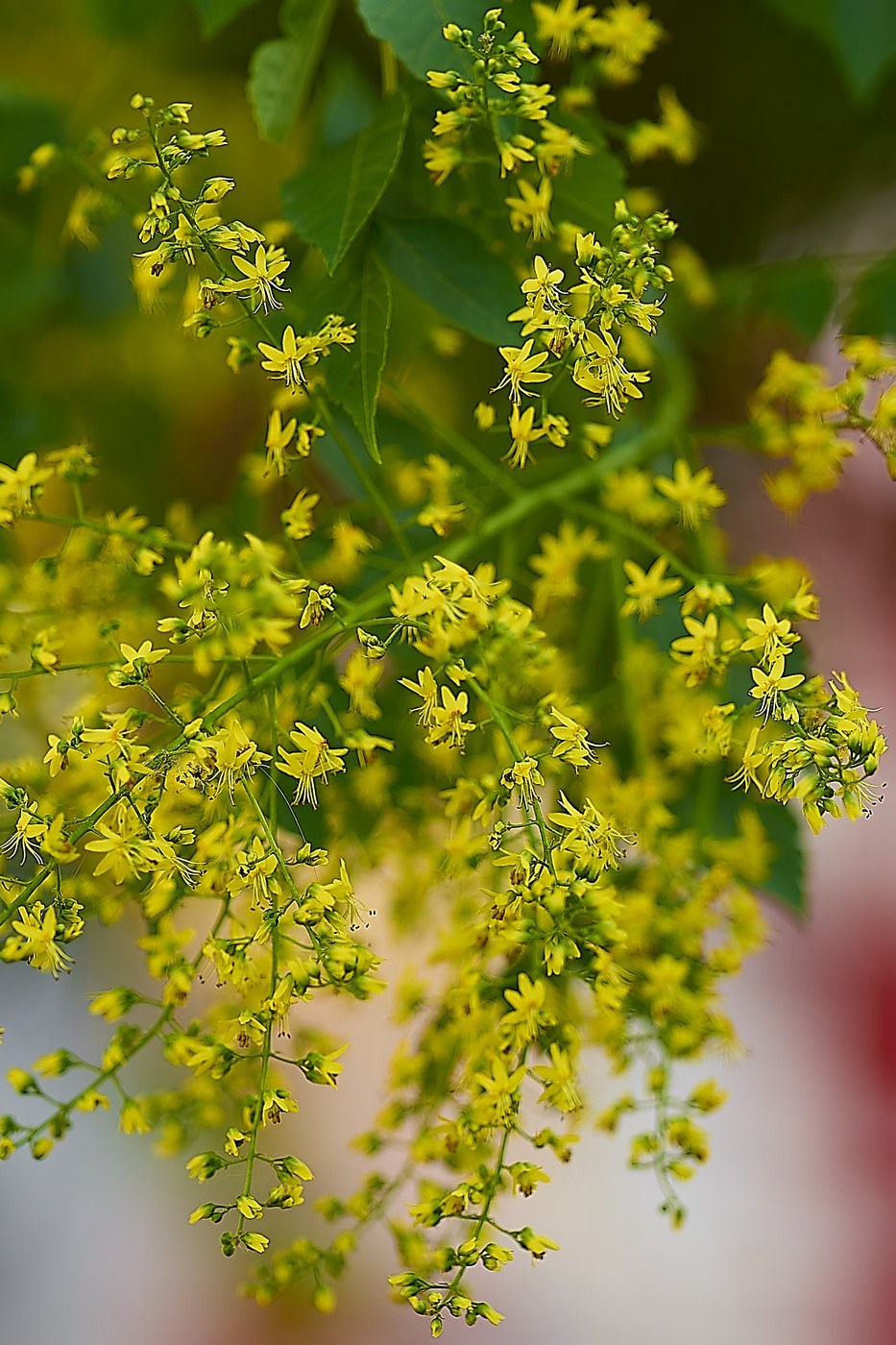
Golden rain tree (Koelreuteria paniculata) is a tough, adaptable deciduous shade tree famed for its cascading panicles of bright yellow summer flowers followed by papery lantern-shaped seed capsules. Fast-growing and remarkably tolerant, it is an easy choice for a medium-sized ornamental or street tree.
Light
Wants full sun for the strongest growth, best flowering, and a well-formed canopy. It tolerates very light shade but blooms far more freely in an open, sunny position.
Water
Water regularly through the first couple of seasons to establish deep roots. Once established it is notably drought-tolerant and needs only occasional deep watering in extended dry spells. It also tolerates a wide range of moisture conditions and even brief periods of poor drainage.
Soil & Potting
Thrives in almost any well-drained soil, including poor, dry, rocky, sandy, or alkaline ground. It tolerates a broad pH range and urban conditions such as compacted soil, pollution, heat, and wind, which makes it a favorite street tree. Avoid permanently waterlogged sites.
Humidity & Temperature
Hardy and adaptable across a wide climate range, tolerating cold winters and hot, dry summers alike. It handles urban heat and drought stress well once mature and needs no special humidity provisions.
Feeding
Undemanding. A young tree benefits from a spring application of balanced fertilizer to speed establishment, but mature trees generally need little or no feeding. Overly rich conditions produce weak, fast growth, so keep feeding light.
Propagation
Most commonly grown from seed, which germinates well after a period of cold stratification; note that it self-sows readily and seedlings can be numerous. Root cuttings taken in late winter are another reliable method. Named forms are propagated by grafting.
Repotting / Pruning
Prune when young to establish a strong single leader and well-spaced scaffold branches, as the wood can be somewhat brittle. Do formative and corrective pruning in late winter while dormant. Little pruning is needed once a good framework is set; remove dead or crossing branches as they appear.
Common Problems & Pests
A notably pest-resistant, low-maintenance tree. It can be prone to weak or brittle branch structure, so good early pruning matters. Occasional issues include coral spot or canker on stressed wood and root rot in wet ground. Prolific self-seeding can be a nuisance where seedlings are unwanted.
Seasonal Care Tips
Spring: feed young trees and complete any pruning before growth resumes. Summer: enjoy the golden flowers and water during severe drought while young. Autumn: watch the papery seed capsules develop; rake up seedlings if you wish to limit self-sowing. Winter: carry out structural pruning while the tree is dormant.
Frequently asked questions
How fast does golden rain tree grow?
It is a fast grower, especially when young, quickly forming a rounded shade canopy in full sun and well-drained soil.
Is golden rain tree drought-tolerant?
Yes. After a couple of establishment seasons it tolerates drought, poor soil, heat, and urban conditions with only occasional deep watering.
When should I prune a golden rain tree?
Prune in late winter while dormant. Focus on young trees to build a strong leader and well-spaced branches, since the wood can be brittle.
Does golden rain tree self-seed?
Yes, it self-sows readily from its papery seed capsules. Rake up unwanted seedlings if you want to keep it from spreading.
What soil does golden rain tree need?
Almost any well-drained soil, including poor, dry, sandy, rocky, or alkaline ground. It only dislikes permanently waterlogged sites.