
Golden Rain Tree Identification Guide
How to identify the Golden Rain Tree by its sprays of yellow summer flowers, papery lantern-like seed pods, and feathery compound leaves.
Read the full Golden Rain Tree encyclopedia entry →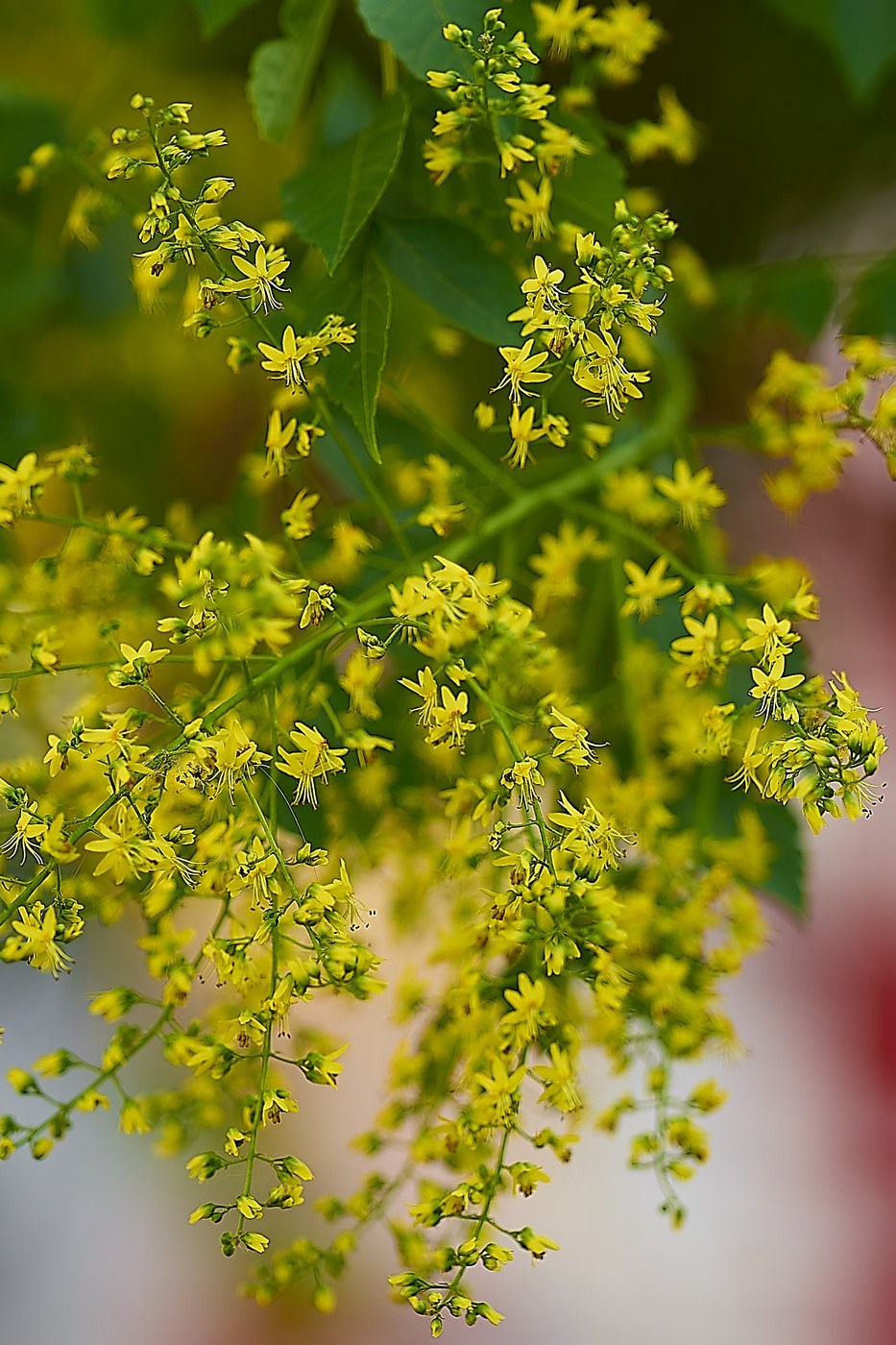
Key Identifying Features
The Golden Rain Tree (Koelreuteria paniculata) is a small-to-medium deciduous tree prized for its large sprays of bright yellow flowers in summer followed by ornamental papery, lantern-shaped seed pods.
- Loose, branching clusters of small yellow flowers in mid-summer
- Inflated, papery, three-sided seed capsules like little Chinese lanterns
- Pinnate to bipinnate compound leaves, often irregularly lobed
- Rounded, spreading crown, typically 7-12 m tall
Leaves & Stems
Leaves are alternate and pinnately compound (sometimes partly bipinnate), 20-45 cm long, with 7-17 leaflets. Each leaflet is ovate, coarsely and irregularly toothed or lobed, giving the foliage a ragged, feathery look. Leaves emerge pinkish-bronze in spring, turn bright green in summer, and often color yellow in autumn.
Twigs are stout with prominent buds; bark is gray-brown and becomes ridged and furrowed with age. The crown is broad and rounded.
Flowers & Fruit
- Flowers appear in June-July in large, upright, branching panicles up to 30-40 cm long held above the foliage. Each tiny flower is yellow with a small red/orange base, and the falling petals carpet the ground in gold — the source of the "golden rain" name.
- Fruit is the most distinctive feature: papery, bladder-like, three-lobed capsules about 4-6 cm long that hang in clusters. Green at first, they ripen to pink, then tan/brown, looking like miniature paper lanterns. Each holds several hard black BB-like seeds.
How to Tell It Apart from Look-Alikes
- Goldenrain Tree's relative the Flamegold (Koelreuteria elegans/bipinnata) has fully bipinnate leaves and pinkish-red ripe pods; K. paniculata pods ripen tan/brown.
- Tree of Heaven (Ailanthus) has similar compound leaves but bears winged samara fruits and smooth-margined leaflets with a gland-toothed base, plus a strong odor when crushed.
- The papery inflated lantern pods are unique among common temperate trees and clinch the ID.
Where You'll Find It
Native to eastern Asia (China and Korea), the Golden Rain Tree is widely planted as a street and ornamental tree across temperate North America and Europe, valued for its summer bloom and tolerance of heat, drought, and poor urban soils. In some warm regions it self-seeds and can become weedy.
Quick ID Checklist
- Upright sprays of small yellow flowers in summer
- Papery, three-sided lantern-like seed pods (green to pink to tan)
- Pinnate compound leaves with coarsely toothed/lobed leaflets
- Pinkish-bronze new growth; yellow fall color
- Rounded spreading crown, small-to-medium size
Frequently asked questions
Where does the name 'Golden Rain' come from?
It refers to the shower of small yellow petals that fall from the flower panicles in summer, carpeting the ground in gold beneath the tree.
What are the papery lantern-like pods?
They are the tree's seed capsules: inflated, three-lobed, papery bladders that start green, turn pinkish, then ripen tan-brown. Each holds a few hard black seeds, and they persist decoratively into autumn.
How do I tell Koelreuteria paniculata from the Flamegold tree?
K. paniculata has once-pinnate leaves and pods that ripen tan-brown, while the Flamegold (K. bipinnata/elegans) has bipinnate leaves and showy pink-to-red ripe pods. Leaf division and pod color are the key differences.
Is the Golden Rain Tree invasive?
In warm parts of the southeastern US it can self-seed prolifically and naturalize, so it is considered weedy or mildly invasive there, though in cooler climates it generally stays well-behaved.