Goldenrod Identification Guide
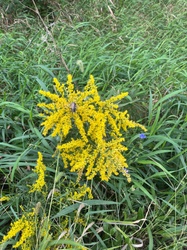
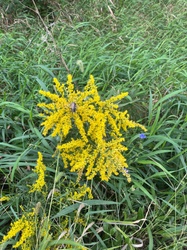
Identify Goldenrod (Solidago) by its arching plumes of tiny golden-yellow flowers and lance-shaped leaves. This guide also clears up the common confusion with allergy-causing ragweed.
Read the full Goldenrod encyclopedia entry →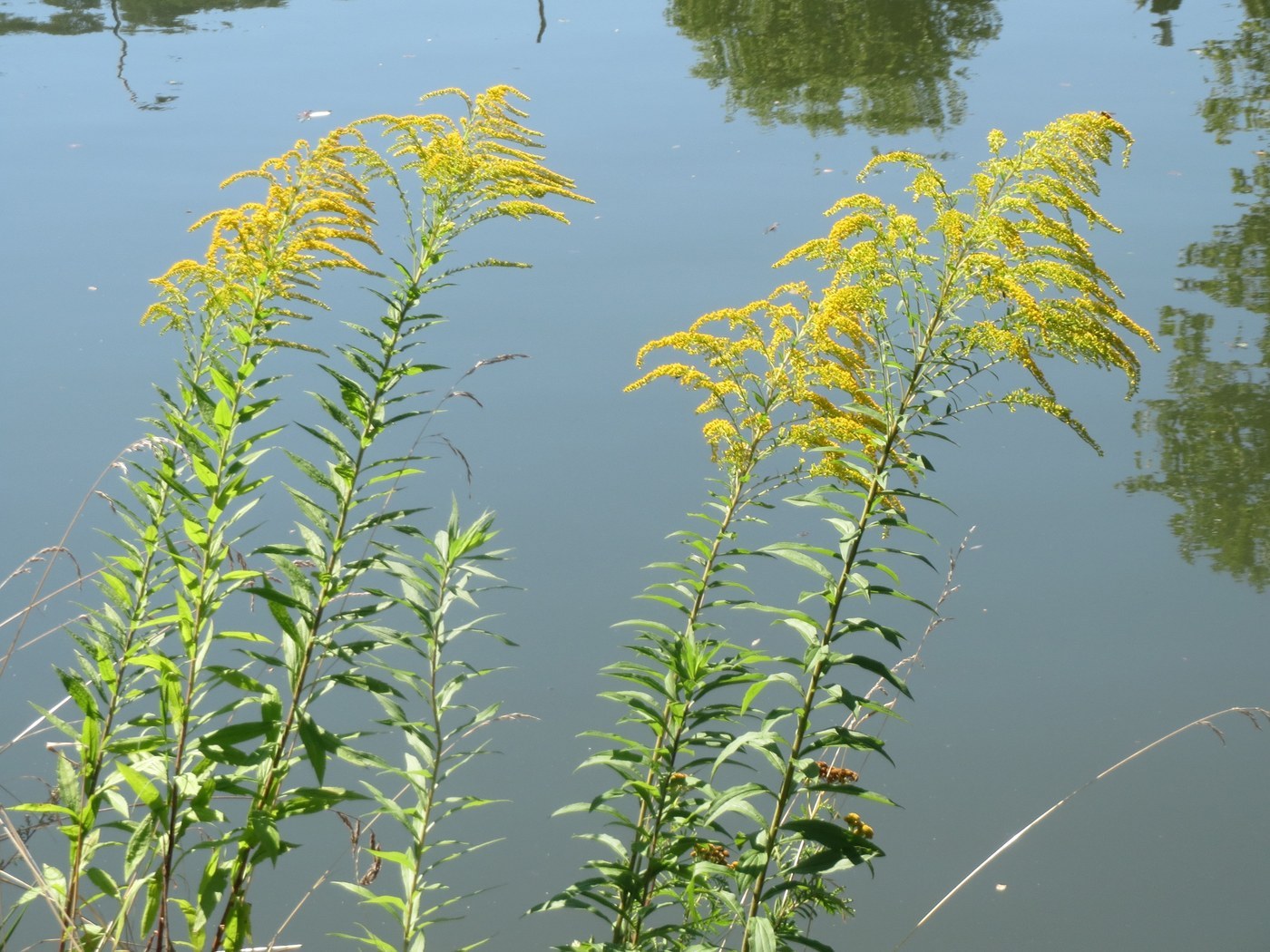
Key Identifying Features
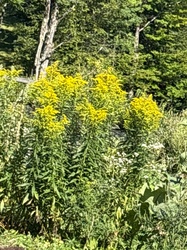
Goldenrod (genus Solidago) is a tall, late-summer-to-fall perennial known for its dense sprays of tiny golden-yellow flowers. Most species stand 1 to 5 feet (30 to 150 cm) tall on a single upright stem topped with a branching, plume-like or pyramid-shaped flower cluster. It often forms colonies and is a magnet for bees and butterflies.
- Bright yellow flower clusters in plumes, wands, or flat-topped sprays
- Flowers are tiny composite heads with both ray and disk florets
- Tall, mostly unbranched leafy stem
- Blooms late summer into autumn
Leaves & Stems
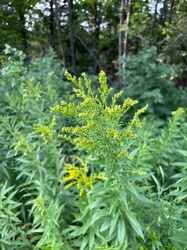
The stem is usually erect, rough or finely hairy, and unbranched below the flower cluster. Leaves are alternate, lance-shaped to narrow, and pointed, often with toothed or smooth margins. Many species have three prominent parallel veins running the length of the leaf, a helpful clue. Leaves are typically largest near the base and get smaller toward the top.
Flowers & Fruit
Each golden "flower" is actually a cluster of many tiny flower heads, each head containing minute ray petals around a center disk. The overall plume can be arching (goldenrod's classic nodding wand), club-shaped, or flat-topped depending on species. After bloom, flowers turn to small fluffy, wind-dispersed seeds (tan tufts). Pollen is heavy and insect-carried.
How to Tell It Apart from Look-Alikes
- Ragweed (Ambrosia): This is the real hay-fever culprit, often blamed on goldenrod. Ragweed has greenish, inconspicuous flowers and deeply divided, fern-like leaves, not showy yellow plumes.
- Tansy (Tanacetum vulgare): has flat, button-like yellow flowers and strongly aromatic, fern-like leaves.
- Wild parsnip / golden Alexanders: have flat umbels of yellow flowers, not dense narrow plumes.
If the plant has showy bright yellow plumes, it is goldenrod, not ragweed. Goldenrod's heavy, sticky pollen rarely causes allergies.
Where You'll Find It
Goldenrod grows in fields, meadows, prairies, roadsides, forest edges, and old pastures across North America and parts of Eurasia. It tolerates poor soils and full sun and is one of the most reliable fall wildflowers, sometimes covering whole fields in gold.
Quick ID Checklist
- Golden-yellow plume or spray of tiny flowers
- Tall, single leafy stem, often in colonies
- Alternate, lance-shaped leaves, often three-veined
- Blooms late summer to fall
- Showy flowers (NOT the greenish flowers of ragweed)
- Found in sunny fields and roadsides
Frequently asked questions
Does goldenrod cause hay fever?
Rarely. Goldenrod has heavy, sticky pollen carried by insects, not wind. The real culprit is ragweed, which blooms at the same time but has inconspicuous green flowers. Goldenrod gets blamed simply because it is showy and obvious.
How do I tell goldenrod from ragweed?
Goldenrod has bright, showy yellow flower plumes. Ragweed has greenish, drab flowers and deeply cut, fern-like foliage. If you see a vivid yellow display, it is goldenrod.
When does goldenrod bloom?
Most species bloom from late summer into autumn, roughly August through October in temperate regions, making it one of the signature flowers of the fall landscape.
Are there many kinds of goldenrod?
Yes, there are over 100 species of Solidago, varying in height and flower-cluster shape, from arching wands to flat-topped sprays. Exact species identification can be tricky, but the genus is easy to recognize.
Goldenrod identified by the community
Recent Goldenrod specimens identified with Plant Identifier.